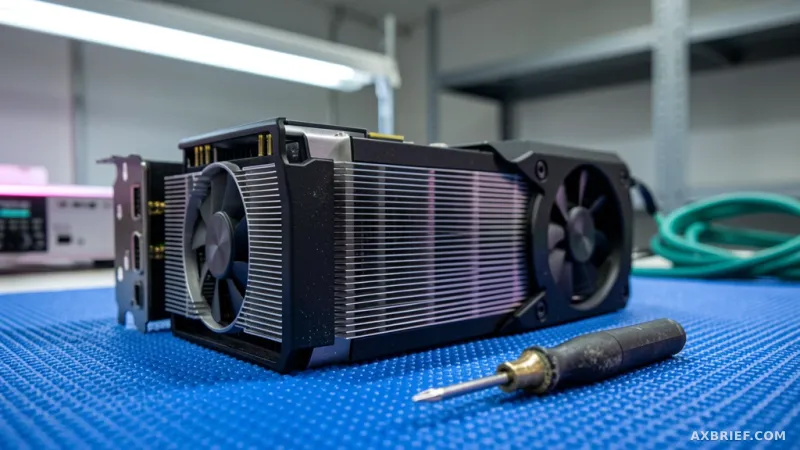
The modern developer's terminal has transformed into a battlefield of token management. Every few weeks, a new model drops, promising a leap in reasoning or a collapse in pricing, leaving engineers in a state of perpetual infrastructure anxiety. The core struggle is no longer just about writing clean code, but about deciding where that code is actually generated. Whether it is the hum of a local GPU cluster or the seamless latency of a cloud API, the choice of infrastructure now dictates the velocity of a project more than the language choice ever did.
The Three Pillars of AI Coding Infrastructure
Building an AI-native development environment currently follows three distinct architectural paths, each with a unique cost-performance profile. The first is local hosting, where the developer invests in physical hardware to run open-source models. This approach requires a significant upfront capital expenditure for high-VRAM GPUs, but it eliminates the recurring cost of tokens. While this provides total privacy and zero marginal cost per request, it introduces the risk of rapid hardware depreciation. In a field where model architectures shift monthly, a multi-thousand dollar rig can become a legacy bottleneck if the next generation of open-source models requires memory capacities that exceed the current hardware's limits.
The second path is API rental, epitomized by gateways like OpenRouter. This model treats intelligence as a utility, allowing developers to pay only for what they consume. The primary advantage here is extreme agility. By using a unified gateway, a developer can switch from a heavy-duty model to a lightweight, cost-effective alternative by changing a single line of configuration. This removes the risk of hardware lock-in and allows the infrastructure to evolve in real-time as new models are released or prices are slashed by providers.
The third path is the frontier subscription model offered by labs like OpenAI and Anthropic. For a monthly fee of approximately $400, these plans provide access to the most capable models in existence. When analyzed against list prices, these subscriptions are deceptively economical, offering a volume of usage that would cost roughly $2,800 if billed via standard API rates. However, this economy comes with a critical caveat: these plans are metered. They are designed for human-in-the-loop interaction, meaning they possess strict rate limits that make them unsuitable for high-throughput, autonomous AI agents.
The Agentic Wall and the Spec-Driven Pivot
The tension between these three paths reveals a fundamental truth about AI productivity: there is a sharp divide between a tool for thinking and an engine for execution. Frontier subscriptions are world-class thinking tools. They excel when a human is driving the prompt, iterating on a complex architectural problem, and verifying the output. But the moment a developer attempts to plug a subscription account into an automated pipeline or a full-time autonomous agent, they hit the agentic wall. The token consumption of an agent operating in a loop is orders of magnitude higher than that of a human, leading to rapid exhaustion of subscription quotas and immediate service suspension.
This realization necessitates a shift toward spec-driven development, a hybrid strategy that decouples high-level reasoning from mechanical implementation. In this workflow, the frontier subscription is used exclusively for the first phase: the design phase. The developer uses the most powerful model available to architect the system, map out the logic, and produce a rigorous, detailed implementation specification. This is the high-cost, high-intelligence work where the subscription's reasoning capabilities are indispensable.
Once the specification is finalized, the workflow pivots to the API layer. The detailed spec is fed into a cheaper, open-source model via an API like OpenRouter to handle the actual code generation. Because the heavy lifting of logical reasoning was already completed in the spec phase, the cheaper model only needs to perform the mechanical task of translating a clear blueprint into syntax. This division of labor—expensive models for design and cheap models for implementation—prevents the waste of high-tier tokens on repetitive coding tasks.
When executed correctly, this hybrid pipeline transforms the economics of software engineering. By isolating the expensive reasoning phase, it is possible to achieve a level of output where a budget of approximately $1,000 can generate a volume of production-ready code equivalent to the monthly output of 20 human engineers.
The era of the general-purpose AI assistant is ending, replaced by a tiered infrastructure where intelligence is strategically allocated based on the complexity of the task.