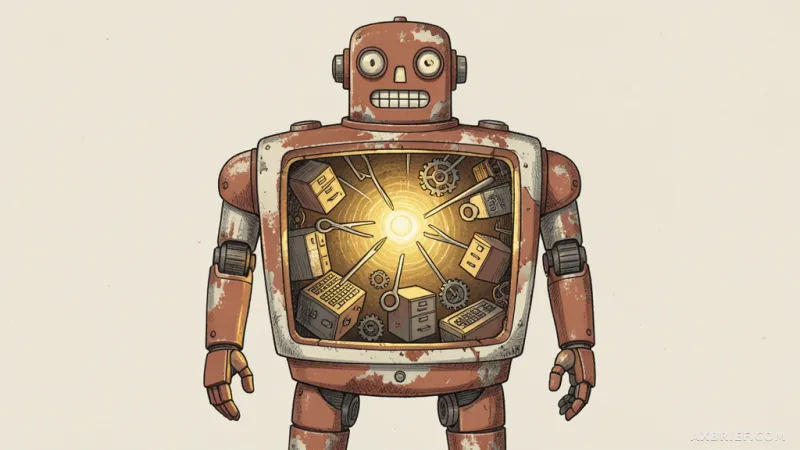
Late at night, the home office setup remains a familiar scene: a sophisticated strategy document glows on the monitor, but the cursor in the code editor blinks in a rhythmic, empty void. For years, this state of inertia—where the gap between a brilliant concept and the first line of code feels insurmountable—has been the primary barrier for developers. Today, that friction is being systematically dismantled by AI agents that turn intent into execution in seconds.
The Economics of Claude Code and the 100-Euro Threshold
Anthropic is fundamentally altering the development landscape with Claude Code, an AI agent designed to handle end-to-end coding tasks. The current workflow for power users involves subscribing to the Claude Max plan, which facilitates the rapid consumption of tokens—the fundamental units of AI text processing. Developers are frequently spending approximately 100 euros on these tokens to build everything from complex games to iOS applications. When the base plan reaches its limit, it is common practice to purchase an additional 20 euros in API credits to maintain momentum. To manage these costs, developers are increasingly relying on specific configuration settings, such as `/modus opusplan`, to optimize token usage and ensure that the AI remains cost-effective during intensive coding sessions.
Bridging the Gap Between Idea and Execution
Historically, the development process was plagued by task paralysis, a psychological state where the sheer fatigue of implementation prevents a project from ever starting. While analysis paralysis traps the brain in a loop of over-thinking, task paralysis causes the brain to stop entirely. Claude Code acts as a catalyst that bridges this divide, allowing developers to bypass the manual labor of boilerplate code and syntax debugging. The performance gap between the AI capabilities of late 2025 and current models has created a massive shift in velocity, effectively turning the act of coding into a high-speed iteration process.
This shift has introduced a powerful psychological mechanism: the dopamine loop. Because ideas are transformed into functional code almost instantly, the brain’s reward system is triggered at a much higher frequency. This creates a cycle where the immediate gratification of seeing a working feature encourages the user to purchase more tokens, effectively turning the development process into a high-utility, high-reward habit. Developers are finding themselves less reliant on the traditional, laborious process of manual coding and more dependent on the immediate, AI-driven sense of accomplishment.
The New Frontier of AI-Driven Value
This evolution signals a broader shift in the business models of AI companies, moving away from simple flat-rate subscriptions toward high-cost, usage-based billing. As the psychological reward for the user increases, their willingness to pay for tokens grows exponentially. We are witnessing a transition where the technical barrier to entry is being replaced by the "pleasure of execution" as the primary business value. However, this convenience comes with a trade-off. As AI agents increasingly handle the creative and technical heavy lifting, developers and creators are forced to navigate the tension between explosive productivity and the potential dilution of their own creative identity. The competitive edge is no longer defined by raw coding proficiency, but by the ability to control these high-speed execution loops and architect genuine business value in an era of automated creation.