The tension in a modern software sprint often boils down to a single, loaded question from a product manager: Can we try something quicker? For a junior developer, this sounds like a request for overtime or a shortcut. For a senior developer, however, this phrase is a strategic signal. It is an acknowledgment that the business is not asking for a perfect piece of engineering, but rather a fast answer to a market uncertainty. The goal is not to build the final bridge, but to see if people actually want to cross the river.

The Collision of Market Velocity and System Integrity

Business organizations operate within a relentless cycle of market learning. In this environment, the greatest enemy is not a bug or a slow load time, but uncertainty. To a marketer or a product owner, time is the primary cost, and the only way to mitigate risk is to ship a feature, gather user data, and pivot based on real-world feedback. This creates a natural drive toward pure speed, where the objective is to reduce the gap between a hypothesis and a validated result.

Once a product finds its footing and acquires a stable user base, the objective shifts. The focus moves from discovery to durability. This is where the senior developer's primary responsibility emerges: ensuring system stability and maintainability. While junior developers might lean heavily on the latest industry trends or a specific set of best practices found in online communities, the senior engineer views these with skepticism. They understand that blind adherence to a pattern often introduces unnecessary complexity, and complexity is the precursor to failure.

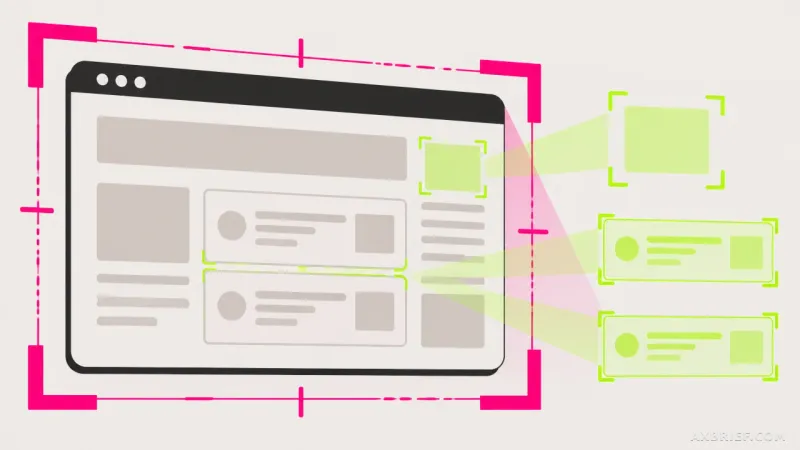
When a system becomes overly complex, debugging becomes a nightmare and the risk of catastrophic failure increases. A minor change in a convoluted codebase can lead to a critical outage, such as a payment gateway failure, which directly impacts revenue. To avoid this, senior developers often advocate for low-fidelity solutions to test high-fidelity ideas. Instead of building a full-scale feature, they might suggest using a tool like Google Forms to collect data or adding a single button to an existing UI to measure click-through rates. By lowering the implementation cost, they remove uncertainty without compromising the core architecture.

From Code Writer to System Editor

Historically, developers were expected to balance market learning and system stability within a single codebase. The developer wrote the code, tested it, and maintained it. However, the rise of AI agents has fundamentally broken this equilibrium. AI can generate vast amounts of functional code in seconds, exponentially increasing the speed of delivery. The problem is that AI possesses a critical blind spot: it generates code to satisfy a prompt, but it does not take responsibility for the long-term complexity it introduces into the system.

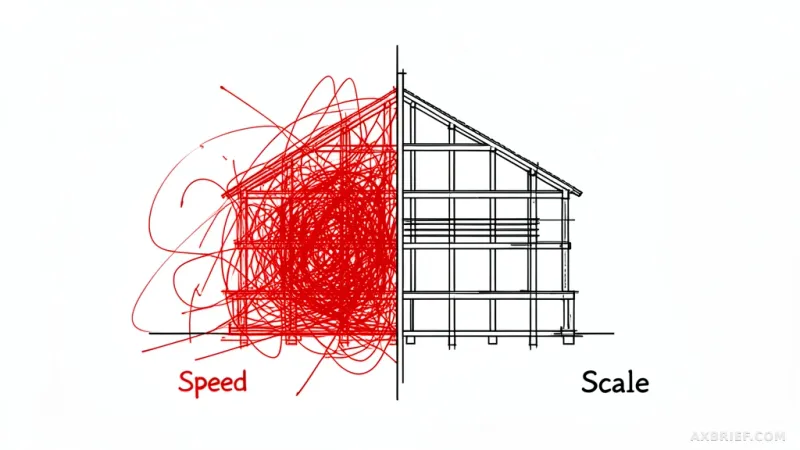
This shift has led to a new architectural strategy: the explicit separation of the Speed version and the Scale version. The Speed version serves as a high-velocity sandbox. It is a space where AI-generated code, unreviewed snippets, and rapid prototypes from junior developers are deployed to gather immediate market feedback. In this environment, the goal is not perfect readability or architectural purity, but a state of being sufficiently functional to test a hypothesis. It is a disposable layer of the product designed for discovery.

Conversely, the Scale version is the sanctuary of the senior developer. This is where the architecture is meticulously designed for scalability, security, and long-term stability. The Scale version does not guess; it implements only what has been proven to work in the Speed version. By observing which features in the Speed version actually drove user engagement and which were ignored, the senior developer can filter out the noise and integrate only the essential logic into the permanent system. This creates a pipeline where features are born in the Speed version and matured in the Scale version.

This transition redefines the developer's identity from a writer to an editor. In the traditional model, the developer was like a novelist, drafting every word from scratch. In the AI era, the developer acts as a chief editor. The AI provides the raw, voluminous first draft, and the senior developer decides which paragraphs to keep, which to rewrite, and which to delete entirely. This separation allows the business to maintain its momentum, receiving a Speed version in three days to keep the product moving, while the senior developer secures a six-week window to ensure the Scale version is engineered for the long haul.

Professional expertise for the senior developer no longer resides in the ability to write syntax or implement algorithms. Instead, it lives in the editorial authority to decide what to discard from the AI's overproduction and what to preserve for the future of the system.