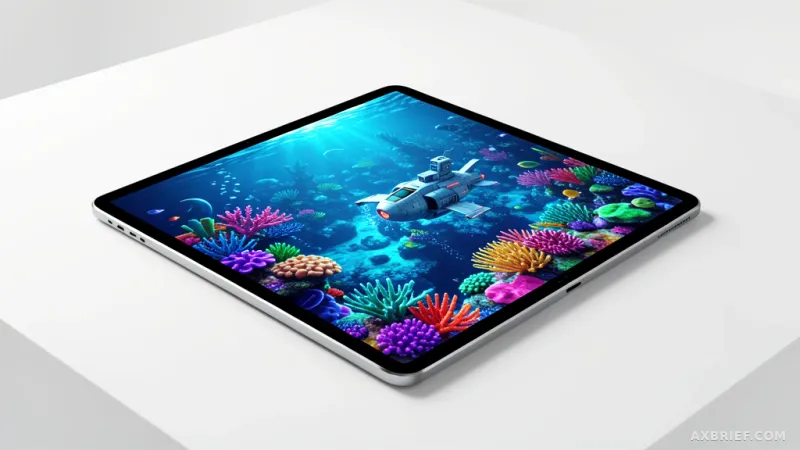
The modern gaming experience often begins not with a start screen, but with a progress bar. For years, the ritual of playing a triple-A title has involved clearing dozens of gigabytes of storage, navigating driver updates, and praying that a mid-range GPU can handle the minimum requirements without overheating. This friction creates a silent barrier between the player and the game, where the technical overhead of installation often outweighs the initial excitement of a new release. This week, NVIDIA is attempting to dismantle that barrier entirely.

The Cloud Catalog Expansion

NVIDIA has expanded its GeForce NOW cloud streaming library by adding 11 new titles, headlined by the immediate arrival of Subnautica 2. The ocean-based survival exploration game is available on a day-and-date basis, meaning users can dive into its alien aquatic ecosystems the moment the game launches without waiting for a local download. The service handles the heavy lifting of rendering the game's dynamic ecosystems, deep-sea trenches, and stormy horizons on remote servers, streaming the result to the user's device in real time. This allows players to build bases and explore mysterious ruins regardless of whether they are using a high-end PC or a basic laptop.

Alongside the survivalist depths of Subnautica 2, the open-world racing title Forza Horizon 6 has entered the service via early access. This specific availability is tiered, targeting users who have purchased the Steam Premium Edition or those utilizing the PC Game Pass Premium upgrade bundle. By bypassing the installation phase, these players can enter the race immediately, shifting the requirement from disk space to bandwidth.

Existing titles are also receiving cloud-integrated updates. HITMAN World of Assassination is currently hosting a reward event featuring the return of the Casino Royale character Le Chiffre. This content is available for free play until May 25. Furthermore, exclusive reward items can be claimed on a first-come, first-served basis through the GeForce NOW account portal's reward section until June 14. To further streamline the user experience, NVIDIA is currently developing a single sign-on integration with the combat simulation developer Gaijin, which will allow users to authenticate across services with a single login in a future update.

The Death of the Local Install

This update represents more than just a library expansion; it marks a fundamental shift in the geography of gaming. For decades, the industry operated on a model of hardware ownership. To play a high-fidelity game, the consumer had to purchase the physical or digital capacity to run it. This created a cycle of forced upgrades where the quality of the experience was tethered to the most recent GPU release. By moving the computation to the server and the delivery to the stream, NVIDIA is decoupling the gaming experience from the physical machine.

When a game like Subnautica 2, which features vast maps and complex dynamic environments, is delivered via the cloud, the entry barrier vanishes. The tension no longer lies in whether a user's laptop can handle the rendering load, but simply whether they have a stable internet connection. This transition transforms the market from one centered on hardware ownership to one centered on service access. The quality of the experience is no longer determined by what the user owns, but by the infrastructure they subscribe to.

For developers and publishers, this shift solves a critical problem: the installation drop-off. A significant percentage of potential players abandon games during the download or setup phase, especially when faced with massive file sizes or compatibility errors. Cloud distribution eliminates this friction entirely. By managing compatibility and optimization at the server level, NVIDIA ensures a uniform experience across a fragmented landscape of user devices. In doing so, NVIDIA is pivoting from its traditional role as a silicon manufacturer to become the primary infrastructure layer for game distribution.

NVIDIA is effectively turning the act of gaming into a subscription-based utility, ensuring that the hardware in the user's hand is merely a window into a much more powerful machine.