Most users interacting with Gemini on their smartphones today see a versatile assistant capable of drafting emails or summarizing documents. They rarely perceive the invisible architecture beneath the interface, a lineage of reasoning and problem-solving that began not with a chatbot, but with a board game. This transition from a specialized research curiosity to a ubiquitous productivity tool represents one of the most aggressive technology transfers in the history of computing, moving the frontier of AI from the digital vacuum of games into the messy, physical reality of biological and planetary science.

The Path from AlphaGo to the Nobel Prize

The trajectory of this evolution began in 2016 with AlphaGo, the system that stunned the world by defeating a world champion in Go. While the public saw a victory in a complex game, the research community saw a proof of concept for deep reinforcement learning and strategic intuition. Google DeepMind quickly pivoted this capability toward a challenge that had stumped biologists for five decades: the protein folding problem. The result was AlphaFold, an AI model designed to predict the three-dimensional structure of proteins based solely on their amino acid sequences.

This was not merely an incremental improvement in software but a fundamental shift in how science is conducted. By solving a problem that previously required years of expensive, manual laboratory work, AlphaFold accelerated the pace of drug discovery and biological understanding. The magnitude of this achievement was codified in 2024 when Demis Hassabis, CEO of Google DeepMind, was awarded the Nobel Prize in Chemistry. This award signaled a global consensus that AI had transitioned from a tool for data processing to a primary driver of scientific discovery, capable of uncovering laws of nature that had remained hidden from human researchers.

Beyond the Lab: AI as Planetary Infrastructure

There is a critical distinction between the AI of a decade ago and the systems being deployed today. Early successes like AlphaGo operated within closed systems with rigid rules and defined win conditions. The current era of DeepMind's research focuses on open-system challenges where the stakes are human survival and planetary health. The same reasoning engines that mastered Go are now being applied to the most volatile variables of the physical world.

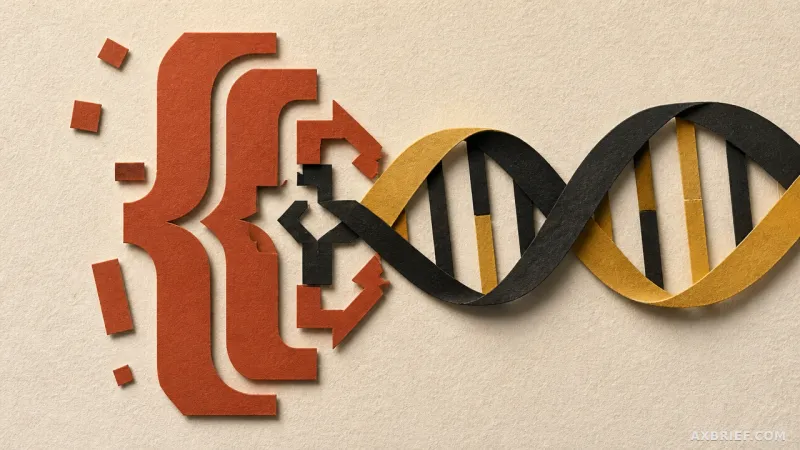
DeepMind's current portfolio includes systems that identify DNA mutations responsible for rare genetic diseases and models that control the plasma in nuclear fusion reactors, which operate at temperatures reaching 100 million degrees. Furthermore, the organization has deployed AI to predict typhoon paths with unprecedented speed and accuracy. This shift reveals a profound transformation: AI is no longer just a software layer for digital tasks but has become a core piece of scientific infrastructure. The tension has moved from whether AI can beat a human at a game to whether AI can stabilize a fusion reaction or cure a disease. This evolution proves that the ability to navigate a complex search space, whether it is a Go board or a protein chain, is a universal capability that can be scaled to any domain of knowledge.

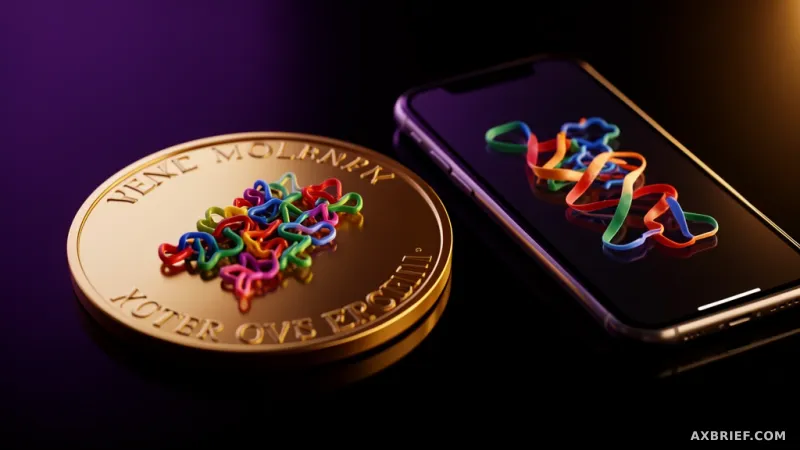
This concentrated intelligence is now flowing directly into Gemini. The multimodal reasoning and complex problem-solving capabilities developed for AlphaFold and other scientific models are being integrated into the Gemini engine. For the end user, this means the AI is not just predicting the next likely word in a sentence, but is leveraging a sophisticated lineage of reasoning to analyze complex information and provide actionable insights. The laboratory breakthroughs that earned a Nobel Prize are now the silent engines powering a mobile app.

The journey that began with a game of Go has culminated in a tool that translates the complexity of the universe into the simplicity of a smartphone prompt.