Motorsport is no longer just a test of driver endurance and mechanical engineering; it has become a high-stakes battle of data processing. At Porsche Cup Brazil, the ability to interpret telemetry in milliseconds is the difference between a podium finish and a DNF. Luis Baldini, the engineering coordinator for the series, notes that real-time data has fundamentally transformed race dynamics, turning historical logs into a live strategic asset.
The AI Infrastructure Behind the Grid
During a race, the pit wall is flooded with a constant stream of vehicle telemetry. Porsche Cup Brazil utilizes Microsoft Fabric to ingest sensor data from vehicles at intervals of just a few seconds. This data is piped directly into Power BI dashboards, allowing engineers to monitor vehicle health in real-time. If a car deviates from expected performance parameters, the system triggers an immediate alert, enabling the team to call the driver into the pits or halt the vehicle to prevent catastrophic failure.
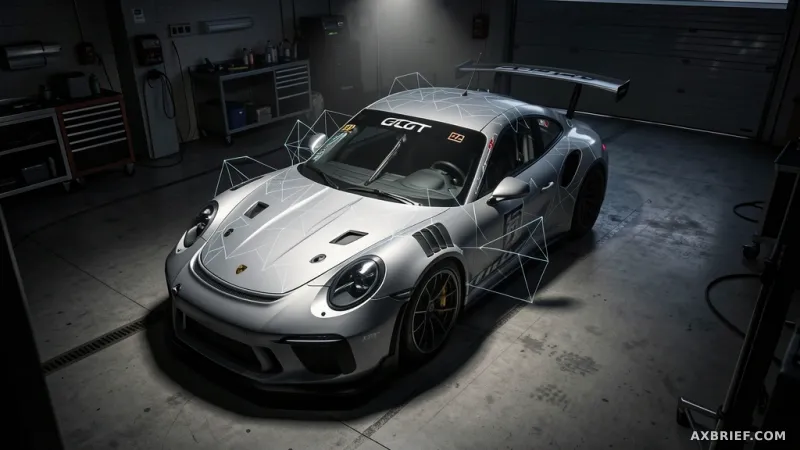
To manage post-incident analysis, the team partnered with Kumulus to deploy a multi-agent AI architecture. Rather than relying on a single, monolithic model, the system uses three specialized AI agents that collaborate to process information. An image analysis agent cross-references damage against a catalog of approximately 2,000 individual parts. This modular approach ensures higher precision than a general-purpose model could provide.
The underlying infrastructure runs on Azure Kubernetes Service, providing a scalable environment for the web interface used by the engineering team. When an engineer uploads images of a damaged vehicle along with contextual metadata—such as the driver name and race date—a Python-based backend triggers an analysis workflow hosted on Microsoft Foundry. To ensure the AI understands the nuances of race car damage, the team uses Azure AI Search as a vector database, providing the agents with vectorized guidelines on how to define and categorize structural failure. All incident data is archived in Azure Data Lake Storage for long-term historical analysis, with the development of these agents accelerated by GitHub Copilot and Visual Studio Code.
From Monolithic Models to Specialized Agents
In previous iterations, the team attempted to use a single large model to handle all visual inspections. This proved ineffective, as race cars frequently change liveries, which consistently confused the model’s visual recognition capabilities. By shifting to a multi-agent system, the team now employs specialized agents for specific vehicle components, allowing the system to identify parts accurately regardless of external aesthetic changes.
The shift has significantly improved both precision and feedback loops. The AI provides a primary assessment of the damage, which is then verified by a human analyst. This human-in-the-loop process serves a dual purpose: it ensures safety and provides the system with corrected data, which is fed back into the model to improve future performance.
Looking ahead, the team is moving from reactive analysis to predictive maintenance. The integration of a Garage Scheduler will soon allow the system to automatically trigger parts orders based on the AI's damage assessment. By combining this with real-time telemetry—incorporating physical context like impact force and speed—the team aims to prevent mechanical failures before they occur on the track. While the scope of these AI agents continues to expand, Baldini emphasizes that the technology remains a decision-support tool, with final control and accountability resting firmly with the human engineering team.
As these AI agents move from diagnostic tools to predictive systems, the role of the race engineer is evolving from manual data monitoring to high-level strategic oversight.