For months, the atmosphere across Silicon Valley and the global AI corridor has been one of cautious anticipation. Developers and CEOs have lived through a cycle of anxiety, fearing that the next wave of government policy would arrive as a set of restrictive shackles. The industry has grown weary of the tension between the drive for rapid iteration and the imposition of rigid safety guardrails that often feel like they were written by people who have never pushed a line of code to production. The central question for every AI lab this week was not whether the US government would act, but whether that action would stifle the very innovation that gave the West its competitive edge.
The Downsized Mandate
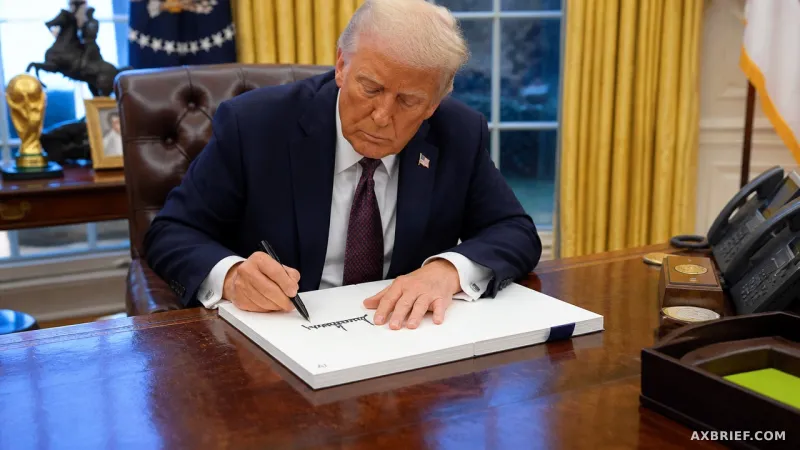
President Trump has officially signed a new AI Executive Order, but the final document is not the sweeping regulatory framework many had anticipated. The order is the result of several weeks of intense internal revisions, during which the administration repeatedly overturned and modified the text. The final version is a scaled-back, downsized iteration of the original plan. Rather than doubling down on the strict reporting obligations and dense safety guidelines that characterized previous policy discussions, this order deliberately lowers the intensity of federal oversight. It shifts the burden of governance away from government mandates and toward corporate autonomy, effectively reducing the scale of the state's role in managing AI development.
The Pivot from Safety to Speed
This reduction in scope represents more than just a shorter document; it is a fundamental pivot in the philosophy of AI governance. For a long time, the prevailing narrative in policy circles was that AI required a heavy hand to prevent catastrophic risks, often resulting in proposals for mandatory audits and transparency reports that could slow a product's time-to-market. By downsizing the order, the administration has signaled that the risk of falling behind in the global AI race is now viewed as a greater threat than the risks the regulations were designed to mitigate. The causation is clear: by removing the friction of bureaucratic reporting, the government is attempting to accelerate the velocity of commercialization. The tension has shifted from a battle over safety to a race for dominance, where the ability to ship features faster than competitors is the primary metric of success.
This shift removes a significant layer of uncertainty for AI enterprises. When the rules of the game are overly complex or constantly shifting, companies tend to hedge their bets, slowing down deployment to avoid potential legal pitfalls. With a lighter regulatory touch, the incentive structure flips. The focus moves from compliance to implementation, allowing firms to allocate their engineering resources toward technical breakthroughs rather than administrative paperwork.
The era of the regulatory safety net is giving way to a period of aggressive market acceleration.