For the past year, the AI community has been trapped in a binary trade-off. Developers and power users must either sacrifice raw intelligence for the privacy of on-device models or surrender their most sensitive data to the cloud to access frontier-grade reasoning. This friction has created a fragmented workflow where security and performance exist as opposing forces, forcing a manual choice every time a prompt is entered.
The Architecture of Real-Time Routing
At Computex 2026, Perplexity AI introduced a solution to this deadlock with the unveiling of its Hybrid Local-Server Inference Orchestrator. This software layer removes the manual decision process by autonomously determining the execution site for every individual task within a session. Rather than selecting a single model for an entire conversation, the orchestrator analyzes the workload in real-time, routing specific operations to either the local device or a cloud-based frontier model based on a balance of intelligence requirements, latency, cost, and privacy.
During a keynote presentation featuring Intel hardware, Perplexity CEO Aravind Srinivas demonstrated the system running on the Intel Core Ultra Series 3. The demonstration highlighted a critical shift in how AI agents handle data: the local model acts as the primary gatekeeper and router. When a user inputs sensitive information, such as private financial records or health data, the orchestrator ensures these tokens never leave the local environment. Conversely, when the task requires the massive parameter count of a frontier model for complex synthesis or deep reasoning, the system seamlessly offloads only the necessary, non-sensitive components of the request to the cloud.
The Economic Shift Toward Local Silicon
This orchestration layer transforms the economic calculus of AI deployment. For enterprises, the primary burden of AI adoption has been the escalating operational expenditure of cloud inference tokens. By shifting the intelligence threshold to the edge, the hybrid model converts recurring cloud costs into a one-time hardware investment. As local silicon becomes more capable, a larger percentage of the total workload can be processed on-device, directly lowering the monthly cloud bill while simultaneously eliminating the latency associated with round-trip server communication.
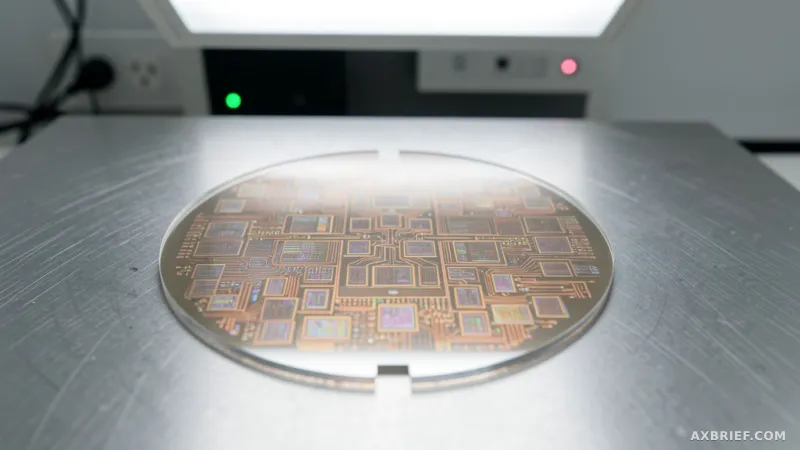
This shift creates a powerful incentive for the adoption of high-performance local hardware. The upcoming RTX Spark, NVIDIA's superchip designed for AI-native Windows PCs, is a direct response to this hybrid requirement. The hardware is engineered to handle the heavy lifting that previously required a data center, featuring up to 20 Arm CPU cores and 6,144 CUDA cores via a Blackwell GPU. With 128GB of LPDDR5X RAM, the RTX Spark provides the memory bandwidth necessary to run models with up to 120 billion parameters locally. This level of local compute ensures that the orchestrator can keep more tasks on-device, further reducing reliance on external APIs.
Beyond the corporate balance sheet, this technology alters the geopolitical landscape of AI. Many nations are currently spending billions to build domestic data centers to ensure data sovereignty and prevent sensitive national information from crossing borders. However, if a hybrid orchestrator can deliver frontier-level results while keeping the most sensitive data on local silicon, the urgency to build massive, centralized physical infrastructure may diminish. The focus shifts from owning the data center to owning the silicon that governs the data flow.
The battle for AI dominance is moving beyond the size of the model weights and into the intelligence of the orchestration layer that decides where those weights actually run.