Every developer building with the OpenAI SDK eventually hits the same wall. It starts with a simple model swap or a minor prompt tweak, but it quickly spirals into a tedious cycle of manual code revisions and configuration updates. The friction is palpable when a team decides to test Claude 3.5 Sonnet against GPT-4o or needs to implement a fallback mechanism to ensure uptime. In the current landscape, the infrastructure for managing these transitions is often a fragmented mess of custom scripts and fragile wrappers, leaving engineers to spend more time on plumbing than on actual AI logic.
The Architecture of a Model-Agnostic Gateway
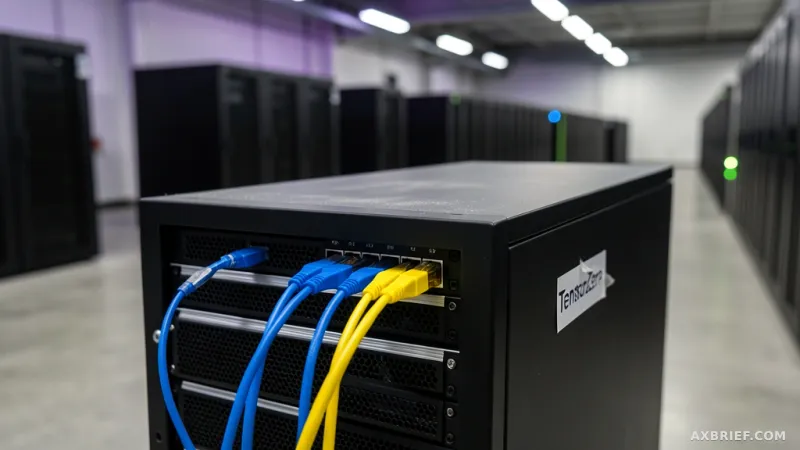
TensorZero enters this space not as another wrapper, but as a comprehensive open-source LLMOps platform designed to decouple the application logic from the underlying model provider. At its core is an LLM gateway that serves as the single entry point for all API calls. By consolidating observability, evaluation, and optimization into one stack, the platform allows developers to manage the entire lifecycle of a prompt without touching their core codebase. The system is built to be 100% self-hosted, a critical requirement for enterprise users who cannot risk sending sensitive telemetry data to a third-party cloud provider. This architectural choice ensures that data security and deployment flexibility remain entirely within the organization's control.
The platform's operational depth is visible in its dedicated open-source UI, which implements a zoom-in and zoom-out analysis philosophy. Engineers can zoom in to debug a single, specific API call to understand exactly why a model hallucinated, or zoom out to monitor how a prompt's performance metrics are shifting over weeks of production traffic. To ensure production-grade reliability, TensorZero integrates native routing, fallback logic, and retry mechanisms. These features are complemented by a robust A/B testing framework that allows teams to quantitatively compare different model-prompt combinations to find the mathematically optimal setup.
This technical ambition is backed by significant capital and specialized talent. TensorZero has secured 7.3 million dollars in seed funding, fueling a team that blends deep systems engineering with academic rigor. The roster includes a former Rust compiler maintainer, which explains the platform's focus on high-performance systems optimization, alongside machine learning researchers from Stanford, CMU, Oxford, and Columbia. This combination of low-level systems expertise and high-level ML theory is managed by a CPO with experience at a decacorn startup, bridging the gap between a research project and a commercial-grade product.
From Manual Tweaking to the Autopilot Flywheel
While the gateway solves the connectivity problem, the real shift occurs when moving from manual prompt engineering to automated optimization. Most teams currently operate in a loop of trial and error: change a word in the prompt, run a few test cases, and hope for the best. TensorZero disrupts this through a paid product called TensorZero Autopilot. This tool transforms the observability data collected by the gateway into a functional feedback loop. Autopilot analyzes production logs to automatically build evaluation sets and execute A/B tests, effectively automating the engineering process required to refine an LLM agent's performance.
The true insight here is the transition from model dependency to performance parity. TensorZero leverages a data flywheel and Dynamic In-Context Learning (DICL) to achieve a specific, high-value goal: making smaller, cheaper models perform like frontier models. By using the platform's optimization tools, developers can often migrate a workload from a heavy model like GPT-4o to a lightweight alternative like GPT-4o Mini without a perceptible drop in quality. This transforms the LLMOps conversation from one of simple accessibility to one of quantitative cost-efficiency, where the platform provides the evidence needed to downgrade the model while maintaining the output standard.
This capability has already scaled to a massive degree. TensorZero currently processes approximately 1% of all global LLM API expenditures, serving a client base that ranges from cutting-edge AI startups to companies in the Fortune 10. To achieve this scale, the platform maintains strict compatibility with the OpenAI SDK and OpenTelemetry, the industry standard for distributed tracing. This means developers can integrate TensorZero into existing pipelines without rewriting their entire stack. The compatibility layer extends across the entire frontier AI ecosystem, including Anthropic, AWS Bedrock, Azure, DeepSeek, Google Vertex AI, OpenAI, and xAI (Grok).
Beyond the major cloud providers, the platform embraces the open-source ecosystem by supporting any API that follows the OpenAI specification, such as those served via Ollama. This allows enterprises to blend commercial cloud models with local, self-hosted models through a single, unified interface. By removing the infrastructure constraints associated with different providers, TensorZero enables a truly fluid strategy where the model is treated as a replaceable commodity rather than a permanent architectural decision.
The industry is moving toward a future where the specific model used is less important than the system used to optimize it.