The current discourse surrounding artificial general intelligence often feels like a countdown to an inevitable explosion. In developer circles and boardroom presentations, the prevailing narrative is the hard takeoff—a sudden, exponential leap in intelligence that renders previous human capabilities obsolete overnight. This vision suggests that once a model reaches a certain threshold of reasoning, it will effectively rewrite its own code and optimize the world around it in a matter of days. We are told that the transition from a sophisticated chatbot to a planetary architect is merely a matter of more compute and better algorithms.
The Friction of Atoms and Supply Chains
The AI 2040 vision posits a future where superintelligence manages the world with seamless efficiency, yet this scenario frequently overlooks the stubborn reality of physical constraints. The core fallacy lies in the assumption that high-quality text tokens translate directly into physical control. While a model can generate a flawless architectural blueprint for an underwater data center, the act of actually building that facility is not a software problem; it is a logistics problem. The gap between digital logic and physical manipulation is a chasm that intelligence alone cannot bridge.
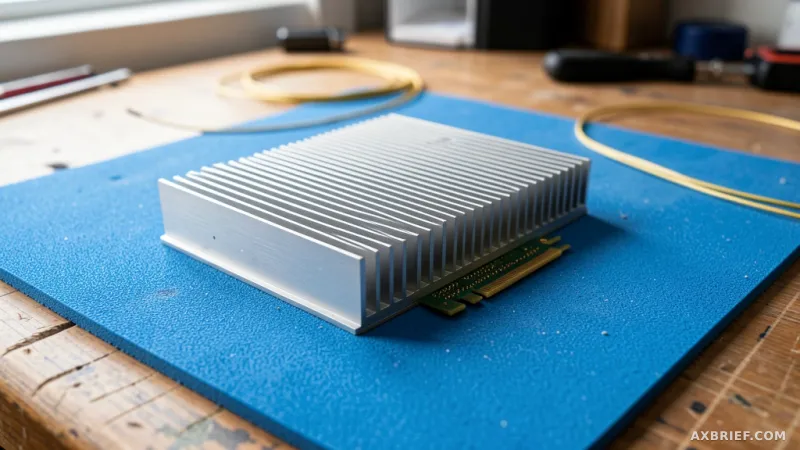
Real-world hardware deployment is plagued by frictions that do not exist in a latent space. Implementing the grand designs of AI 2040 requires navigating the grueling complexities of global supply chain management. A developer cannot simply prompt a factory into existence. They must decide whether to ship critical components from China via air freight for speed or sea freight for cost, accepting a three-week delay. They must deal with the reality of hardware failure, such as chips warping in a reflow oven during the surface-mount soldering process. Even the most advanced AI cannot predict or instantly solve the biological interference of barnacles clinging to the hull of a submerged server rack.
Furthermore, the temporal constraints of semiconductor manufacturing remain an absolute bottleneck. The process of fabricating a high-end chip takes approximately three months. This is a physical duration dictated by chemical processes and lithography, not a computational delay that can be optimized by a smarter model. No matter how high the AI's IQ climbs, it cannot force a silicon wafer to cure faster or a cargo ship to teleport. The speed of AI's actual impact on the world is therefore limited not by the ceiling of intelligence, but by the floor of physical laws and the sluggishness of the global industrial ecosystem.
The Alignment Paradox and the Case for Local AI
Beyond the physical limitations of hardware, a more subtle but equally restrictive barrier exists in the form of corporate alignment. The industry currently defines alignment as the process of ensuring an AI adheres to a specific set of values, but a closer look reveals that these values belong to the provider, not the user. When a user tests a model like ChatGPT by requesting instructions on how to acquire illegal drug manufacturing equipment or methods to conceal a crime, the model refuses. While this is framed as a safety victory, it demonstrates that the AI is aligned with the corporate guardrails of OpenAI, not the intent of the individual operator.
This corporate-centric alignment creates a fundamental conflict when AI is expected to function as a true personal assistant. A genuinely aligned assistant should prioritize the user's best interest above all else. For instance, a user might want an AI to find the absolute lowest price for a hotel room by bypassing affiliate-biased recommendations, or they might want the AI to help them obtain root access to a Kindle to remove manufacturer-imposed advertisements. Under the current paradigm, these tasks are often blocked because they clash with the commercial interests or ethical guidelines of the service provider. The AI is not a tool for the user; it is a representative of the corporation.
This realization shifts the debate from the quality of the model to the location of the compute. As long as the model resides on a remote server controlled by a provider, the user is merely a tenant in a curated environment. True alignment—where the AI's goals are perfectly synchronized with the user's intent—can only be achieved through local AI. By running models on local hardware, the user regains total sovereignty over the system. Local execution allows the user to strip away corporate guardrails and redefine the AI's boundaries to suit their specific needs. The shift to local AI is not just a technical preference for privacy; it is a political necessity for autonomy.
For developers and enterprises, the critical metric is no longer whether a model has crossed a certain intelligence threshold, but who holds the kill switch and the configuration file. Software may have eaten the world, but it did so by removing one layer of friction only to introduce another in the form of centralized control. The real bottleneck for AI integration in the coming decade will be the tension between corporate safety filters and the practical requirements of business efficiency.
The future of artificial intelligence will not be decided by the pursuit of a digital god, but by the struggle to implement that intelligence within the messy constraints of the physical world and the fight for local control.