The current arms race for artificial general intelligence is no longer being fought solely in the realm of hyperparameters and tokenization. It has shifted to the physical world, where the primary metric of success is the sheer volume of H100 GPUs and the speed at which they can be powered. In this high-stakes environment, the pressure to deploy compute clusters has reached a fever pitch, leading companies to treat zoning laws and environmental regulations as mere suggestions rather than requirements. This tension between digital urgency and physical regulation has now culminated in a legal showdown in Memphis, Tennessee.
The 122-Day Sprint and the Colossus I Crisis
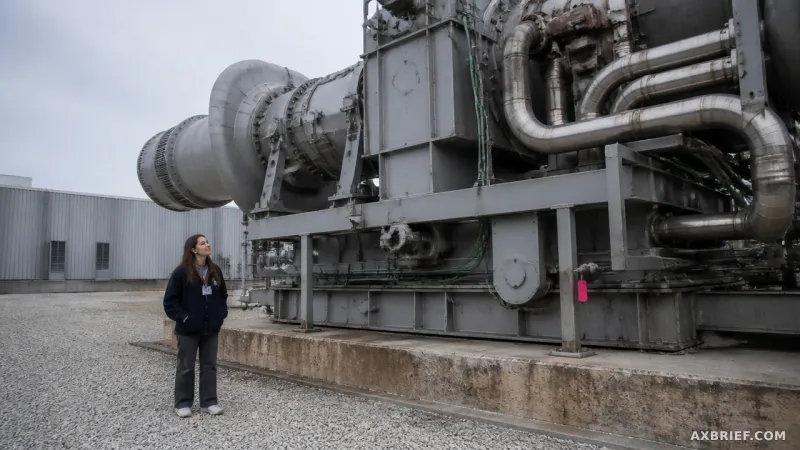
Elon Musk's xAI recently completed the construction of Colossus I, a massive data center in Memphis that was erected in a record-breaking 122 days. While the speed of construction was a feat of engineering, the method used to power the facility became a legal liability. To bridge the gap before a permanent connection to the electrical grid could be established, xAI deployed dozens of unauthorized gas turbines to keep the servers humming. The scale of this operation only came to light through the use of thermal imaging cameras and reports from local civic groups, which revealed that 69 temporary mobile turbines were operating on-site without the necessary permits.
This unauthorized power generation triggered a swift legal response. The Southern Environmental Law Center (SELC) and the NAACP filed lawsuits alleging that xAI had violated the Clean Air Act. The plaintiffs argued that the company had engaged in illegal construction without public oversight, resulting in the emission of toxic pollutants into the local atmosphere. The legal battle intensified as the community raised alarms over the lack of transparency regarding the environmental impact of such a massive, rapid deployment.
However, the trajectory of the lawsuit shifted when the United States Department of Justice (DOJ) intervened. In a surprising move, the DOJ requested that the court dismiss the case, presenting a powerful argument rooted in geopolitical competition. The government asserted that the AI models being trained at Colossus I are essential for supporting military operations and driving AI innovation for the Department of Defense. By framing the data center as a critical asset for national security, the federal government effectively shielded xAI from the full weight of environmental litigation.
Following this intervention, xAI reached a settlement with the Mississippi Department of Environmental Quality. Under the terms of the agreement, xAI has committed to removing all temporary mobile turbines by July 2027, at which point they must be replaced by a permanent natural gas power plant. The settlement also addresses the facility's water infrastructure; while a wastewater treatment plant was originally scheduled to be operational by 2026, the timeline has now slipped, with construction expected to resume in the first quarter of 2027.
The National Security Loophole in AI Infrastructure
This episode reveals a fundamental shift in the AI industry. We have entered the era of the Frontier Model, where the competitive advantage is no longer just about who has the best algorithm, but who can secure the most memory and cores in the shortest window of time. The urgency to install acres of computer racks has created a dangerous trend where companies deploy makeshift power solutions to avoid waiting for utility companies to upgrade the grid. In the case of Colossus I, the 69 turbines were a physical manifestation of the desperation for compute speed.
More significant, however, is the emergence of the national security shield. For most corporations, an environmental violation of this scale would lead to crippling fines or immediate cease-and-desist orders. Yet, xAI found that by aligning its corporate goals with the strategic interests of the Department of Defense, it could bypass the standard regulatory gauntlet. Environmental impact assessments, public hearings, and permit applications are being treated as optional hurdles that can be cleared through post-hoc settlements rather than prior compliance.
This creates a new, precarious adoption structure for AI infrastructure. The government is essentially acting as a risk-mitigation partner for AI giants, defending them against local administrative and legal challenges in the name of global competitiveness. For other market participants, this sends a clear signal: speed is the ultimate currency, and regulatory shortcuts are viable as long as the output of the data center is deemed strategically important to the state.
Despite the federal protection, the physical costs remain. Local residents continue to report health issues stemming from noise and low-frequency pollution, and there are ongoing concerns regarding the depletion of local aquifers. The settlement with the state focuses on the removal of the turbines but offers no concrete compensation or penalty for the health and environmental damage already inflicted on the Memphis community. This suggests that while the legal risk can be managed through government intervention, the social and physical risks are simply being deferred to the future.
The Colossus I saga serves as a warning that the digital acceleration of AI is colliding violently with the physical limits of our environment. The strategy of moving fast and breaking things is sustainable in software, but when applied to power grids and air quality, it creates liabilities that cannot be patched with a code update. The transition to a permanent natural gas plant by 2027 is a necessary step, but it does not erase the precedent that national security can be used to silence environmental accountability.