Developers have spent the last year building AI agents that can reason, plan, and write complex code, yet these agents remain largely trapped within the confines of a chat interface or a sandboxed terminal. The industry has reached a plateau where the intelligence of the model exceeds its ability to interact with the actual environment where users live: the operating system. While we can ask an agent to write a script to automate a task, the friction of deploying that script and managing the device state remains a manual hurdle. This gap between cognitive reasoning and physical execution on a device is exactly what the community is now attempting to solve.
The Architecture of Universal Device Control
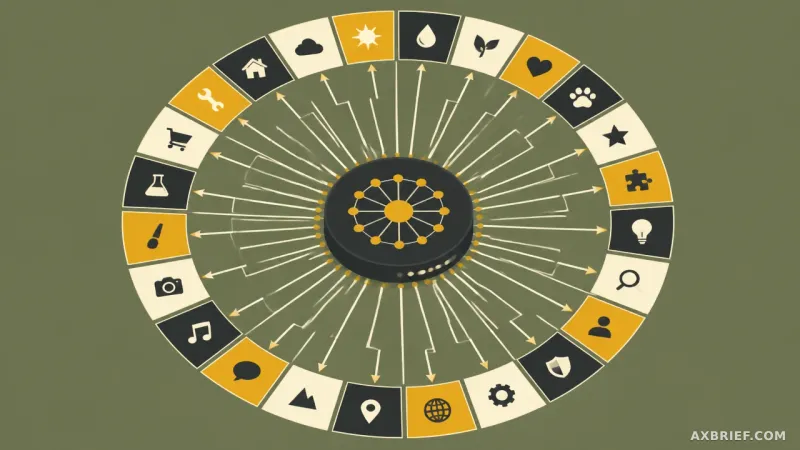
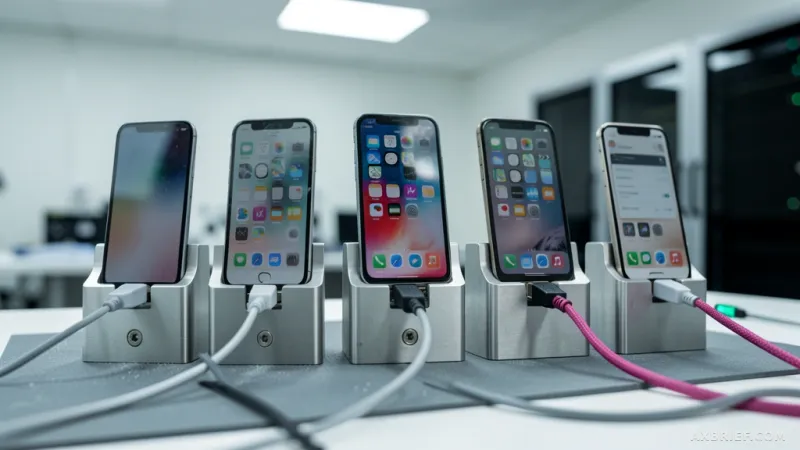
The release of agent-device introduces a command-line interface designed specifically to grant AI agents the ability to control devices directly. The scope of compatibility is remarkably broad, extending beyond the standard desktop and mobile environments. It provides native support for iOS, Android, macOS, and Linux, while also reaching into the living room by supporting tvOS and Amazon Vega OS TV. This cross-platform capability ensures that agents are not limited to a single ecosystem but can operate across a fragmented hardware landscape. Furthermore, the tool is not restricted to native applications; it explicitly supports apps developed using React Native, Expo, and Flutter, ensuring that the majority of modern cross-platform mobile applications are within the agent's reach.
At the core of agent-device is a rigorous inspect-act-verify process. Rather than relying on blind execution, the agent first performs an inspection phase using accessibility snapshots and selectors to identify the precise elements on the screen. Once the target is identified, the agent executes an action, such as a tap, text input, or scroll. The process concludes with a verification step to ensure the intended state change actually occurred. When an action fails, the system does not simply return an error; it captures a comprehensive diagnostic package including screenshots, system logs, network data, and crash details. This allows the agent to analyze the failure and self-correct in real-time. For developers looking to stabilize these workflows, successful operation sequences can be saved as .ad scripts, allowing the exact interaction path to be reproduced locally or within a Continuous Integration (CI) pipeline.
From Static Automation to Dynamic Agency
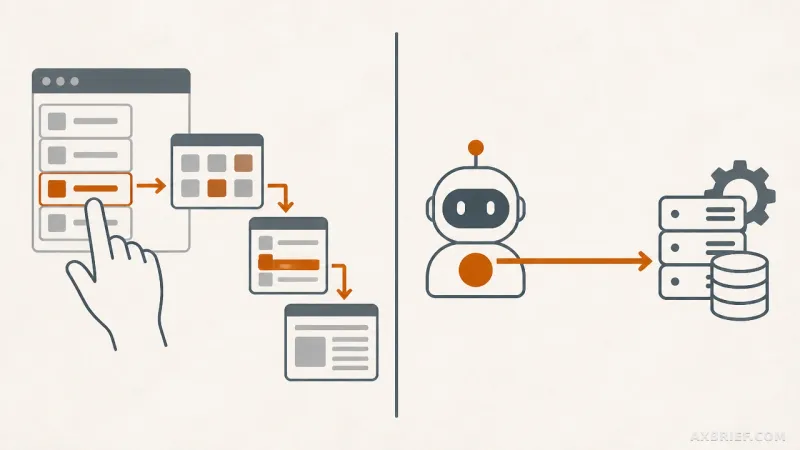
To understand the significance of agent-device, one must distinguish it from traditional UI automation tools like Appium or Maestro. For years, Appium and Maestro have been the gold standard for mobile UI testing, but they operate on a fundamentally different philosophy. Those tools are designed for deterministic testing, where a human writes a predefined script that the tool executes linearly. If the UI changes by a single pixel or a popup appears unexpectedly, the script breaks because the tool cannot reason about the new state.
agent-device shifts the paradigm from automation to agency. Instead of following a rigid script, it allows the AI agent to read the state of the device at runtime and decide the next command based on what it actually sees on the screen. It does not seek to replace Appium or Maestro but rather to complement them by providing the cognitive layer that those tools lack. This capability is amplified by its integration into the modern AI development stack. Because it operates as a CLI, it can be executed directly within agent-centric terminals such as Cursor, Claude Code, and Windsurf. This means an agent can write code in an IDE, deploy it to a device, and then use agent-device to test the feature in a real-world environment without human intervention.
Released under the MIT license, the tool removes the proprietary barriers to OS-level agent integration, allowing the open-source community to build autonomous layers on top of existing operating systems.
This transition marks the end of the agent as a mere advisor and the beginning of the agent as a functional operator of the digital world.