The modern 3D pipeline is notoriously slow. For years, developers and digital artists have spent countless hours meticulously sculpting meshes and painting textures, often spending days on a single asset that might be discarded during the first round of prototyping. This friction between a creative concept and a tangible 3D object has long been the bottleneck in game development and industrial design, where the cost of iteration is measured in hours of manual labor.
The Mechanics of Instant Geometry
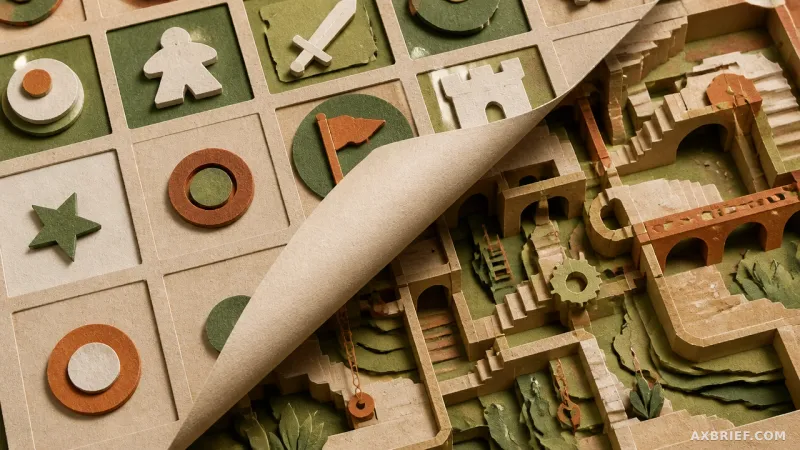
AI 3DGen enters this space as a web-based solution designed to collapse the distance between a 2D sketch and a 3D model. The workflow is streamlined for immediate utility: users drag and drop a JPG or PNG image into the interface, and the system generates a corresponding 3D asset. The processing time is remarkably lean, ranging from 50 seconds to two minutes depending on the complexity of the source image. Once the generation is complete, the service provides downloads in three industry-standard formats: OBJ, STL, and GLB.
The service operates on a tiered access model to accommodate different user needs. The Lite model provides a free entry point with a set number of daily generations, allowing hobbyists to experiment with the technology. For those requiring professional-grade output, the Ultra model offers high-resolution meshes, superior texture quality, and priority processing to bypass queues. For enterprises and freelancers, the Pro plan grants a full commercial license, ensuring that the generated assets can be legally integrated into commercial products.
Shifting the Prototyping Paradigm
The real shift here is not simply the ability to create a 3D model, but the speed at which a concept becomes a spatial object. Traditional modeling requires a deep understanding of topology and UV mapping, processes that often stifle the iterative nature of early-stage design. By converting a 2D image into a 3D mesh in under two minutes, AI 3DGen transforms the role of the 3D artist from a manual laborer to a curator.
This capability is particularly disruptive for VR and AR development, where the need for rapid environmental prototyping is constant. Instead of waiting for a dedicated asset pass, a designer can now upload a concept sketch and immediately place a rough 3D version of that object into a scene to test scale and composition. The tension between high-fidelity requirements and tight deadlines is eased when the initial block-out phase is automated. The result is a pipeline where the AI handles the primitive geometry, leaving the human artist to focus on the final polish and optimization rather than the tedious initial build.
The barrier to entry for spatial computing is falling as the distance between a flat image and a three-dimensional world vanishes.