The AI race has shifted from a battle of algorithms to a war of attrition over silicon. For months, the developer community has watched as the bottleneck for the next leap in intelligence moved from data quality to raw power. The tension is palpable: build your own fortress of GPUs and risk obsolescence, or find a way to plug into the largest compute engine available. This week, that tension found a resolution in an unexpected strategic alignment that signals a new era of infrastructure sharing among the world's most powerful AI labs.
The Colossus2 Integration and the GB200 Leap
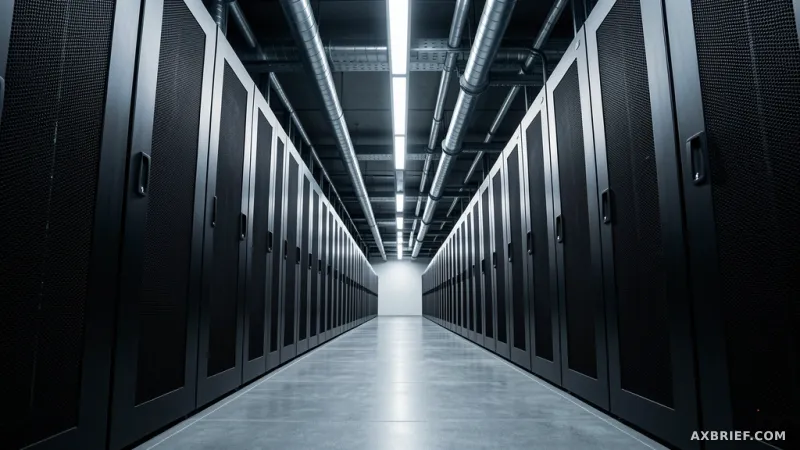
Anthropic has officially integrated its next-generation training and inference workloads into the Colossus2 cluster, a massive GPU powerhouse operated by Elon Musk's xAI. At the heart of this infrastructure is the Nvidia GB200 (Grace Blackwell 200) chipset. This is not a mere incremental upgrade; it is a fundamental shift in the scale of available compute. The GB200 architecture addresses the primary pain point of the H100 era: the communication bottleneck between chips. By drastically increasing memory bandwidth and power efficiency, the Blackwell architecture allows for the training of models with parameter counts that were previously computationally prohibitive.
For Anthropic, the decision to bypass the traditional route of building a proprietary data center in favor of xAI's existing cluster provides an immediate injection of the astronomical compute required for their next-gen models. In the current climate, hardware procurement is a nightmare of lead times and supply chain volatility. By leveraging Colossus2, Anthropic eliminates the risk of construction delays and power grid negotiations, moving straight to the execution phase of model training. The developer community views this as a pragmatic admission that the speed of deployment now outweighs the prestige of ownership.
Beyond raw training speed, the transition to GB200-based infrastructure fundamentally alters inference efficiency. The Blackwell architecture's ability to handle massive data throughput directly impacts the latency users experience during complex reasoning tasks. For models with vast parameter sets, the inter-chip communication lag often becomes the ceiling for performance. The GB200's design minimizes this friction, providing the physical foundation necessary to implement more complex reasoning chains and maximize the volume of training data processed per second. This move effectively turns Colossus2 into a force multiplier for Anthropic's research goals.
The Death of the Proprietary Data Center
This move exposes a critical reversal in how AI giants view infrastructure. For years, the gold standard for a tech company was the proprietary data center—a closed loop of server racks and custom network switches designed for total control. However, the GB200 era has rendered this model sluggish. While traditional data centers focused on maximizing the efficiency of individual servers, next-generation clusters like Colossus2 treat tens of thousands of GPUs as a single, unified organic entity. This shift in topology allows for a level of compute density that makes the old server-rack model look like a relic of the early cloud era.
The twist here is that the ability to orchestrate resources across a shared, massive cluster is now more valuable than owning the physical hardware. We are witnessing the emergence of a compute-as-a-service paradigm at the highest level of AI development. The industry is realizing that the time spent designing cooling systems and securing power grids is time lost in the race to AGI. Consequently, the barrier to entry is no longer just the brilliance of the research team, but the ability to secure a seat at the table of a Colossus-scale cluster. The gap between companies that insist on closed infrastructure and those that embrace shared scalability is widening by the month.
This shift also solves the chronic bottleneck of data transmission. In older data center models, latency between different server racks often throttled the overall training speed of a large-scale model. Modern cluster architectures utilize high-speed interconnects that effectively erase the physical distance between GPUs. This allows developers to scale model parameters to unprecedented levels without the typical performance degradation associated with distributed computing. The strategic choice to "blood-transfuse" compute from an external source like xAI is no longer a sign of weakness, but a sophisticated survival strategy to maintain a competitive release cycle.
The New Economics of Intelligence
Among AI practitioners, a cynical but realistic consensus is forming: the number of available GPUs is now a more accurate predictor of model performance than the sophistication of the algorithm. The era where a clever optimization trick could bridge the gap between a small lab and a giant is over. We have entered the age of the economy of scale, where the ability to push massive amounts of data through massive amounts of silicon determines the winner. This has led to a realization that capital is now directly synonymous with intelligence. The capacity to solve network bottlenecks across tens of thousands of chips is the new primary engineering challenge, overshadowing traditional model architecture design.
This trend is drastically shortening the release cycles for next-generation models. When companies no longer have to wait years to build their own clusters, the interval between model versions shrinks. Developers are now spending as much energy on infrastructure partnerships as they are on loss functions. As infrastructure sharing becomes the standard, the competitive axis is shifting. When everyone has access to the same Colossus-scale compute, the advantage moves away from the model itself and toward the ability to implement that model into a viable, high-value service.
For AI practitioners in regions with limited hardware access, such as South Korea, this signals a mandatory pivot in strategy. The traditional approach of purchasing GPUs and building internal server rooms is becoming a liability due to the rapid hardware replacement cycle and astronomical costs. The survival strategy is now cloud-native: mastering the art of resource allocation and distributed training optimization within shared environments. The most valuable engineers are no longer those who can simply run a model, but those who can efficiently occupy and optimize a slice of a global compute cluster. In a world of finite silicon, the ability to navigate these shared infrastructure ecosystems is the new benchmark for professional competence.
The era of the isolated AI lab is over, replaced by a world where the speed of intelligence is dictated by the scale of the shared cluster.