For years, the digital assistant has been a glorified timer or a search shortcut, operating on a simple trigger-and-response loop. We have grown accustomed to the friction of fragmented apps and the lingering anxiety that our most personal data is being harvested to train a distant model. But the conversation is shifting from what an AI can do to how that AI is actually wired. Apple has just pulled back the curtain on a fundamental redesign of Apple Intelligence, signaling a pivot toward a more integrated, reasoning-capable system that moves beyond simple command execution.
The Hybrid Engine of Apple Foundation Models
The core of this architectural overhaul is the Apple Foundation Models, developed in strategic collaboration with Google. This is not a superficial integration or a simple API wrapper; it is a structural alignment designed to bring Google Gemini's state-of-the-art reasoning capabilities directly into the Apple ecosystem. The architecture splits the execution environment into two distinct tiers: on-device processing and Private Cloud Compute. By optimizing models to run across both environments, Apple aims to capture the immediate responsiveness of local hardware while leveraging the massive compute power of the cloud for complex cognitive tasks.
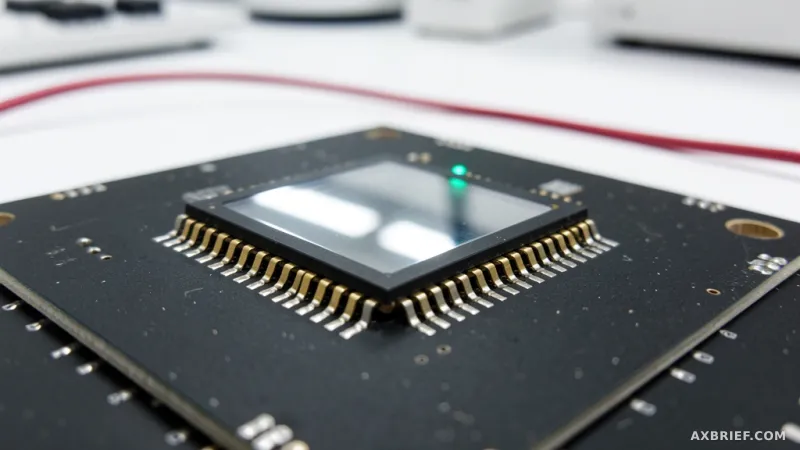
This dual-track approach is essential for the system's new multimodal capabilities. The architecture no longer treats text as the sole primary input. Instead, it processes various forms of information simultaneously, allowing the device to understand the relationship between a spoken command, a visual element on the screen, and the textual context of an email. To manage the varying capabilities of its hardware lineup, Apple is implementing a tiered model strategy. Certain high-end devices will receive specialized, high-performance versions of these models. These premium versions are designed to offer superior voice generation, higher dictation accuracy, and a more nuanced grasp of natural language. While Apple has not yet released a definitive list of which devices qualify for these high-performance models, the strategy clearly indicates a move toward hardware-software co-optimization where the silicon dictates the intelligence ceiling.
The System Orchestrator and the Privacy Paradox
While the rest of the industry is locked in a raw performance arms race, Apple is playing a different game centered on the boundaries of control. The centerpiece of this new design is the System Orchestrator. This component acts as a security-first control tower that manages how Apple Intelligence functions across the entire platform. Rather than simply routing a user's prompt to a model, the orchestrator analyzes the active application and the specific task context in real-time. It determines what information is necessary to fulfill the request and ensures that the response is tailored to the user's current state without overstepping security boundaries. This is the mechanism that enables system-wide intelligence, transforming the AI from a standalone app into a connective tissue that binds the OS together.
This approach creates a sharp contrast with the trajectory of Apple's competitors. Many AI labs are racing forward, prioritizing scale and speed, often treating user data as a raw resource to be mined for the next iteration of a model. Apple is positioning privacy not as a secondary feature, but as a primary architectural constraint. By embedding privacy into the logic of the System Orchestrator, Apple is betting that users value a secure perimeter more than a marginally faster response time. The tension here is between the hunger for data required by SOTA models and the strict limitations of a privacy-centric OS. Apple addresses this by utilizing Private Cloud Compute, a system where user data is used exclusively to perform the requested task and is never accessible to Apple or any third party. To move beyond mere corporate promises, Apple has opened this infrastructure to independent external experts who can verify the privacy guarantees, turning transparency into a technical specification.
This shift enables a new class of multimodal interactions that were previously cumbersome. Users no longer need to manually crop a photo or write a detailed text description to identify an object. The upgraded models can perform Visual Question Answering, analyzing an image to provide an answer or generating photorealistic imagery and performing advanced edits based on a simple conceptual prompt. By moving the intelligence into the orchestrator and the foundation models, Apple has expanded the user experience from text-based interaction to a visual and contextual dialogue.
The ultimate success of this architecture depends on whether the friction of privacy constraints can coexist with the raw power of Gemini's reasoning.