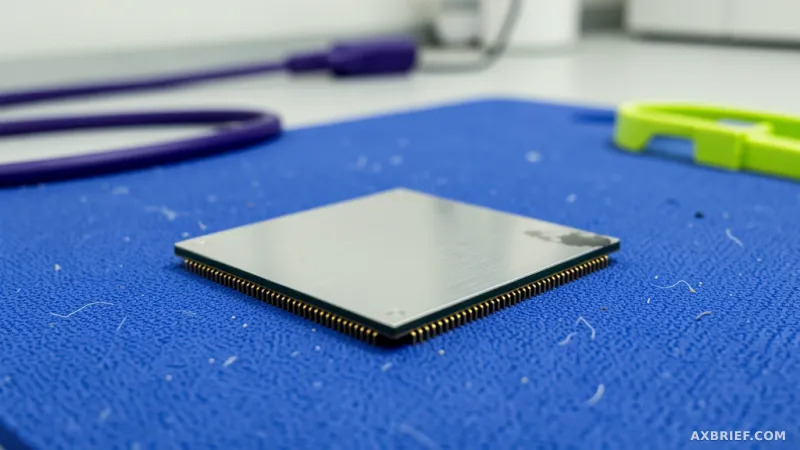
For the past several years, the ritual for any professional upgrading a Mac has remained the same. You open a comparison chart and meticulously weigh the trade-offs between the base, Pro, Max, and Ultra tiers. This hierarchy became the gold standard of the Apple Silicon era, providing a predictable ladder of performance that allowed developers, editors, and engineers to scale their hardware to their specific workloads. But the predictable cadence of the M-series roadmap is about to break. Apple is preparing a strategic pivot that disrupts the generational cycle users have come to expect, signaling that the race for on-device artificial intelligence has officially overridden the traditional product release calendar.
The M-Series Roadmap Shift and the M5 Ultra
Apple is breaking its established pattern of releasing a full suite of chip variants for every generation. While the company has maintained a consistent Pro and Max rollout from the M1 through the M5, the M6 generation will be an outlier. Internal strategies indicate that Apple will skip the high-end M6 Pro and M6 Max variants entirely. Instead, the M6 will exist only as a base chip, destined for the entry-level MacBook Pro models later this year. The high-performance Pro and Max tiers are being pushed forward to 2027, where they will debut as part of the M7 lineup. This decision is not a sign of stagnation but a calculated leap; Apple is aligning its most powerful hardware milestones with the projected maturity of next-generation on-device AI and graphics-intensive software.
While the M6 high-end chips are being bypassed, the M5 Ultra is still moving forward. Codenamed Sotra D or H17D, the M5 Ultra is designed to be the pinnacle of mainstream computing performance. The chip features approximately 36 CPU cores and 80 GPU cores and is slated for integration into the Mac Studio. To push the boundaries of local LLM execution and massive dataset processing, Apple has conducted tests to verify support for up to 768GB of unified memory. However, this powerhouse is facing headwinds. Supply chain volatility and the surging cost of raw components have created friction, leading to delays in its actual market release. For power users, this delay creates a precarious gap in the market, where the cost of building a high-spec workstation may rise even as the availability of the latest hardware shrinks.
The Open-Weight Revolution and the Component Shock
This hardware shift is a direct response to a fundamental change in how AI is consumed. For years, the industry has been dominated by closed-source API models, where users pay a monthly subscription to access the intelligence of a remote server. But the tide is turning toward local execution and open-weight models. Data from OpenRouter, a service that aggregates various AI APIs, reveals a staggering shift in market share. The combined token request share for the dominant trio of Google, OpenAI, and Anthropic, which stood at 72% a year ago, is projected to plummet to 33% by June 2026. Users are migrating toward open-weight models like DeepSeek and other transparent architectures that allow for local modification and deployment.
This migration is driven by a desire for lower latency, better privacy, and the elimination of recurring subscription costs. However, running these models locally requires massive memory bandwidth to prevent the system stutters and freezes that plague current high-resolution rendering and AI inference tasks. This is where the M6 base chip enters the fray. Apple is increasing the memory bandwidth of the M6 base model to approximately 200GB/s, a significant jump from the 153GB/s recorded by the M5. This 30% increase in bandwidth, paired with an increase in GPU cores from 10 to 12, is specifically designed to alleviate the bottlenecks that occur when moving large tensors through the system. By upgrading the memory architecture and the Neural Engine, Apple is ensuring that even its entry-level professional machines can handle the inference demands of the open-weight era.
Yet, this technological leap comes with a financial penalty. The global explosion of AI data centers has created an unprecedented surge in demand for high-bandwidth memory and storage components. This systemic demand has driven up the cost of parts across the entire semiconductor industry. Apple has responded to these rising costs by implementing broad price increases across its ecosystem, affecting the Mac, iPad, HomePod, and Vision Pro lines. The market's reaction was swift and negative; Apple's stock dropped 6.1% in a single day, closing at 275.15 dollars. This price hike serves as a warning to users: the cost of the AI transition is being passed directly to the consumer.
Despite the short-term stock volatility, the broader economic outlook for AI infrastructure remains bullish. Analysis from Exponential View suggests that global AI revenue, excluding China, will hit 25 billion dollars by the first quarter of 2026. This figure is critical because it exceeds the estimated 21 billion dollars in depreciation costs associated with data center and chip investments for two consecutive quarters. For the first time, the massive capital expenditures required to build the AI era are being offset by actual revenue, proving that the infrastructure investment is economically sustainable.
As Apple moves toward the M7, the trajectory of memory bandwidth is the most telling metric. The climb from the M5's 153GB/s to the M6's 200GB/s, and eventually to the M7's target of 240GB/s, represents more than just a spec bump. It is a declaration that on-device AI processing is now the primary driver of Apple's hardware architecture. The traditional tiers of Pro and Max are no longer the main event; the ability to move data fast enough to sustain a local LLM is the new benchmark of success.
Users now face a strategic choice: settle for the M6 base chip's improved bandwidth or wait until 2027 for the M7's high-end return. The decision is no longer about how many cores a chip has, but whether the hardware can sustain the memory requirements of the models they intend to run locally.