For years, the developer community viewed OpenAI’s Codex primarily as a sophisticated autocomplete engine—a tool designed to suggest snippets and debug syntax within an IDE. But as teams struggle to bridge the gap between fragmented SaaS platforms and manual data entry, the role of the AI assistant is undergoing a fundamental shift. We are moving away from the era of the 'coding helper' and into the era of the 'delegation platform,' where AI is no longer just writing code, but operating the software stack itself.
The Expansion of Enterprise Utility
OpenAI has signaled this strategic pivot by expanding its documented Codex use cases from 12 to 52. This is not merely a quantitative increase; it represents a qualitative shift in target audience. The platform is now positioned to serve departments ranging from finance and operations to sales and quality assurance. By moving beyond the code editor, OpenAI is positioning Codex as a central nervous system for enterprise tasks.
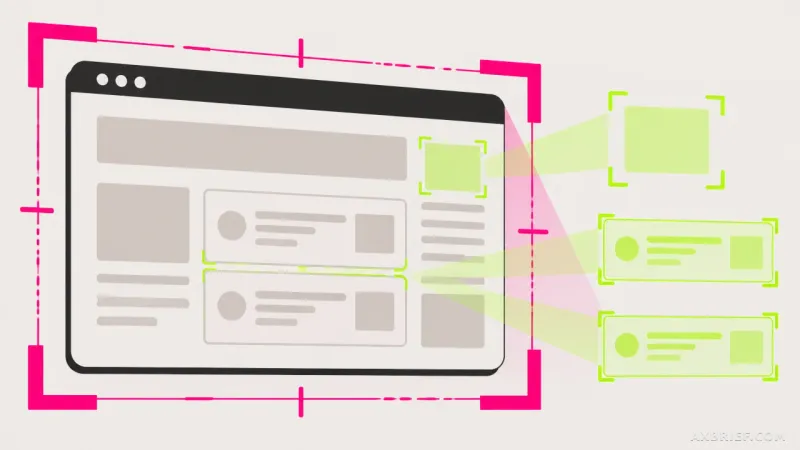
Central to this evolution is the integration of Computer Use, a capability that allows the model to perceive and interact with a Mac desktop environment. Rather than relying solely on proprietary APIs, which are often limited or non-existent for legacy internal tools, Codex can now observe a screen, identify UI elements, and execute clicks or keystrokes. This allows the model to bridge the gap between disparate applications like Slack, Gmail, Calendar, Notion, GitHub, and Linear. By connecting these tools into a single thread, the system maintains a continuous context of the user's workflow, effectively acting as a digital colleague that understands the state of multiple projects simultaneously.
From Tooling to Operational Autonomy
What differentiates this iteration of Codex from its predecessors is the transition from a reactive tool to an autonomous operator. In the past, a developer would invoke a model to solve a specific function. Today, the model is designed to manage complex, multi-step processes. For instance, in design and frontend development, the system can ingest screenshots and design briefs to generate responsive UI components, pulling from existing repository design systems. It then uses Playwright to launch a browser, verify the implementation across mobile and desktop breakpoints, and iterate on the code based on visual discrepancies.
This shift is most evident in how the system handles data and decision-making. When tasked with cleaning messy datasets—such as CSV files containing inconsistent date formats, currency strings, or duplicate rows—Codex does not just provide a script. It performs the cleaning, preserves the original data, and generates a refined copy. Furthermore, it can perform DCF (Discounted Cash Flow) modeling or budget analysis, providing visual insights through HTML-based browser visualizations rather than simple text outputs. The system is designed to handle the heavy lifting of routine operations, surfacing only the most critical decisions to the human user. By delegating the execution of these loops to the AI, organizations are effectively moving toward a structure where the AI holds the authority to manage the operational flow, leaving the human to act as the final arbiter of intent.
This evolution marks the end of the AI-as-a-utility phase and the beginning of the AI-as-an-operating-system era, where the boundary between the user and the software is mediated entirely by intent-based delegation.