Developers building for the Apple ecosystem have long faced a frustrating architectural divide. On one side lies the promise of on-device AI, offering low latency and high privacy but limited reasoning power. On the other side are massive cloud models like Claude, which provide sophisticated intelligence but require complex API integrations, separate authentication flows, and constant network overhead. Until now, bridging these two worlds meant writing two entirely different code paths for every single AI feature, creating a maintenance burden that slowed down the adoption of hybrid AI strategies.
The Unified Interface for Hybrid Intelligence
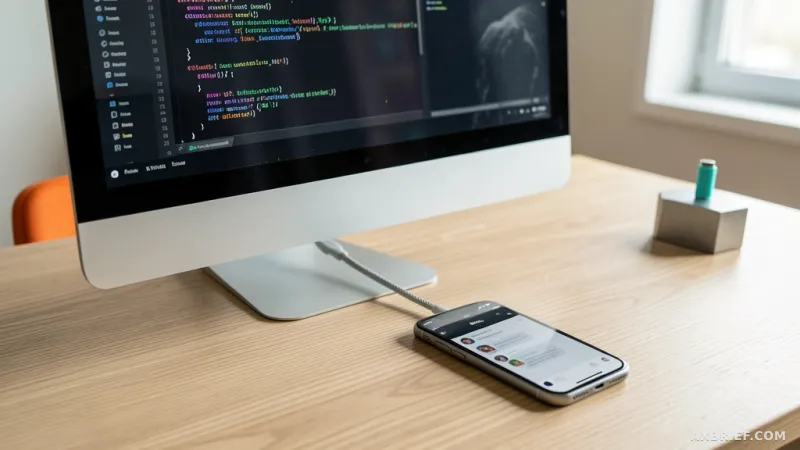
Anthropic has moved to dissolve this divide by releasing a new Swift package that connects Claude as a server-side model within the Apple Foundation Models framework. This integration is built upon the LanguageModel protocol, a standardized API introduced at WWDC 2026 designed to unify how applications interact with large language models regardless of where they are hosted. By adopting this protocol, the Claude Swift package allows developers to call cloud-based models using the same code paths they use for on-device models, effectively removing the need to manually implement separate data transmission routes or individual API key management systems for every request.
The package is released under the Apache 2.0 license, ensuring it remains open and accessible to the broader developer community. However, because the integration is currently in beta, it carries strict environment requirements. It is only compatible with iOS 27, iPadOS 27, macOS 27, visionOS 27, and watchOS 27, requiring Xcode 27 or later. Anthropic has cautioned that the API specifications may evolve before the final release, meaning developers should prepare for potential code adjustments as the framework matures.
From Implementation Hurdles to Architectural Design
The true shift here is not just the availability of a new library, but the abstraction of the model provider itself. In previous workflows, switching from a local model to a cloud model required a significant rewrite of the session logic. Now, because both the on-device models and Claude operate under the same LanguageModelSession API, the physical location of the model becomes an implementation detail rather than a structural constraint. A developer can prototype a feature using a fast, local model for basic tasks and then elevate the request to Claude for high-complexity reasoning without changing the core application logic.
This transition is achieved through a simple modification of the Swift Package dependency settings. By changing a single line in the configuration, a developer can swap between different model providers, such as Apple's native models, Claude, or Gemini. The application continues to use the same session logic, merely updating the model argument during the call. This creates a plug-and-play environment where the cost of switching models is virtually zero.
Privacy and billing are handled outside of Apple's infrastructure to maintain a clean separation of concerns. Data transmission flows directly from the application to the Claude API, meaning Apple does not intercept the prompts or the responses. Similarly, billing is handled directly through Anthropic accounts, bypassing any Apple-mediated payment layers. To further this open ecosystem, Apple plans to open-source the Foundation Models framework this summer, which will allow the LanguageModel protocol to serve as the industry standard for Swift-based AI development.
The engineering challenge has fundamentally shifted. The friction of API key management and custom communication pipelines has been replaced by a strategic question of resource allocation. The focus is no longer on how to connect to a model, but on how to design a hybrid architecture that assigns simple summarization and extraction to local silicon while reserving expensive cloud compute for complex cognitive tasks.