The ritual of the custom PC build has always begun with a spreadsheet. For years, enthusiasts tracked the steady decline of component costs, timing their upgrades to hit the sweet spot where performance peaked and prices bottomed out. But this week, that predictability has vanished. Builders opening their browsers to finalize parts lists are finding a market that no longer follows the traditional laws of consumer electronics. The budget that once comfortably covered a high-end memory kit is now barely scratching the surface of the entry-level tier, turning a routine upgrade into a financial crisis for the average gamer.
The New Baseline for Memory Costs
The volatility is most evident in the current pricing for DDR5, the latest double data rate memory standard. According to data from PCPartPicker, the lowest available price for a 32GB DDR5 kit has surged to $374.97. To put this in perspective, the same capacity could be acquired for under $100 just one year ago. This is not a marginal increase or a temporary fluctuation; it is a fundamental shift in the cost of entry for high-performance computing. While 32GB is widely considered the necessary baseline for gaming and productivity heading into 2026, the market has effectively erased any option for budget-conscious users to enter the DDR5 ecosystem affordably.
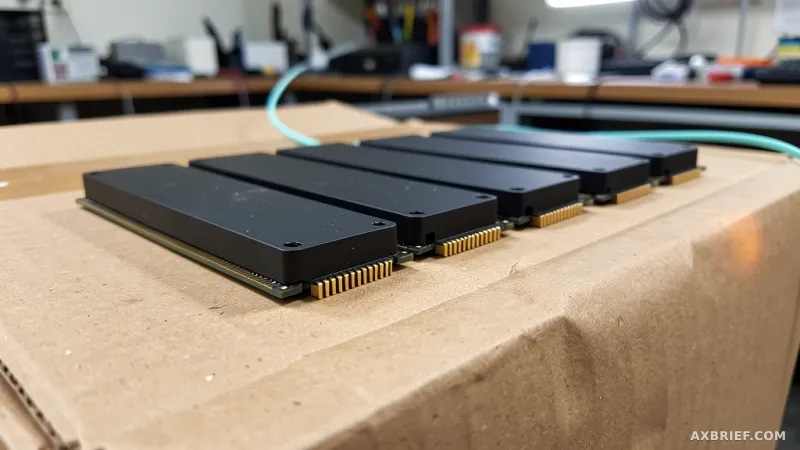
Specific product data reveals the depth of the squeeze. Currently, four Silicon Power 32GB (2x16GB) DDR5 6000MT/s CL36 kits represent the floor of the market, hitting that $374.97 mark only after the application of promotional codes. For those looking at higher capacities, the pressure intensifies, with 64GB models reaching $679.99. When users move toward premium brands like Corsair or Crucial, or opt for kits with RGB lighting, the price tags easily clear the $400 threshold. This creates a stark divide where brand loyalty or aesthetic preferences now carry a premium of dozens, if not hundreds, of dollars.
This instability extends beyond RAM. Storage costs are mirroring this aggressive upward trajectory. Price tracking indicates that certain SSDs, which once dipped as low as $38, are now trading around $200. The lack of clarity during major industry events like Computex 2026, where many hardware announcements omitted clear pricing, has only added to the anxiety of the consumer base. The result is a total collapse of cost predictability for the entire system build.
The Strategic Retreat to Legacy Hardware
The catalyst for this pricing chaos is the insatiable appetite of the AI sector. The manufacturing capacity required to produce the high-bandwidth memory (HBM) and specialized modules used in AI accelerators is cannibalizing the production lines for consumer-grade DDR5. When the same fabrication plants must choose between high-margin AI chips and consumer RAM, the consumer loses. This has forced a surprising strategic pivot from the industry's biggest players, AMD and Intel, who are now actively encouraging users to stick with older technology.
AMD has responded by reviving and expanding its support for older platforms to keep gaming PC costs manageable. This includes the return of the Ryzen 7 5800X3D and the announcement of the Ryzen 7 7700X3D, moves designed to give users a high-performance path that does not require a leap to the most expensive current-gen memory. Intel is following a similar trajectory, signaling that it will maintain product lines that utilize Raptor Lake and DDR4 memory. Intel's internal assessment of the situation is blunt: something has to give. By keeping DDR4 viable, chipmakers are essentially providing a safety valve for a market that can no longer afford the bleeding edge.
This shift reveals a grim reality for the upgrade cycle. Traditionally, users wait for a price drop before increasing their memory capacity. However, reports concerning SK hynix suggest that these manufacturing constraints are not a short-term glitch. The data indicates that production limitations could persist until 2030. This transforms the act of waiting into a high-stakes gamble. If the supply chain is structurally diverted toward AI for the next several years, the window for affordable DDR5 may not reopen for a long time.
The economic calculation for the builder has changed from a question of performance to a question of survival. The cost of migrating to a modern platform has become a luxury expense rather than a standard upgrade. As the price of the latest standards continues to climb, the lifespan of the DDR4 ecosystem is being artificially extended, not by a lack of innovation, but by the sheer cost of progress.
The choice now facing every PC builder is a binary one: pay a massive premium for the AI-depleted supply of DDR5 or retreat into the stability of legacy hardware.