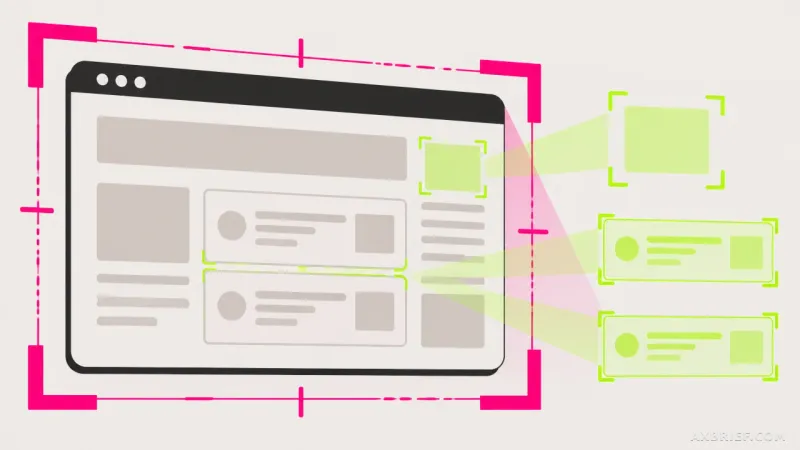
The current state of AI agent development is defined by a frustrating gap between the prototype and the product. Most developers spend their first week in a low-code playground, building a promising proof-of-concept that feels like magic. Then comes the wall. To move that agent into a production environment, they must manually rebuild the logic in a professional IDE, provision fragmented infrastructure, and struggle with session memory and governance from scratch. This friction creates a ceiling where many innovative agentic workflows die in the demo phase because the cost of migration is too high.
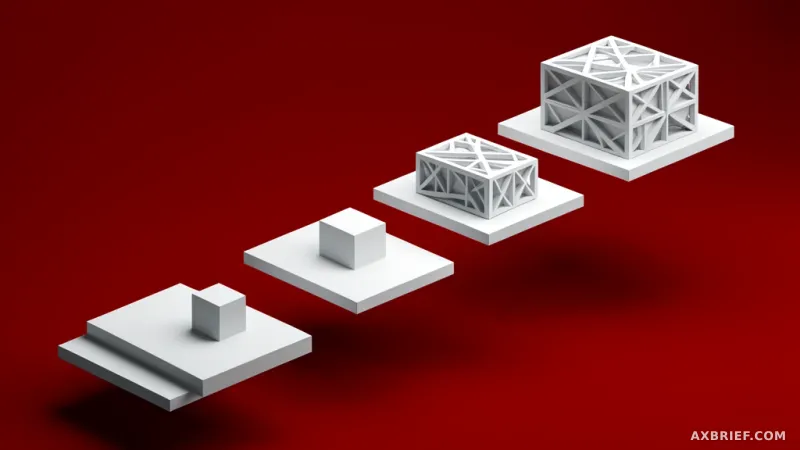
The Four-Tier Ladder of Agent Development
Google Cloud is attempting to dismantle this wall by introducing a structured development ladder that spans from no-code accessibility to professional engineering. At the center of this strategy are Antigravity 2.0 and the Managed Agents API, unveiled during Google I/O '26. This is not merely a collection of new features added to Vertex AI, but a structural overhaul that transforms the platform into the Gemini Enterprise Agent Platform. The core objective is to unify business users and professional engineers on a single plane, ensuring that a prototype created by a product manager can be evolved by a software engineer without starting over.
This ecosystem is organized into four distinct paths, all bound together by the A2A (Agent-to-Agent) protocol. This protocol acts as the connective tissue, ensuring that agents built at different levels of complexity can communicate and, more importantly, that assets can be migrated upward. The first rung is Agent Studio, a low-code visual workspace. Here, users select models and visually map prompts to tools, making it the ideal environment for rapid validation and business-led prototyping.
As the requirements grow, developers move to the second tier: the Managed Agents API. This layer removes the burden of infrastructure management. Developers define the behavioral logic, and Google Cloud handles the execution environment. A critical security feature here is the use of ephemeral sandboxes. Each agent runs in an isolated environment, physically preventing interference between multiple agents operating simultaneously and ensuring that a failure or security breach in one agent does not compromise the entire system.
The third tier is Antigravity, an orchestration solution optimized specifically for Gemini models. Antigravity focuses on the coordination between different agents, treating developed skills as reusable modules that can be deployed across various environments. Finally, for those requiring absolute control, Google provides ADK 2.0 (Agent Development Kit). This is the professional peak of the ladder, utilizing a graph-based engine that allows engineers to architect complex multi-agent structures from the ground up. By providing this tiered approach, Google allows teams to start with the lowest possible barrier to entry while maintaining a clear, paved path toward enterprise-grade scalability.
From Linear Chains to Graph-Based Control
While the tiered structure solves the migration problem, the real technical shift lies in how ADK 2.0 handles reasoning. Most early agent frameworks relied on linear chains—a sequence of steps where A leads to B. ADK 2.0 abandons this in favor of a graph-based engine, allowing for dynamic reasoning and deterministic control to coexist. This means an agent can follow a strict, predefined workflow for compliance-heavy tasks but switch to an autonomous, reasoning-based path when encountering an ambiguous problem.
This control is further refined through three distinct operating modes for sub-agents. The chat mode is designed for full delegation, where the agent handles the interaction autonomously. The task mode is used when the agent encounters ambiguity and must pause to request clarification from the user. The single-turn mode treats the agent as a specialized tool, called for a specific function and then dismissed. Unlike previous designs that followed a fixed input-output sequence, ADK 2.0 evaluates the state of the execution in real-time and dynamically switches between these modes to optimize the reasoning path.
On the implementation side, Google has introduced a functional node calling system using decorators. This allows developers to treat each node in the graph as an independent function, making complex branching logic manageable at the code level. While this graph model introduces a steeper learning curve for simple tasks, it becomes indispensable once a workflow exceeds two or three branches. To extend this power to the edge, the ADK Kotlin beta allows Android on-device agents to collaborate seamlessly with Python-based agents running in the backend. This creates a hybrid architecture where local inference on a mobile device is augmented by the high-performance compute of the cloud.
This operational flexibility extends to the interface. The Antigravity desktop app serves as a central command center, allowing users to trigger multiple sub-agents or execute parallel tasks from a single prompt. To ensure developers don't lose momentum when switching to a terminal, the Antigravity CLI shares the same authentication, context, and environment settings as the desktop app. This eliminates the redundant configuration typically required when moving from a GUI to a command-line environment.
Perhaps the most surprising strategic move is Google's embrace of external tools. Rather than forcing a closed ecosystem, Google has opened paths for third-party coding agents like Claude Code from Anthropic and the Cursor AI editor to run on Google Cloud infrastructure. This is a calculated move to avoid vendor lock-in at the tool level while absorbing the backend infrastructure. By ensuring compatibility through the Agent CLI and ADK, Google is positioning its cloud as the default execution layer for whatever tool the developer prefers.
For the enterprise, this is wrapped in a governance layer centered on Cloud OAuth. All inference occurs within the user's cloud boundary, and regional model endpoints are used to maintain data sovereignty. The Skill Registry, currently in public preview, allows organizations to catalog domain-specific logic, preventing different teams from wasting resources by rebuilding the same tools. This is supported by Agent Identity and Agent Gateway, which provide centralized control over agent permissions and traffic management.
Despite these advancements, the ecosystem is still maturing. The A2A protocol and governance integration for the Managed Agents API are listed as coming soon, meaning full automation in production environments is not yet a reality. Similarly, ADK Kotlin remains in beta as Google validates the stability of the on-device and backend handshake. However, the fundamental value proposition remains: the ability to maintain the same runtime from a low-code prototype to a professional graph-based agent significantly lowers the risk of enterprise adoption.
Google has effectively shifted the conversation from which model is best to which development pipeline is most efficient.