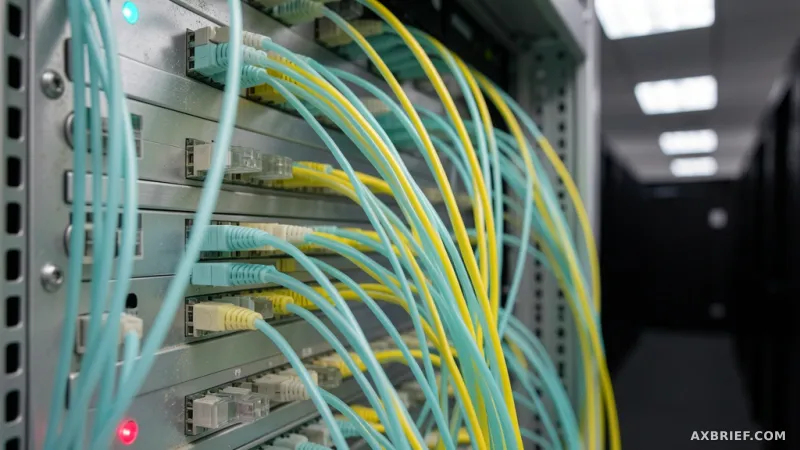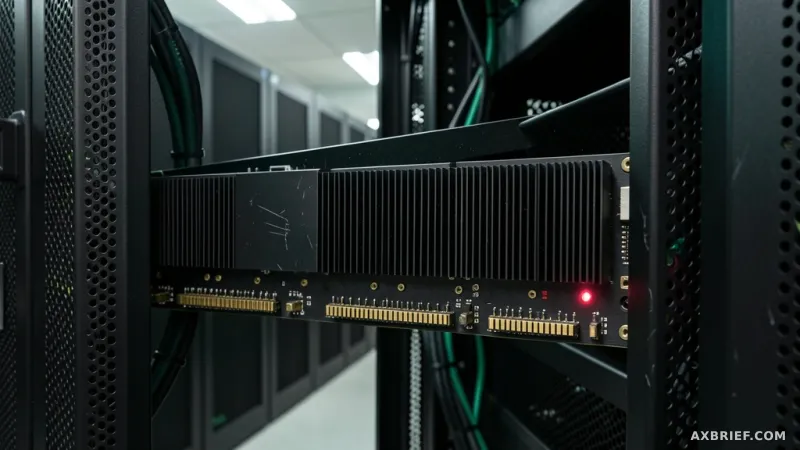
The race for artificial intelligence has evolved from a battle of algorithms into a brutal war of attrition over physical silicon. For years, the narrative focused on who had the most elegant transformer architecture or the cleanest dataset. But this week, the conversation shifted toward the sheer, raw volume of compute. Even a titan like Google, with its own custom TPU ecosystem and sprawling data centers, has found itself in a position of desperation, forced to rent massive amounts of compute from an unlikely source to keep its enterprise ambitions from stalling.
The Billion-Dollar Bridge to Gemini Enterprise
Google has entered into a staggering lease agreement with SpaceX, paying $920 million per month to secure access to approximately 110,000 NVIDIA GPUs, along with accompanying CPUs and memory. This is not a casual partnership but a critical infrastructure lifeline. The contract spans 32 months, running from October of this year through June 2029. The terms are strict: if SpaceX fails to provide the promised GPU access by September 30, 2026, Google retains the right to terminate the contract immediately or slash the fees.
This move is a direct response to the surging demand for Gemini Enterprise, the corporate subscription tier Google launched in October. To meet this demand, Google requires bridge capacity—temporary, high-scale compute to fill the gap until its own internal infrastructure projects are completed. The scale of this expenditure reflects a broader trend among the Big Four. Google, Amazon, Microsoft, and Meta are collectively targeting an AI infrastructure spend of approximately $1 trillion this year.
SpaceX is positioning itself as a primary beneficiary of this hunger. In the first quarter alone, SpaceX recorded capital expenditures of $10.1 billion, with $7.7 billion dedicated specifically to AI. While its AI division generated $818 million in revenue during the same period, it operated at a significant loss of $2.5 billion. Despite these losses, SpaceX is aggressively rewriting the rules of capital raising as it prepares for an IPO. The company is seeking exemptions from standard profitability requirements for index providers and aiming to shorten the index inclusion waiting period from 90 days to just five.
Meanwhile, other giants are diversifying their model strategies. Microsoft recently unveiled seven AI models tailored for specific modalities, including image generation, transcription, reasoning, voice, and coding. These models are managed by Copilot, which acts as an orchestration engine. However, critics argue that Copilot remains tethered to older model architectures, leaving it trailing behind the agility of ChatGPT and Claude.
The Pivot to Agentic Hardware and Vertical Integration
While the headlines focus on the quantity of GPUs, a deeper architectural shift is occurring. The industry is moving away from simple chatbots toward Agentic AI—systems capable of planning tasks, calling tools, executing code, and querying databases autonomously. This shift has exposed a critical bottleneck: GPUs are excellent for training and inference, but the iterative, logic-heavy loops of an AI agent are often better handled by a high-performance CPU.
To address this, the Vera CPU has emerged as a specialized processor designed specifically for agentic workloads. Unlike general-purpose chips, Vera is optimized for the constant load of file verification, output testing, and failure-step retries. When paired with the Rubin GPU architecture, the resulting Vera Rubin chips enter mass production, targeting hyper-scale agent execution. The first units of these chips have already been delivered to OpenAI and Anthropic.
This hardware evolution extends to the edge. NVIDIA has introduced the RTX Spark, its first independent prosumer CPU, featuring 20 CPU cores and over 6,000 integrated GPU cores with up to 128GB of unified memory. Scheduled for release this autumn via partners like Asus, Dell, HP, Lenovo, and Microsoft, the RTX Spark is NVIDIA's attempt to create a Windows-based M1 moment, enabling heavy local model execution without relying on the cloud.
Microsoft is leaning into this local execution trend with the Surface AI engineered laptop. More tellingly, Microsoft is diversifying its model dependencies. By integrating various models, including Anthropic's Claude, Microsoft is intentionally reducing its reliance on OpenAI. This suggests a transition toward a multimodal operating system where the OS chooses the best model for the task, rather than being locked into a single partnership.
This drive toward vertical integration is most evident in SpaceX's recent $60 billion acquisition of Cursor, the AI code editor. By combining Cursor with the Colossus 2 supercomputer from xAI, SpaceX intends to train next-generation coding models from scratch. SpaceX is no longer just a launch provider or a satellite operator; it is transforming into a neocloud competitor, challenging the likes of CoreWeave and Nebius by monetizing its massive compute capacity.
The New Physics of AI Scaling
As the scale of investment reaches unprecedented levels, the market is reacting with extreme volatility. SpaceX, OpenAI, and Anthropic are all preparing S1 filings for IPOs, with a combined projected fundraising goal of $180 billion. To put this in perspective, this exceeds the $164 billion raised during the entire three-year span of the dot-com bubble.
Technical efficiency is now being measured in precise, incremental gains. At Computex, NVIDIA revealed that its latest chips have reduced memory usage per chip by 10% to 20%. Simultaneously, the company unveiled Cosmos 3, a physical AI model trained on a multimodal dataset of 20 trillion tokens. By analyzing video, images, and robot action sequences, Cosmos 3 allows robots to learn causal relationships in the physical world through simulation, bypassing the slow and risky process of real-world hardware testing.
In the software layer, the competition is becoming a race to the bottom on price and a race to the top on reasoning. Alibaba recently released Qwen 3.7 Max, which is approximately six times cheaper than Claude Opus. In a display of recursive improvement, the model used unfamiliar AI chips to build a computing kernel 10 times more performant than the manufacturer's official version in just 35 hours.
Anthropic has countered with Claude Opus 4.8, which outperforms both Opus 4.7 and GPT-5.5 on key benchmarks. The new version is significantly more reliable, with a four-fold reduction in the probability of missing code defects. It introduces a fast mode that is 2.5 times faster and 3 times cheaper, and a new `/effort` command that allows users to toggle reasoning levels between Low, High, XI, and Max. This model supports dynamic workflows where hundreds of parallel sub-agents execute and verify tasks autonomously.
For developers, these gains are manifesting in tools like Cursor's Composer 2.5. It delivers performance comparable to Claude Opus 4.7 but at a fraction of the cost: $0.5 per million input tokens and $2.5 per million output tokens. This efficiency is driven by training on 25 times more synthetic tasks than previous versions.
The Capital Moat and the Power Reversal
Despite the technical breakthroughs, the financial strain of this arms race is becoming apparent. The skyrocketing cost of data centers and GPUs has depleted the available cash flow of even the largest firms, making public fundraising a necessity. Micron recently saw its stock drop 6%—a $60 billion loss in value—following reports that long-term margins could plummet by 66%.
Market sensitivity has reached a fever pitch, where a single verbal slip can erase billions in value. When the CEO of Broadcom misread a 2026 revenue projection of $26 billion as a 2025 figure of $15 billion, automated monitoring bots triggered an immediate sell-off. The resulting 15% stock plunge evaporated roughly $150 billion in corporate value in a matter of minutes.
This environment is pushing companies toward new monetization strategies, such as wearables for work. Meta is currently testing an AI pendant, following its acquisition of the AI pen startup Limitless, to drive consumer agent subscriptions. Even in specialized fields like DNA sequencing, frontier models are now being used to detect intentional evasion in genetic screening, proving that reasoning capabilities are becoming a general-purpose utility.
Perhaps the most telling signal of the current era is the total reversal of the relationship between Google and SpaceX. Five years ago, Google provided computing resources to SpaceX to support the Starlink satellite network. Today, the roles are flipped. Google is now the customer, paying nearly a billion dollars a month to rent the capacity it cannot build fast enough.
In the current AI landscape, the moat is no longer the elegance of the code or the size of the training set. The moat is the absolute volume of compute secured through raw capital. The ability to rent 110,000 GPUs on a whim is the new definition of competitive advantage.