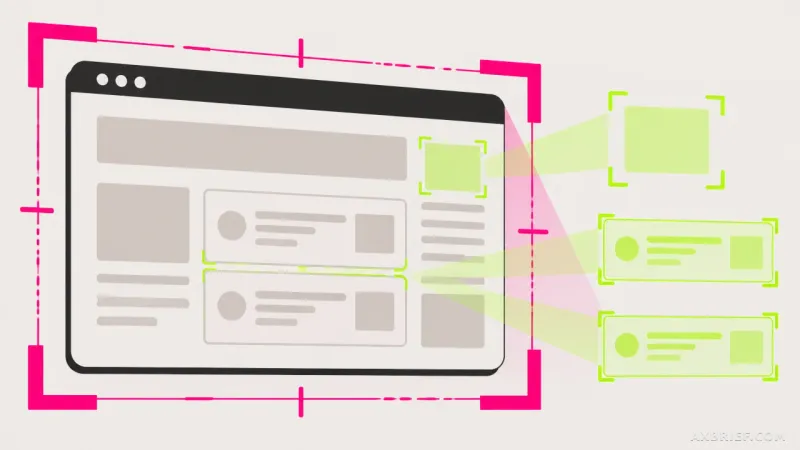
The modern developer is currently trapped in a paradox of productivity. While large language models can generate a complex function in seconds, the time spent reviewing, debugging, and integrating that code into a production environment has not decreased proportionally. This verification gap has become the primary bottleneck in the software development lifecycle. The industry is shifting away from the prompt-and-response loop, moving toward a reality where the AI does not just write the code but manages the entire process of planning, executing, and validating the software. This week, the conversation has moved from how to write better prompts to how to build better agentic workflows.
The Infrastructure of Scale: Gemini 3.5 Flash and Gemma 4
Google is backing this shift with a massive expansion of its AI ecosystem, evidenced by a surge in user adoption and model diversification. The Gemini app has seen its monthly active users (MAU) skyrocket from 400 million last year to over 900 million today. This growth is mirrored in the broader integration of AI into search and utility, with AI Overviews reaching 2.5 billion users per month and AI Mode crossing the 1 billion user mark. These figures indicate that AI has transitioned from an experimental tool for power users to a fundamental interface for global information retrieval.
To support this scale, Google is prioritizing execution efficiency over raw parameter count. Gemini 3.5 Flash serves as the backbone for this strategy, designed as an API model that balances high-speed execution with cost-efficiency to lower infrastructure overhead in high-traffic production environments. The ecosystem has further expanded with Gemini Omni Flash, the first model in the Omni series to support simultaneous multimodal input and video output. This capability allows developers to move beyond text and images, integrating real-time video processing and generation directly into their applications.
Parallel to its closed-API strategy, Google is aggressively pursuing the open-weights market to capture developers who require local deployment or strict data sovereignty. Gemma 4, released under the Apache 2 license, achieved 100 million downloads in its first month alone, with total cumulative downloads now exceeding 500 million. This adoption suggests a strong demand for hybrid AI architectures where high-reasoning tasks are handled by the Gemini cloud lineup while deployment flexibility and fine-tuning are managed via Gemma 4 on local infrastructure.
From Prompting to Mission Control: Antigravity 2.0 and MCP
The most significant architectural shift is the replacement of the traditional chatbot interface with Antigravity 2.0. Rather than a chat window where a developer asks for a snippet of code, Antigravity 2.0 functions as a standalone desktop application that acts as a mission control center. In this environment, the developer defines a task list and reviews implementation plans rather than writing individual prompts. This represents a fundamental transition from using AI as a sophisticated autocomplete tool to using it as an orchestrator of the entire development process.
At the core of this system is an Agent-to-Agent (A2A) collaboration framework. Instead of relying on a single monolithic model to handle every step, Antigravity 2.0 deploys specialized sub-agents that pass tasks to one another in a chain. In a recent demonstration, Google showed 93 sub-agents processing over 15,000 model requests and 2.6 billion tokens to build an operating system kernel from a completely empty project. In a practical scenario, one agent might investigate a bug and identify the problematic files, a second agent modifies the code to fix the error, and a third agent handles the GitHub commit and deployment preparation. The developer's role shifts from writing the code to observing the flow of work between agents and approving the final output.
To ensure these agents have accurate, real-time access to data, Google introduced the Model Context Protocol (MCP). By establishing over 50 managed MCP servers, Google provides a standardized pathway for agents to access Google Cloud tools and data directly. A critical component of this is the Developer Knowledge MCP, which updates documentation snapshots every 8 to 12 hours. This solves the persistent problem of knowledge cutoffs and outdated documentation, ensuring that agents do not generate deprecated code. This structural solution moves the AI's intelligence away from static internal parameters and toward a dynamic injection of external, real-time knowledge.
This integration extends to the browser via the Chrome Prompt API, available starting with Chrome version 148. By providing a model invocation interface directly within the browser, agents can analyze the runtime state of a web environment and respond instantaneously. When combined with the MCP data pipeline and A2A collaboration, the development environment is no longer a set of disconnected tools but a unified, agent-centric automation system.
Redefining the Developer Role in Android 17 and Firebase
This agentic shift is manifesting in the OS and backend layers through Android 17 and Firebase SQL Connect. In Android 17, the process of performance tuning is being automated. Previously, developers had to manually use profilers to track excessive memory usage, cold starts, or high CPU occupancy. Now, the OS designates these performance bottlenecks as automatic analysis targets, allowing agents to detect and report issues before the developer even opens a profiling tool. This changes the developer's daily workflow from that of a forensic investigator searching through logs to a validator who reviews agent-led analysis and approves the resulting fixes.
On the backend, Firebase SQL Connect is simplifying how applications interact with cloud infrastructure. By utilizing custom resolvers, developers can flexibly connect to Google Cloud services like Cloud Functions and BigQuery using standardized SQL. This reduces the friction of complex API configurations and allows AI agents to more accurately understand the relationship between database schemas and services. By eliminating the repetitive labor of connection settings, developers can focus on high-level architecture and the integrity of business logic.
Efficiency gains are also appearing in the tooling layer. Android Studio Otter optimizes token consumption by selectively switching between local and remote models based on the complexity of the task. Simultaneously, the new Android CLI supports LLM workflows directly, reducing token usage by over 70% during the project creation phase. To combat the issue of deprecated APIs, Chrome Modern Web Guidance provides over 100 common use-case guides, ensuring agents suggest modern web standards rather than obsolete patterns. As these systems mature, the manual process of cross-referencing official documentation is being absorbed into the code review stage, drastically increasing the velocity of deployment.
The era of the AI coding assistant is ending, replaced by an era of AI software engineering agents that manage the lifecycle from inception to deployment.