
Developers today are increasingly familiar with the trial-and-error rhythm of the AI coding assistant. A prompt is sent, a block of code is generated, and a test suite returns a failure. The agent reads the error, adjusts the logic, and tries again. This cycle continues until the green checkmark appears. This specific pattern of repetitive execution and verification has become the baseline for basic agentic behavior, yet as the complexity of the tasks grows, this linear loop is hitting a ceiling. The industry is now shifting toward a more sophisticated architectural pattern that mirrors human organizational structures rather than simple scripts.
From Loop Engineering to Graph Orchestration
The fundamental unit of this evolution is loop engineering. In its simplest form, loop engineering involves an agent performing a task and an external verifier checking the result. If the verifier detects a failure, the system triggers a retry. This structure works exceptionally well when there is a binary, objective termination condition, such as a passing unit test or a successful API response. Because these loops can often be implemented via clever prompting without a heavy framework, they have become the entry point for most developers building autonomous workflows.
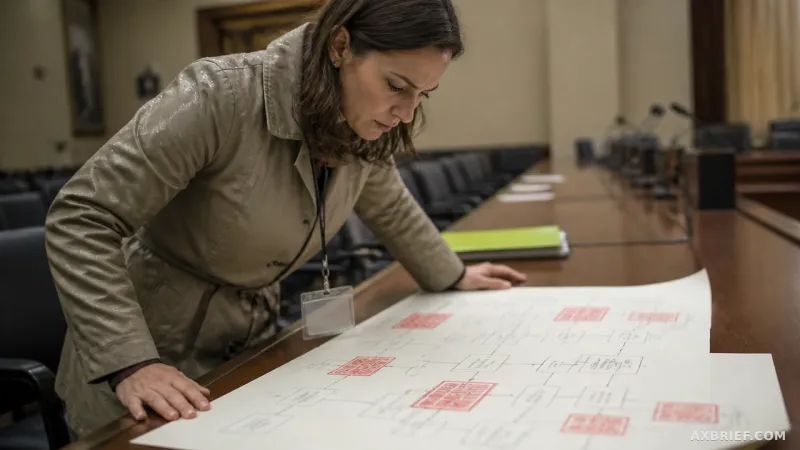
However, real-world enterprise tasks rarely fit into a single loop. When a project requires a comprehensive code review, for instance, a single agent cannot simultaneously write the code, audit it for security vulnerabilities, check for architectural consistency, and fix the resulting bugs without losing focus or introducing hallucinations. This is where graph engineering enters the frame. Instead of a single loop, graph engineering connects multiple loops and specialized task nodes into a broader orchestration layer.
In a graph-based system, the workflow resembles a professional pipeline. A generation agent creates the initial change, which is then handed off to multiple audit agents operating in parallel. These auditors examine the code from different perspectives—one focusing on performance, another on security. A final verifier aggregates these findings and routes the work back to a fixer agent for remediation. This transition represents a shift from a single-worker mindset to a multi-agent organizational design, where the graph serves as the blueprint for how work is delegated, reviewed, and handed off between specialized entities.
The Challenge of Probabilistic Nodes
Graph structures are not new to software engineering. For years, developers have used Directed Acyclic Graphs (DAGs) and state machines through tools like Apache Airflow to manage data pipelines. The critical difference in the current AI shift is not the shape of the graph, but the nature of the nodes. Traditional workflow engines are deterministic. If a node is told to move a file from point A to point B, it does so exactly the same way every time. The path through the graph is predictable and governed by rigid logic.
AI agents, however, are probabilistic. Because each node is powered by a Large Language Model, the same input can result in different decisions across different runs. An agent might choose a different tool, interpret a prompt slightly differently, or take an unexpected path through the graph. This introduces a new layer of volatility into the system. We are no longer connecting fixed rules; we are orchestrating probabilistic executors.
This shift forces architects to move away from the vague flexibility of a chat context and toward explicit system-level control. Designers must now define precise rules for parallel execution, determine exactly which state variables are passed between nodes, and establish who holds the veto power over a specific result. Most importantly, the risk of infinite loops becomes a financial and operational liability. Orchestration now requires hard constraints on iteration counts and strict cost limits to prevent a probabilistic agent from spiraling into an endless cycle of self-correction.
Reliability in these systems cannot be achieved simply by adding more agents. There is a significant risk of creating an echo chamber where multiple agents, sharing the same underlying model and context, agree on a hallucinated conclusion. To break this cycle, designers must implement structural separation. This means using different models for the reviewer and the creator, providing the reviewer with a completely fresh context to avoid bias, or inserting a human-in-the-loop to exercise veto power over critical changes.
The most robust verification strategy relies on evidence from outside the LLM ecosystem. True reliability comes from grounding the agent's output in independent signals, such as actual test execution results, confirmed transaction logs, or verified user behavior. Relying on one agent to check another agent is a structural weakness; relying on a compiler or a database record is a systemic strength.
For teams looking to implement this, the most effective path is not to build a complex graph from day one. The optimal trajectory starts with a single, tight loop consisting of a worker, a verifier, and a clear stop condition. Once that loop is stable, developers should analyze the failure patterns to identify where the system breaks. Only then should they introduce independent reviewers, parallel branches, or state-persistence logic to handle the specific complexities of their workload.



