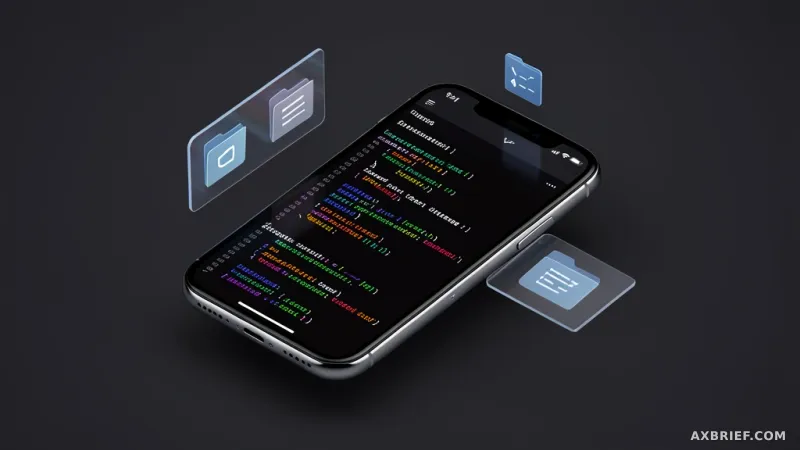
For developers who rely on command-line interface (CLI) coding agents, the transition from a desktop terminal to a mobile device has long been a point of friction. While tools like the original Pi—popularized by Nicolas—offer powerful autonomous coding capabilities, they remain tethered to local terminal environments. This week, the release of the open-source project pi-web changes that dynamic, effectively porting the entire CLI coding agent experience into a mobile-friendly web browser interface.
Bridging the Gap Between CLI and Web
The core value of pi-web lies in its ability to replicate the full workspace and session management of a terminal within a browser. Unlike previous mobile solutions that offered limited interaction, pi-web provides a comprehensive suite of file management tools, including CRUD (create, read, update, delete) operations. Users can browse files, upload external assets, and utilize an integrated text editor to manually refine code generated by the agent. By maintaining a shell command input field directly beneath the chat interface, the tool ensures that power users do not lose the granular control they expect from a CLI, even while working on a smartphone screen.
Transparency and Real-Time Control
The most significant shift in pi-web is the level of transparency it provides regarding the agent's decision-making process. In the browser interface, developers can monitor the agent’s "thinking" process and observe real-time tool calls. This visibility is critical for debugging; rather than waiting for a final output that might contain errors, developers can track the agent’s logic as it unfolds. This real-time feedback loop allows for immediate intervention, turning the agent from a "black box" into a transparent collaborator. The ability to execute shell commands directly within the browser session further ensures that the transition from terminal to web does not sacrifice the utility of the underlying environment.
Future Roadmap for On-the-Go Development
The project’s roadmap signals a move toward a more integrated mobile workflow. Developers are currently testing notification systems that link with Discord and Telegram, allowing users to receive alerts when complex builds or long-running shell tasks are completed. This feature is designed to decouple the developer from the browser, enabling true "on-the-go" productivity. Furthermore, the team is exploring voice-based interfaces to mitigate the physical limitations of mobile typing. By incorporating voice commands and text-to-speech feedback, the project aims to make emergency debugging and code adjustments possible in environments where traditional input methods are impractical.
As an open-source initiative, pi-web continues to evolve based on community feedback, rapidly integrating user-requested features into its core functionality. This iterative approach is transforming mobile coding from a niche experiment into a viable, high-productivity development workflow.