The modern DevOps workflow is often a battle between the desire for automation and the rigid constraints of security compliance. For years, the ritual has remained the same: to gain deeper visibility or implement advanced tooling, a developer must SSH into a machine, install a specific agent, modify a security group to open a new port, or deploy a heavy daemon like vscode-server. This process is not just tedious; it is a security risk. In environments characterized by immutable infrastructure or strict auto-scaling policies, installing third-party binaries on a production instance is often a forbidden act. The industry has been waiting for a way to bring the reasoning capabilities of Large Language Models to server administration without compromising the integrity of the host machine.
The Zero-Install Architecture of LiteDeck
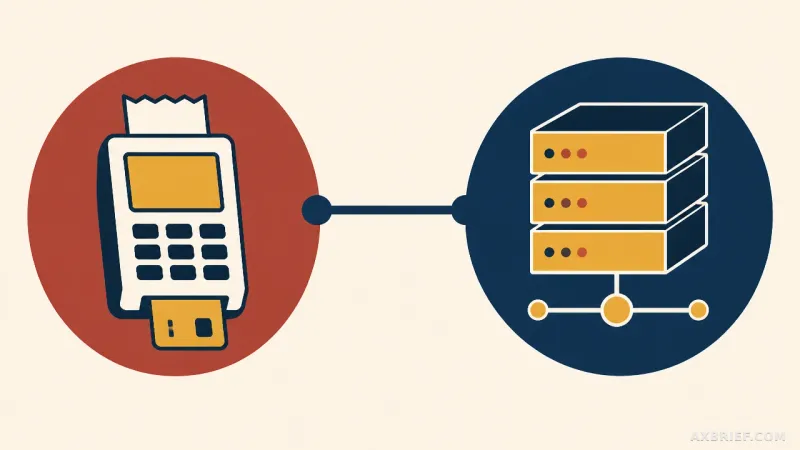
LiteDeck enters this space by fundamentally decoupling the AI's execution environment from the server it manages. Rather than requiring a server-side agent, LiteDeck operates as a local adapter that resides on the developer's workstation. It leverages the existing SSH port—the one already open for administrative access—to perform server development and monitoring. The AI tools do not run on the remote server; they run on the local PC, and LiteDeck facilitates the communication by translating AI intents into SSH commands and parsing the resulting logs to update the server's state.
This architecture eliminates the need to install packages, daemons, or specialized environments like Claude or Codex on the target machine. Because it utilizes the existing SSH tunnel, there is no requirement to modify cloud security groups or firewall rules to open additional ports. This makes LiteDeck compatible with virtually any environment that supports SSH, including AWS EC2 instances, various Virtual Private Servers (VPS), Proxmox virtual machines, corporate on-premise servers, and home labs. The client application has been verified to run across macOS, Windows, and Ubuntu 24.04.4, ensuring broad accessibility for developers regardless of their local OS.
From a technical standpoint, LiteDeck is built for extreme efficiency. The download size ranges between 4.8 and 9.8MB, a footprint achieved by eschewing the heavy Chromium-based Electron framework. Instead, the developers utilized a combination of the Go language, the Wails desktop framework, and React. By leveraging native OS webviews—specifically WebView2 on Windows, WebKitGTK on Linux, and WKWebView on macOS—the application avoids bundling a Java Virtual Machine (JVM) or Node.js runtime. This design ensures that the tool consumes minimal system memory and starts instantly, providing a static binary that utilizes the resources already present in the operating system. The project is released under the Apache-2.0 license, promoting open adoption and transparency.
Shifting the Trust Boundary to the Local Machine
The critical tension in AI-driven infrastructure is trust. Giving an AI agent the ability to execute commands on a server is a recipe for disaster if the model hallucinates a `rm -rf /` command. LiteDeck resolves this by shifting the trust boundary and implementing a strict human-in-the-loop verification system. To prevent external attacks, the Model Context Protocol (MCP) endpoint—the standard used to connect AI models to external tools—is bound exclusively to the 127.0.0.1 local address. This ensures that the bridge between the AI and the server is never exposed to the public internet.
Unlike autonomous agents that operate in a black box, LiteDeck does not permit the AI to execute arbitrary commands or delete files without oversight. When the AI proposes a change to a configuration file, LiteDeck generates a diff screen. This interface presents the existing server content side-by-side with the AI's proposed modification, forcing the human operator to review and approve the change before it is committed to the disk. This mechanism ensures that the human remains the final authority on the server's state, filling the information gap that AI models inherently possess regarding specific production contexts. Furthermore, every action is recorded in a Command Log, which explicitly marks the lines modified by the AI, allowing for precise auditing and the ability to revert changes if an error is detected.
This local-first approach extends to the AI tools themselves. Because tools like Claude Code or Codex CLI run on the user's local machine, they can manage servers that lack the necessary runtimes for Python or Node.js. The AI does not need the server to be a compatible environment; it only needs the server to be reachable via SSH. This allows LiteDeck to handle a wide array of administrative tasks, from monitoring CPU, memory, and disk load to managing systemd units, checking open ports, and verifying sshd configurations. For containerized environments, it manages Docker and Podman at the Compose project level. Even Windows servers are supported through a dedicated PowerShell adapter, ensuring that the same AI-driven workflow applies regardless of the remote shell.
By removing the requirement for server-side installation, LiteDeck transforms the server from a place where tools must be managed into a target that is simply observed and configured. It solves the paradox of wanting AI intelligence on an instance where you have no permission to install the software required to enable that intelligence.