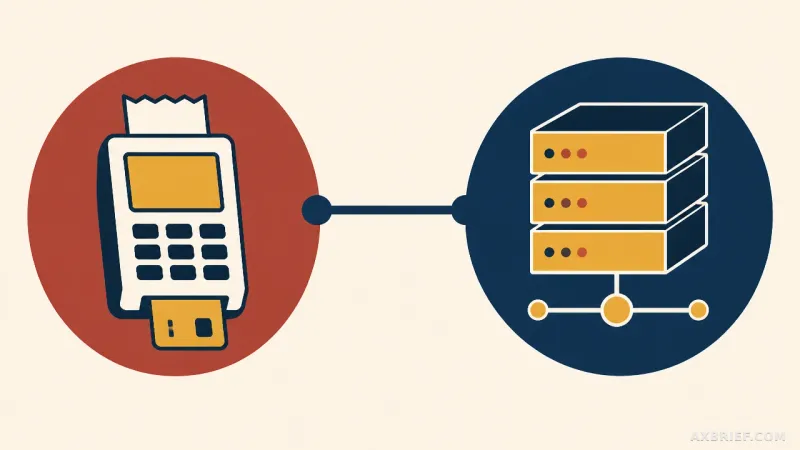
Developers and privacy advocates have spent the last year trapped in a frustrating trade-off between the raw power of frontier AI and the security of local execution. While cloud APIs offer state-of-the-art reasoning, they come with recurring costs, strict rate limits, and the constant shadow of telemetry. The community has long sought a way to bring that same level of intelligence onto their own silicon, removing the middleman and the monthly subscription fee.
The Local Frontier Engine
llama.cpp has emerged as the primary vehicle for this transition, providing a C++ based inference library that allows frontier-grade models to run on local hardware without requiring API keys. The current implementation simplifies the deployment pipeline significantly. By executing the `llama serve` command and installing the `pi-llama` plugin, the system automatically recognizes local models, allowing them to run without manual configuration. This architecture ensures that all data and requests remain strictly on the local device, eliminating external data transmission.
This compatibility extends across a vast hardware spectrum, from consumer laptops to massive compute clusters, utilizing the same binary and kernel for both GPU and CPU operations. The library now supports a diverse array of high-performance open-weight models. This includes the first open-weight release from OpenAI since the GPT-2 era, as well as open models built on Google's Gemini 3 technology. Additionally, the library supports Alibaba's next-generation multimodal reasoning models, including both Dense and Mixture of Experts (MoE) variants.
Technical specifications for these integrations are substantial. The Google-based models support over 140 languages and a context window of up to 128K tokens, making them viable for everything from edge device deployment to full-scale cloud infrastructure. Meanwhile, the OpenAI open-weight models bring advanced function calling and tool-use capabilities to the local environment, which are essential for building complex reasoning chains and autonomous agents.
From Simple Chatbots to Local Agents
The significance of this update lies not in the mere act of running a model, but in the shift from passive inference to active agency. For years, local LLMs were viewed as lightweight alternatives to the cloud, capable of basic chat but lacking the sophisticated orchestration required for real-world tasks. By integrating models that support function calling and tool use locally, llama.cpp transforms a standard workstation into a sovereign agent hub.
When a model can trigger local tools or call specific functions without sending data to a remote server, the nature of AI privacy changes. The tension between utility and security is resolved because the intelligence is no longer a rented service; it is a local asset. The inclusion of Alibaba's multimodal MoE variants further pushes this boundary, allowing the system to process diverse data types with the efficiency of a sparse architecture, reducing the hardware overhead typically associated with frontier-scale reasoning.
This movement effectively decouples high-tier AI capability from corporate infrastructure. The ability to run a Gemini 3-based model with a 128K context window locally means that developers can process massive documents or entire codebases without worrying about token costs or data leaks. The transition from API-dependency to local-first execution represents a fundamental change in how AI software is architected.
The wall between frontier-grade intelligence and local privacy has finally collapsed.