The frustration is familiar to anyone using an enterprise AI assistant. You ask Copilot to summarize a specific project update from last Tuesday or pull a precise figure from a messy internal spreadsheet, and the response is either a polite apology or a confident hallucination. The intelligence of the underlying model is rarely the problem; the problem is that the AI is blind to the actual environment it is supposed to serve. It has the brain of a genius but the access permissions of a stranger.
The Architecture of Contextual Intelligence
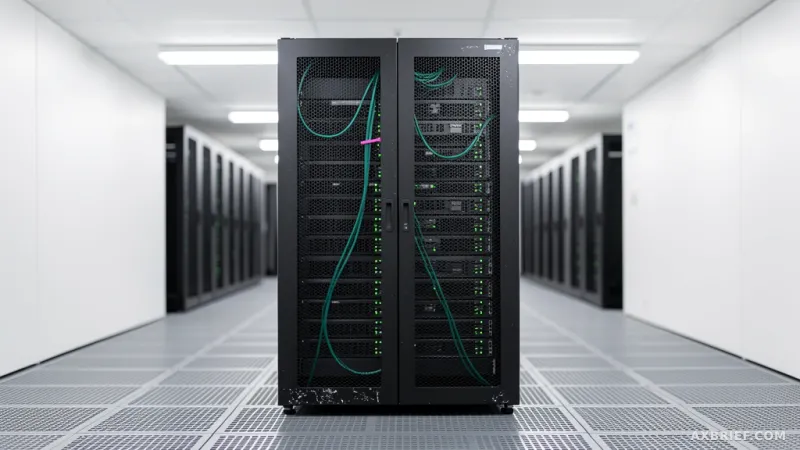
Microsoft is attempting to solve this visibility gap with the introduction of the IQ series, a dedicated context layer designed to transform AI from a conversational chatbot into a functional agent. Rather than relying on a single, monolithic data retrieval method, Microsoft has bifurcated the context layer into four specialized streams. Foundry IQ handles unstructured knowledge, such as fragmented notes and free-form documents. Fabric IQ manages structured business data, specifically targeting tables and relational databases. Work IQ integrates the vast Microsoft 365 app ecosystem, while Web IQ manages real-time external search.
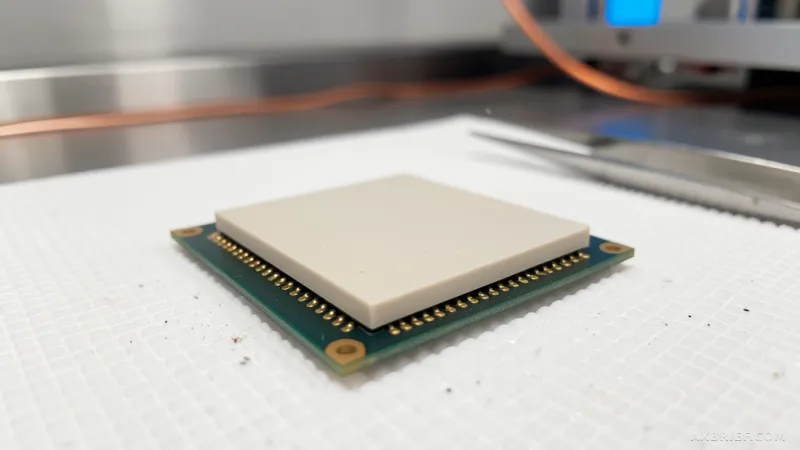
These components are engineered as headless interfaces. By removing the visual layer, Microsoft allows developers and agents to exchange data programmatically and instantaneously. This ensures that the agent does not just search for a keyword but understands the specific type of context required for the task at hand. To support this computationally heavy lifting, Microsoft is shifting the processing load from the cloud to the edge. The new Microsoft Surface AI engineered laptop, powered by the latest Nvidia chips, is designed to run AI models locally. By processing data on the device, Microsoft aims to eliminate the latency of round-trip server requests and mitigate the security risks associated with sending sensitive corporate data to external clouds.
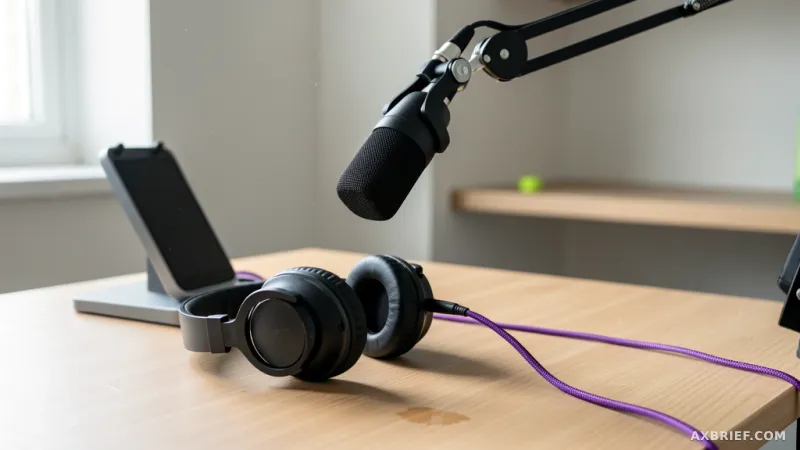
Beyond the laptop, Microsoft showcased concept hardware designed to act as physical sensory nodes. These include desktop devices and neck-worn key-card style wearables intended to capture real-time audio, visual, and textual data from a user's daily life. The goal is to create a continuous feedback loop where the AI learns the user's habits and preferences through passive observation. However, Microsoft has explicitly stated that these are not consumer products for sale. They are blueprints intended to signal to other hardware manufacturers how AI-integrated devices should be designed to maximize data ingestion for personalized agents.
The Pivot Toward Model Independence
For years, the industry assumed that the path to AI dominance required a symbiotic relationship with a single frontier model provider. Microsoft's strategy was the gold standard of this approach through its deep investment in OpenAI. However, a significant shift is now underway. Microsoft is aggressively diversifying its model layer to avoid vendor lock-in and regain granular control over its AI stack. This is evidenced by the launch of MAI, a suite of seven in-house models designed for specific modalities and use cases.
Among these is MAI-Thinking-1, a model optimized for complex reasoning. The MAI lineup also includes a Large and a Flash model for image generation, a dedicated transcription model for speech-to-text, two specialized voice models, and a dedicated coding model. By developing these in-house, Microsoft can optimize for token efficiency and allow enterprise customers to customize models using their own proprietary datasets from the ground up, rather than simply fine-tuning a third-party API.
This diversification extends to external partnerships as well. Microsoft is now integrating competing models like Anthropic's Claude into its ecosystem, recently adding Claude Opus 4.8 to Azure Foundry. This transforms Copilot from a wrapper for GPT into an orchestration engine. In this new architecture, Copilot acts as a conductor, analyzing a user's request and routing it to the most efficient model—whether that is a MAI reasoning model for a logic puzzle or a Claude model for creative synthesis. This move is a direct response to the persistent criticism that Copilot has lagged behind the raw performance of standalone ChatGPT or Claude instances, often due to its reliance on older model versions.
To manage these agents at scale, Microsoft introduced Microsoft Foundry. This platform provides a control plane for agent hosting, automating the complexities of server scaling and containerization. More importantly, it addresses the issue of drifting, where an agent's performance degrades over time as data evolves. Through the control plane, administrators can monitor token usage, accuracy rates, and real-time interaction samples to ensure consistent quality. For developers struggling with the trial-and-error nature of prompt engineering, the Agent Optimizer provides a precision tool to decompose agent behavior into minute units of evaluation. This creates a feedback loop where the system identifies exactly where a logic chain broke and suggests prompt modifications to fix the error.
Every component of this rollout, from the Scout personal work agent to the MCP (Model Context Protocol) servers that power the IQ layer, points toward a singular conclusion. The era of the standalone LLM is ending, and the era of the integrated agent is beginning. The competitive advantage in enterprise AI is no longer about who has the largest model or the most parameters. It is about who can build the most seamless pipeline between the model's reasoning capabilities and the organization's private data. The intelligence is now a commodity; the connectivity is the moat.