
For months, the high-end AI video landscape has been dominated by closed-wall gardens. Creators have largely been relegated to the role of prompt-engineers, sending requests to a remote server and hoping the resulting clip matches their vision. This API-centric model offers convenience but strips away the granular control required for professional production. The industry has been waiting for a shift toward local execution where the workflow is transparent and the parameters are adjustable. This week, that shift became a reality with the integration of MiniMax H3 into ComfyUI, moving the power of high-fidelity video generation from the cloud to the local workstation.
The Architecture of Local Control
MiniMax H3 arrives not as a restricted service, but as a flexible framework optimized for ComfyUI, the node-based interface that has become the gold standard for power users in the generative AI space. By moving away from a closed API, MiniMax allows developers and artists to manage their own model files and design custom workflows. Instead of following a linear path dictated by a service provider, users can now assemble the video generation process like a modular circuit, connecting specific nodes to control every stage of the pipeline.
At the core of this release is a comprehensive suite of generation paths: Text-to-Video (T2V), Image-to-Video (I2V), and Reference-to-Video (R2V). While T2V and I2V provide the foundational ability to turn prompts or still images into motion, the R2V capability represents a significant leap in utility. R2V allows a creator to use a reference video to maintain the visual identity of a subject across new generations. In previous iterations of video AI, characters often morphed or lost their distinct features from one frame to the next. MiniMax H3 solves this by locking in the unique characteristics of a person or object from the reference source, allowing the user to change the background or the action while the subject remains consistent. This level of temporal and visual stability is exactly what commercial production houses require for storytelling.
Breaking the Hardware Barrier with Qwen3-VL
The intelligence driving these visuals is the Qwen3-VL 32B model, which serves as the text encoder. In the context of video generation, the text encoder is the bridge between human language and visual pixels. By employing a massive 32 billion parameter model, MiniMax H3 can process complex prompts with a level of nuance that smaller encoders typically miss. This scale ensures that intricate details described in a prompt are actually rendered in the final video, reducing the common issue of prompt neglect where the AI ignores secondary instructions.
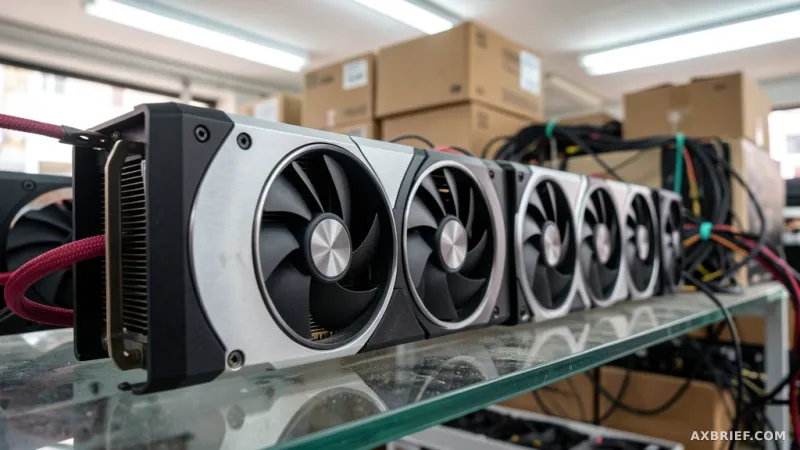
However, a 32B parameter model typically demands enterprise-grade hardware, such as the Nvidia H100, which is out of reach for most independent creators. The twist in the MiniMax H3 release is the aggressive implementation of quantization. Quantization reduces the precision of the model's weights to shrink its memory footprint without significantly degrading output quality. MiniMax provides several versions to match different hardware tiers. Users can opt for the bf16 version for maximum precision or the int8 version for a balance of speed and memory efficiency. For those using Nvidia GPUs, a specialized 4-bit quantization version, `nvfp4_awq`, is available, effectively lowering the VRAM requirement to a level manageable by consumer-grade hardware.
This optimization extends to the diffusion paths and the Variational Autoencoder (VAE). The system offers two primary diffusion routes: `fl2va` and `ref2va`. To further refine performance, users can choose between precision levels including `bf16`, `int8_convrot`, and `pruned_int8_convrot`, the latter of which removes unnecessary weights to maximize throughput. The VAE, responsible for compressing and reconstructing high-dimensional data, is split into an `fp32` version for audio and an `fp16` version for video. By mixing and matching these components based on their available VRAM, a user can build a pipeline that maximizes their specific GPU's potential.
This transition from cloud-dependency to local deployment means that the barrier to entry for high-resolution AI video is no longer a corporate budget, but simply the possession of a modern GPU and a JSON configuration file from GitHub. The ability to run a 32B parameter encoder locally transforms the AI video tool from a novelty into a professional instrument.
Local video generation is no longer a theoretical goal but a deployable reality for the independent creator.



