
Developers have long accepted a frustrating trade-off in the AI ecosystem: you either leverage the raw power of cloud-based autonomous agents at the cost of privacy and latency, or you deploy small, local LLMs that struggle with complex tool use and multi-step reasoning. This week, that boundary shifted. The industry is witnessing a move toward local-first autonomy where the agent does not simply generate text but actively plans, executes, and corrects its own mistakes without a single round-trip to a remote server.
The Architecture of Local Autonomy
Meta Superintelligence Lab has introduced Muse Glimmer, a model specifically engineered to bring high-performance autonomous agency to consumer-grade hardware. The foundation of the model is a dense causal transformer featuring 29.6 billion parameters. This architecture is structured across 52 layers with a hidden dimension size of 6656, providing the computational depth necessary for complex reasoning. To enable multimodal capabilities, the team integrated a ViT-G/14 cognitive encoder with 180 million parameters, allowing the model to process mixed inputs of text and images seamlessly.
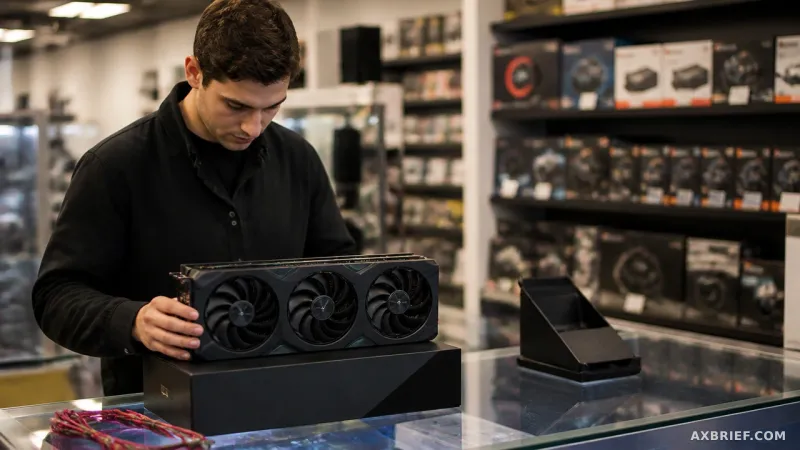
To handle the massive data requirements of autonomous tasks, Muse Glimmer supports a context window of over 131,072 tokens. However, the most critical engineering feat is the model's optimization for local deployment. By applying 4-bit quantization to compress the weights, the team reduced the model size to under 20GB. This optimization ensures that the model can operate on consumer graphics cards equipped with 24GB or 32GB of VRAM. This memory headroom is vital, as it allows the system to simultaneously load the KV cache, the cognitive encoder, and a speculative decoding drafter designed to accelerate inference speeds.
Beyond the hardware specs, the model is built for global and commercial scalability. It is released under the Apache 2.0 license, granting users the freedom to modify the code and utilize the model for commercial purposes. The training set included data from over 100 different languages, and the model's knowledge cutoff is established as January 4, 2026.
From Chatbots to Self-Correcting Agents
While the parameter count and quantization are impressive, the true technical pivot of Muse Glimmer lies in its failure recovery capabilities. Most local LLMs suffer from a critical flaw: when a tool call returns an unexpected error or a hallucinated result, the model typically enters a loop of repetition or simply halts the task. Muse Glimmer is designed to treat these errors as data points. It can autonomously diagnose why a tool failed and iterate on its plan to find a successful path to completion.
This shift from passive generation to active problem-solving is evidenced by its performance across several specialized benchmarks. The model demonstrated strong capabilities in DeepSearch QA and MCP-Atlas, as well as the $\tau^3$-Bench. Most significantly, its performance on SWE-Bench, which measures the ability to resolve real-world software engineering issues, proves that it can handle the complexities of actual codebase modification.
By moving this entire process to a local environment, the model resolves the primary tension between power and security. For developers handling proprietary code or sensitive corporate data, the risk of data leakage during cloud transmission is eliminated. The local processing model transforms the desktop from a simple terminal into a secure, autonomous workstation that operates independently of cloud infrastructure and recurring API costs.
The transition to local autonomy now depends less on cloud credits and more on whether a developer has 24GB of VRAM and a requirement for self-correcting agency.



