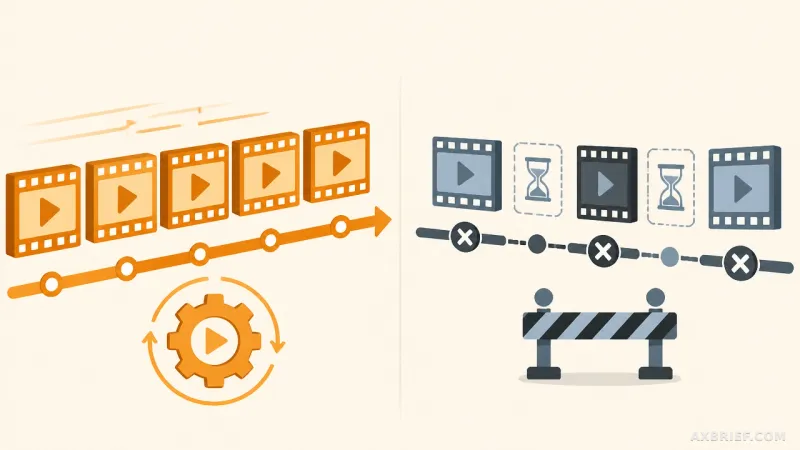
The modern AI developer exists in a state of perpetual tension between the convenience of a managed API and the desire for total sovereignty over their stack. For months, the industry has watched as the leading frontier models retreated behind increasingly thick walls of proprietary safety layers and restrictive usage terms. This shift has created a bottleneck where innovation is dictated by a handful of corporate gatekeepers in San Francisco. However, the atmosphere shifted this week as Meta decided to break the silence and pivot back to a strategy of radical transparency.
The Architecture of Openness and the Muse Roadmap
Meta has officially released the weights for Muse Glimmer, effectively handing the keys of the model's internal intelligence to the global developer community. By releasing the weights—the learned connection strengths that allow a neural network to recognize patterns and generate responses—Meta is moving beyond the limited utility of a hosted service. Developers are no longer restricted to the features Meta deems appropriate; they can now download the model, modify its internal parameters, and fine-tune it for highly specific, niche applications. This move marks a significant reversal from the beginning of the year, when Meta had temporarily paused its open-model strategy citing potential safety risks. The return to openness is not a one-off event, as the company has already signaled that a version of Muse Spark, a more powerful iteration of the architecture, will be released within the coming weeks.
This technical release is the foundation for a much larger ambition: the creation of personal superintelligence. Meta is not merely building a chatbot but is pursuing a vision of high-performance AI agents tailored to the individual. These agents are designed to integrate into the fabric of a user's daily life, providing sophisticated support across health management, hobbyist exploration, financial planning, and career trajectory mapping. To turn this vision into a reality, Meta is aggressively recruiting top-tier AI talent and pouring massive capital into the construction of specialized AI data centers. The goal is to move the industry from simple query-and-response interactions toward autonomous agents that manage the complexities of human existence.
The Security Paradox and the Cost of Democracy
While competitors like Google, Anthropic, and OpenAI argue that keeping model weights secret is the only way to ensure safety, Meta is betting on a different philosophy. The core of Meta's argument is that closed systems are inherently more fragile because they rely on a small group of internal auditors to find vulnerabilities. In contrast, an open-weights system leverages the collective intelligence of millions of developers worldwide. Meta contends that when a model is widely distributed, security flaws are identified and patched with far greater speed and accuracy than any internal team could achieve. To illustrate this, Meta pointed to a specific instance involving Hugging Face, where the platform attempted to fix security vulnerabilities. While closed-model providers rejected the requests based on rigid safety policies, the open-model ecosystem allowed for a collaborative, rapid resolution of the issue.
This ideological divide extends to the controversial practice of distillation, where a smaller model is trained using the outputs of a larger, more capable model as a gold standard. OpenAI and Anthropic have been vocal critics of this method, particularly when Chinese research labs use American-made models to bootstrap their own capabilities. Mark Zuckerberg has taken a diametrically opposite stance, arguing that the right to learn from any observable data is a fundamental principle of AI development. From Meta's perspective, restricting the ability to learn from observable outputs is not a safety measure but a hindrance to global technological growth.
However, this commitment to open-source AI is coming at a staggering financial cost. Meta's free cash flow—the actual liquid capital available after accounting for capital expenditures—has plummeted by 91%. The market has reacted with visible anxiety; the company's stock dropped approximately 8% following the announcement of its massive AI infrastructure spending, and the overall share price has declined by roughly 20% over the past year. Despite this financial volatility and the pressure from investors, Zuckerberg remains steadfast in his investment in open weights and personal superintelligence.
The underlying motivation is as much political as it is technical. By deploying high-performance AI for free to billions of people, Meta aims to prevent the concentration of AI power within a few elite corporations or government agencies. The strategy is to shift the balance of power toward the individual, ensuring that the capability to leverage superintelligence is a universal right rather than a privileged tool of the few. This democratization is intended to act as a check against institutional hegemony, empowering individuals to compete with giant organizations on a more level playing field.
Developers and enterprises now face a critical strategic choice. They must weigh the seamless, low-friction experience of a closed API against the long-term benefits of open weights, which offer unparalleled flexibility, deeper security through transparency, and true ownership of the intelligence driving their products.