The modern developer's desktop has become a fragmented landscape of floating chat windows, browser tabs, and plugin sidebars. For years, the industry has relied on the extension model, where AI assistants live as guests within an editor, often struggling to grasp the full context of a complex codebase without constant manual prompting. This friction has created a growing demand for an environment where the LLM is not an add-on, but the core architecture of the workspace itself.
The Architecture of an AI-Native Workspace
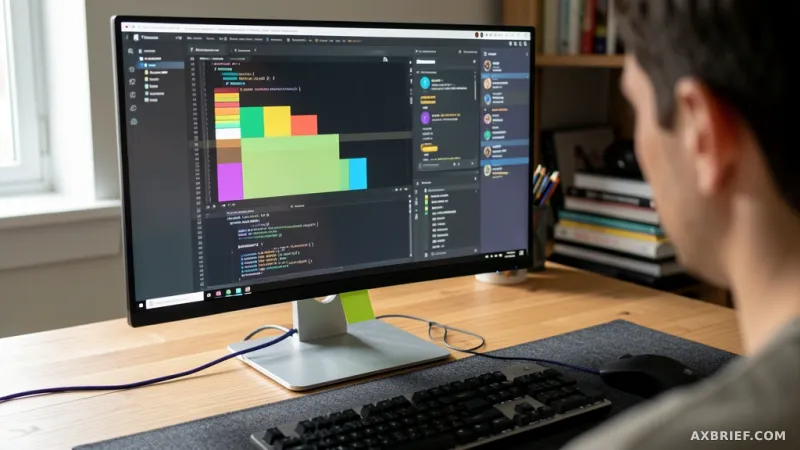
myDoo enters this space not as a plugin, but as a full fork of Visual Studio Code, allowing for a deeper level of integration than standard extensions permit. The interface is redesigned into a focused three-pane layout that combines the file explorer, the primary code editor, and a dedicated LLM chat interface. At the heart of this environment is Claude Code, which serves as the default large language model, driving the intelligence of the editor. This integration allows the AI to operate with a higher degree of awareness regarding the project structure and the developer's current focus.
Beyond the core editor, myDoo introduces a suite of specialized tools designed to bridge the gap between coding and project management. One of the central features is Recall, a memory retrieval tool powered by Retrieval-Augmented Generation (RAG). Unlike standard chat histories that vanish or become truncated, Recall allows Claude Code, Codex, and Gemini to share a unified memory pool. This system automatically summons past conversations and relevant document snippets, ensuring that the AI maintains a consistent understanding of the project's evolution across different model sessions.
To extend the utility of the IDE beyond the code, myDoo includes Doopyrus, a tool for generating and publishing web documents directly from the environment. Additionally, the platform implements Agent Job, a feature designed to handle repetitive administrative overhead, such as organizing emails and managing routine workflows, effectively turning the IDE into a broader productivity hub. Access to the platform is free for individual users, with costs only applying when users opt for cloud backup services. For organizations, the team plan introduces a corporate ownership model for work processes and memory, ensuring that the institutional knowledge generated during a project remains with the company.
From Coding Assistant to Institutional Memory
While the integration of Claude Code and a three-pane UI provides immediate ergonomic benefits, the true shift lies in how myDoo treats the concept of memory. Most AI coding tools operate on a session-by-session basis; once a chat is cleared or a context window is exceeded, the AI loses the nuance of why a specific architectural decision was made three weeks prior. By implementing Recall as a shared layer across multiple models, myDoo transforms the IDE from a tool that writes code into a tool that remembers the intent behind the code.
This capability becomes critical when examining the team plan's approach to collaboration. In the current freelance economy, companies often suffer from a knowledge vacuum when a contract ends and a developer departs, taking the undocumented logic of their implementation with them. By allowing the company to own the memory and the work process logs, myDoo ensures that the logic, the trial-and-error phase, and the final decisions are archived and searchable. The AI becomes the permanent custodian of the project's history, allowing new team members to query the codebase not just for what it does, but for why it was built that way.
This represents a fundamental pivot in the AI-IDE race. The competition is no longer just about who has the fastest autocomplete or the largest context window, but about who can best capture and preserve institutional knowledge. By forking VS Code, myDoo has moved the AI from the periphery of the editor to the center of the development lifecycle, treating the LLM as the primary interface through which a project is managed and remembered.
Detailed service information and access can be found at mydoo.ai.
The IDE is evolving from a passive text editor into a living archive of a project's entire intellectual evolution.