The current discourse around Edge AI is dominated by high-end silicon. Industry giants are racing to optimize models for AI PCs and Mac Studios, pushing the boundaries of what a laptop can do locally. Yet, this trajectory ignores the vast majority of the connected world. While the enthusiast market chases NPU teraflops, the actual landscape of the internet of things consists of billions of low-cost sensors, wearables, and controllers that operate on a fraction of that power. There is a widening gap between the AI capabilities of a premium workstation and the static, hard-coded logic of a budget smart device.
The Architecture of Extreme Compression
Needle 2 enters this gap as an open model designed specifically for hardware that lacks a dedicated GPU or NPU and possesses only a few hundred megabytes of RAM. To achieve this, the model is stripped of the traditional ambitions of a Large Language Model. Rather than attempting to store a comprehensive map of human knowledge, Needle 2 focuses exclusively on tool calling and structured extraction. It is engineered to map a user's natural language input to a specific function and its corresponding parameters, reducing its parameter count to 45 million and its total size to 14MB.
Efficiency is baked into the model from the ground up through Cactus Quants, a 2-bit quantization technique applied across both pre-training and post-training phases. This aggressive compression allows the model to maintain functional utility while fitting into a footprint that would be considered negligible for a standard LLM. For deployment, Needle 2 is provided as a single C++ binary with no external dependencies. Upon execution, the binary automatically probes the host CPU to select the most efficient kernel, supporting SDOT, NEON, and AVX2 to ensure maximum performance across different chip architectures.
Memory management is handled via a 256-token sliding window. This design choice ensures that regardless of the session length, the RAM usage is capped at a maximum of 28MB. This makes the model viable for microcontrollers and low-end ARM chips where memory leaks or spikes lead to immediate system crashes.
Shifting the Edge AI Paradigm from Knowledge to Action
For years, the goal of local AI was to bring the chatbot to the device. Needle 2 represents a pivot in strategy: moving from a knowledge-centric model to an agentic-centric model. The industry is beginning to realize that a smart light switch does not need to know the history of the French Revolution; it only needs to understand that "dim the lights for a movie" means calling a specific brightness function with a value of 20 percent. By abandoning world knowledge, Needle 2 reallocates its limited resources toward the precision of intent recognition.
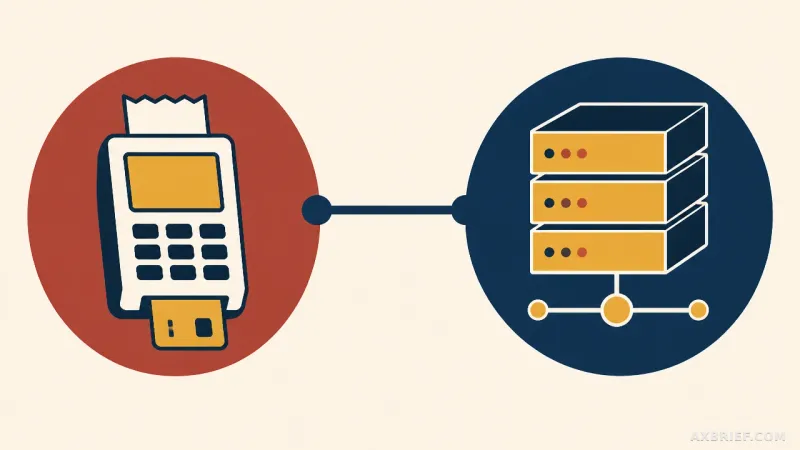
This shift enables AI to scale to the 21 billion IoT devices currently in existence, including the millions of smartphones shipped annually in emerging markets for under 200 dollars. The operational logic follows a hybrid edge-cloud collaboration. Every response generated by Needle 2 includes a confidence score. If the score falls below a predefined threshold or if the request falls entirely outside the model's trained domain, the system triggers an escalation to a cloud-based LLM.
This hierarchy creates a win-win for privacy and cost. Routine device controls are processed locally and instantaneously, eliminating latency and cloud API costs while keeping sensitive user data on the device. Only complex, ambiguous, or high-level queries are sent to the cloud. A practical application of this is seen in the Index 01 app for the Pebble Index Ring. In this screenless wearable, Needle 2 converts voice requests into immediate hardware actions without requiring a network connection, transforming a simple piece of jewelry into a responsive AI agent.
For developers working with extreme hardware constraints, the model's compatibility is a significant breakthrough. It can run on microcontroller-class components such as the STM32H7 or the ESP32-P4, the latter of which features 32MB of PSRAM. Because it is released under the Apache 2.0 license, it is open for commercial integration. Furthermore, the small 45-million parameter scale allows developers to fine-tune the model on a standard PC or Mac in a matter of hours to match a specific tool vocabulary.
However, the utility of Needle 2 is strictly bounded by its purpose. It is not a general-purpose assistant. Because its training data is heavily weighted toward consumer electronics, smart home interactions, and wearable device actions, it struggles with complex general knowledge or enterprise-grade API calls involving languages like Java or JavaScript. It is a specialized tool for structured value extraction and device control, not a replacement for a chatbot.
The success of implementing Needle 2 depends entirely on the tuning of the confidence threshold. The developer's primary task shifts from prompt engineering to boundary engineering, deciding exactly where the local agent's authority ends and the cloud's intelligence begins.
This transition marks the beginning of an era where AI becomes an invisible layer of the physical world, embedded not in expensive hubs, but in the cheapest components of our environment.