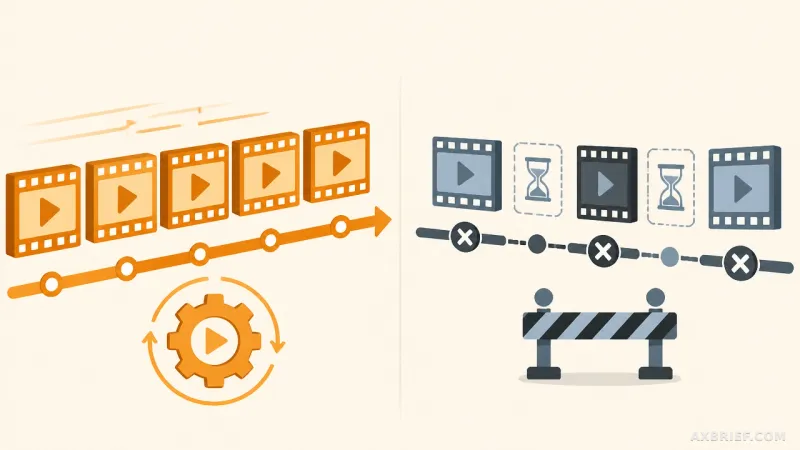
The modern developer's workspace is often a fragmented sprawl of Markdown files, browser tabs, and transient AI chat histories. While LLMs have accelerated the speed of content creation, the process of organizing that output into a persistent, structured knowledge base remains a manual chore. The industry is currently seeing a shift toward local-first software, where data residency moves from the cloud back to the user's device to ensure privacy, speed, and ownership.
The Architecture of OpenKnowledge
OpenKnowledge enters this landscape as an open-source Markdown editor designed specifically to function as an LLM-powered wiki. At its core, the tool emphasizes a local-first approach, ensuring that user data is stored on the local machine rather than a remote server. To bridge the gap between static notes and generative intelligence, OpenKnowledge supports various LLM harnesses, including integrations with Anthropic's Claude and OpenAI's Codex. This allows users to trigger model execution directly within their documentation workflow.
The software is distributed across multiple environments to accommodate different operating systems and user preferences. For Apple users, a dedicated macOS application is available. For those on Linux, Windows, or older Intel-based Macs, the tool is accessible via a web application. Additionally, the project provides a Command Line Interface (CLI) for developers who prefer terminal-based workflows. To run the CLI version, users must have Node.js version 24 or higher installed on their system.
From a legal and collaborative standpoint, OpenKnowledge is released under the GNU General Public License v3.0 (GPL-3.0-or-later). This licensing choice ensures that the software remains free and open, and the maintainers have explicitly opened the project to external contributions through public pull requests.
From Chat Interfaces to Persistent Knowledge
Most AI interactions today happen in a chat window, where information is linear and ephemeral. Once a session ends, the knowledge is often lost unless manually copied into a separate document. OpenKnowledge changes this dynamic by merging the LLM harness with a wiki structure. Instead of treating the AI as a separate consultant, the tool treats the AI as a co-author of a living document.
The distinction here is the move from a conversational interface to a structural one. By utilizing Markdown as the primary format, OpenKnowledge ensures that the knowledge base remains portable and human-readable, while the local-first architecture removes the latency and privacy concerns associated with cloud-based wikis. The tension between the power of massive cloud models like Claude and the desire for local data sovereignty is resolved by allowing the model to act as a processing layer while the storage remains under the user's direct control.
This approach transforms the AI from a tool that answers questions into a tool that manages a knowledge graph. When a user integrates a harness like Codex, they are not just generating code snippets; they are building a searchable, interconnected library of technical documentation that exists independently of any single vendor's proprietary cloud storage.
The open-source nature of the project further suggests that the definition of an LLM wiki will be shaped by the community rather than a corporate product roadmap.
This transition toward local-first, AI-integrated documentation marks a significant step in reclaiming digital autonomy for knowledge workers.