Engineers and CTOs are currently trapped in a frustrating paradox. On one hand, the capabilities of large language models continue to climb, promising a future of autonomous agents and seamless automation. On the other hand, the monthly API bills are rising while the tangible return on investment remains elusive. This tension has shifted the conversation in boardrooms from a focus on what AI can do to a desperate calculation of what each token actually costs. The industry is no longer just debating software architecture; it is grappling with the brutal physics of power, land, and capital.
The Transition to Heavy Industry
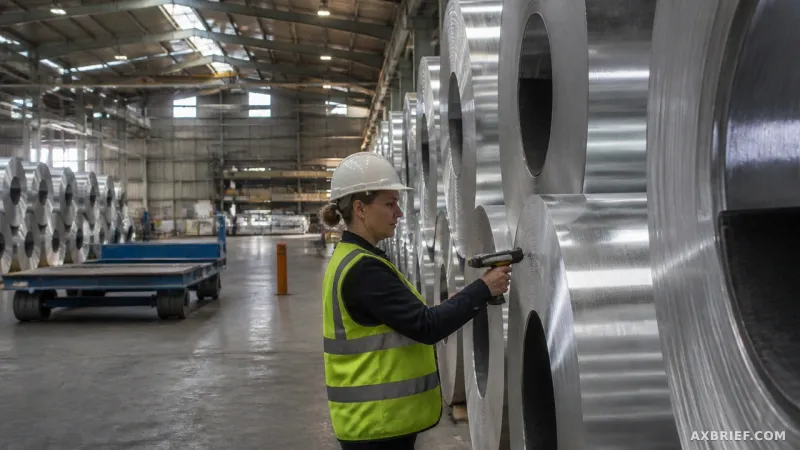
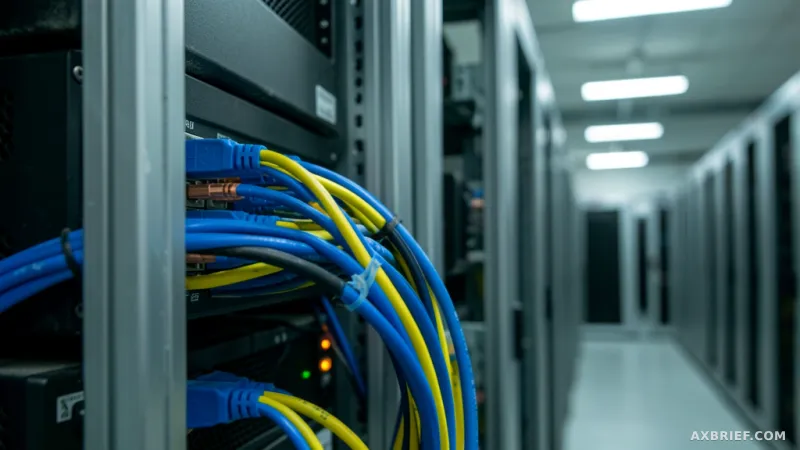
AI has ceased to be a pure software play and has evolved into a massive capital-intensive equipment industry. The scale of physical investment required to sustain current growth is staggering. Oracle is currently spearheading the construction of data centers across Michigan, New Mexico, Wisconsin, and Texas to meet the insatiable computational hunger of OpenAI. This infrastructure project targets a total capacity of 7.1GW. Depending on the projections cited by Nvidia CEO Jensen Huang, the total investment for such an undertaking is estimated to fall between 340 billion dollars and 700 billion dollars. In this environment, the primary bottleneck for AI performance is no longer the elegance of the code or the optimization of the weights, but the ability to secure massive tracts of land and gigawatts of stable electricity.
This shift toward infrastructure dominance is reflected in how enterprises are budgeting for AI. Salesforce has already established a concrete budget to spend 300 million dollars on Anthropic by 2026. This is not a simple payment for API usage based on consumption. Instead, it represents a strategic commitment to a specific model provider to ensure a seat at the table. Large corporations are realizing that computing resources are becoming a scarce commodity, and the only way to guarantee access is through aggressive, upfront financial commitments. The logic of the market has shifted from service procurement to supply chain preemption.
For the developers on the ground, this means the era of experimentation is ending. The new standard for success is not whether a feature works, but whether it meets a rigorous cost-control threshold. In a world where infrastructure is monopolized, companies must either possess the capital to buy their way into the compute layer or design an extremely lean cost structure to survive. The current investment signals prove that AI is now a game of industrial scale.
The Monopoly Gap and the 2030 Deadline
While development teams struggle to reduce API call frequency to save a few thousand dollars, the entities building the models are spending sums that defy traditional software economics. By 2026, OpenAI plans to spend 50 billion dollars on computing costs alone. Anthropic is projected to follow suit, with an estimated expenditure between 30 billion and 50 billion dollars in the same year. These figures create a massive barrier to entry, ensuring that the ability to train next-generation models is reserved for a tiny elite.
This concentration of power is absolute. OpenAI and Anthropic currently command a staggering share of global AI computing demand, estimated to be at least 70 percent and potentially as high as 90 percent. This means two companies effectively dictate the flow of the world's computational resources. The tens of billions of dollars they spend are not merely investments in research; they are the necessary costs of maintaining a dominant market position. Any volatility in API pricing experienced by a small startup is a direct result of the infrastructure strategies employed by these two giants.
This leads to a looming systemic risk. To justify the current level of capital expenditure and the promises made to infrastructure providers, the generative AI and AI computing industry must generate over 2 trillion dollars in annual revenue by 2030. This is not an aspirational target but a mathematical necessity based on the current trajectory of data center spending. If the industry fails to hit this number, the massive physical infrastructure currently under construction will become a collection of stranded assets.
Currently, the total combined computing demand from all AI companies globally does not even reach 100 billion dollars. For the planned data centers to make economic sense, the total demand for AI compute must grow tenfold by 2030. There is a profound and dangerous gap between the current utility of AI and the scale of the infrastructure being built to support it. If this ten-fold growth in demand does not materialize, the current construction boom will be remembered as one of the greatest misallocations of capital in history.
This systemic pressure inevitably trickles down to the end user. Because OpenAI and Anthropic hold a near-monopoly on compute demand, the burden of reaching that 2 trillion dollar revenue target will be passed directly to the API consumers. The paradox of rising costs and stagnant ROI is the natural result of being dependent on an infrastructure monopoly that must grow at an unsustainable rate to survive.
Success in the next era of AI will not be determined by who can implement the most features, but by who can master the unit economics of the token. The winners will be the organizations that can control cost efficiency at the code level, transforming raw compute into actual business revenue with surgical precision.