
The current era of artificial intelligence is defined by a widening gap between the promise of universal benefit and the reality of corporate concentration. For years, the developer community and policy makers have watched as the most powerful models transitioned from open-source experiments or non-profit missions into guarded proprietary assets. This tension has reached a boiling point as the industry realizes that the keys to cognitive automation are held by a handful of executives and shareholders in Silicon Valley, leaving the rest of the world to negotiate for access to a technology built on their own collective data.
The Mechanics of a Sovereign Acquisition
A provocative new proposal suggests a radical solution to this concentration of power: the acquisition of OpenAI by the Government Pension Fund Global (GPF-G) of Norway. With assets exceeding $2 trillion, the GPF-G is one of the largest sovereign wealth funds in existence, making it one of the few entities on earth capable of absorbing a company with an estimated valuation of $800 billion. The core objective of this proposal is not financial profit, but the publicization of AI. Under this framework, the GPF-G would secure management control of OpenAI and subsequently transfer that authority to an international multilateral organization tasked with managing the technology for the global public good.
This proposal is a direct response to the perceived betrayal of OpenAI's founding ethos. The organization began as a non-profit designed to ensure that the benefits of artificial general intelligence were shared by all of humanity. Central to this original mission was the windfall clause, a mechanism intended to cap profits and redistribute the massive wealth generated by an intelligence explosion. However, following approval from the California Attorney General, OpenAI pivoted to a for-profit structure, effectively dismantling the windfall protections. Critics argue that this transition represents a massive loss for the human community, suggesting that Norway's social-democratic capital is the ideal tool to return the laboratory to public stewardship.
Despite the ideological appeal, the proposal faces staggering practical hurdles. For the GPF-G to fund an $800 billion acquisition, it would need to liquidate approximately 40% of its current portfolio. Such a move would likely violate the fund's existing investment mandate and trigger massive market volatility. Furthermore, the geopolitical reality of the United States presents a near-insurmountable barrier. It is highly improbable that the U.S. government would permit the transfer of its most critical strategic technology to a foreign sovereign entity, regardless of that entity's democratic credentials.
AI as a Derivative of the Global Commons
To understand why such a radical proposal has emerged, one must look at the nature of the Large Language Model (LLM) itself. The central argument here is that AI is not a product of isolated corporate genius, but a derivative work of the digital commons. Every token used to train these models—the vast libraries of text, the billions of images, the open-source code repositories—was created by the collective effort of humanity. Beyond the data, the underlying infrastructure often relies on public-funded research, university breakthroughs, and government subsidies.
When a private corporation claims exclusive ownership over a model trained on the commons, it creates a systemic risk of extreme wealth and power concentration. Within Silicon Valley, there is growing discourse regarding the emergence of a permanent underclass. This is the fear that as technical unemployment accelerates, the owners of the AI means of production will possess the power to bypass democratic controls entirely. In this scenario, the social risks—job displacement, misinformation, and economic instability—are socialized and borne by the community, while the financial rewards are privatized for a small group of shareholders.
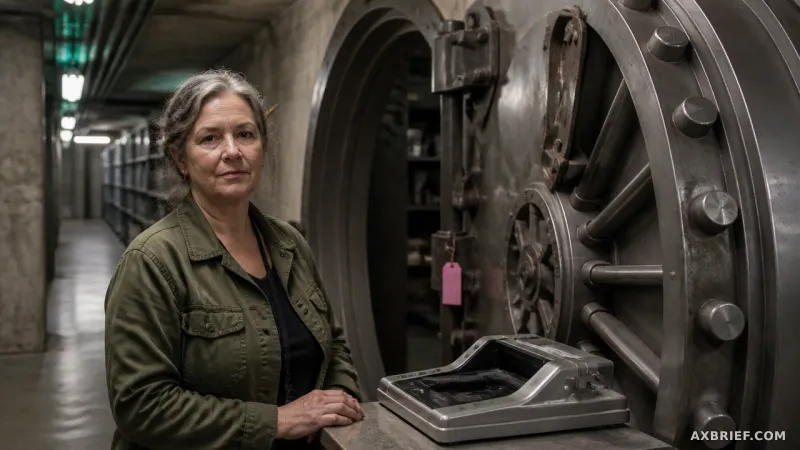
Norway is positioned as the ideal custodian for this technology because of its unique history of managing collective wealth. For decades, Norway has managed its oil revenues through a lens of intergenerational equity and global responsibility. The nation consistently meets or exceeds the UN's official development assistance targets, often contributing up to 1% of its Gross National Income. This cosmopolitan diplomatic identity is best exemplified by the Svalbard Global Seed Vault, where Norway acts as a trustee for the world's biological diversity. The logic follows that if Norway can be trusted to safeguard the seeds of the physical world, it is the most qualified democratic state to manage the seeds of digital intelligence.
This proposal signals a critical shift in the Overton Window of AI governance. For the past few years, the policy conversation has been limited to narrow regulations, such as restricting data center energy consumption or implementing regional safety guidelines. We are now seeing the emergence of a more fundamental question: not how we should regulate the owners of AI, but who should own AI in the first place. For AI practitioners and corporate strategists, this suggests that the legal battle over training data and copyright may eventually evolve into a broader political struggle over the nature of AI as a global public good.
The proposal to move OpenAI into public hands is less a realistic merger and acquisition plan and more a warning that our current policy imagination is failing to keep pace with the scale of the AI transition. The real impact lies in the introduction of ownership restructuring and multilateral management as legitimate options for the future of global AI governance.



