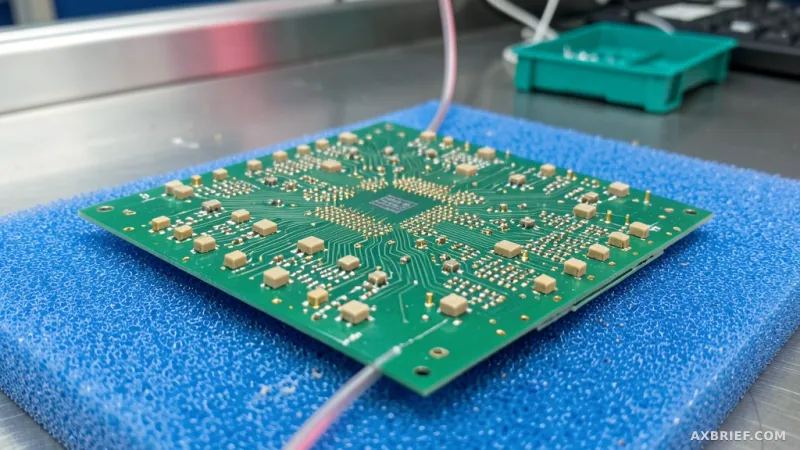
The cursor blinks for a fraction of a second before a stream of text begins to flow across the screen, word by word, as if the machine is thinking in real time. For most users, this typing effect is a polished piece of UI design intended to make the interaction feel human. For the engineers managing the backend, however, that stream represents a brutal war of attrition against latency and hardware limits. There is a pervasive myth in the industry that the most expensive part of artificial intelligence is the training phase—the months spent burning thousands of GPUs to create a foundation model. In reality, the true financial burden begins only after the training ends. The act of generating a single answer, known as inference, is where the real money vanishes.
The Token Explosion and the Cost of Intelligence
When a model is deployed, the cost of maintaining it far outweighs the cost of creating it. Data shows that 80 to 90 percent of the total computing expenditure over a model's entire lifecycle is concentrated in the inference stage. The industry is moving toward a tipping point where, by 2026, inference is expected to account for approximately two-thirds of all AI computing. The primary metric for success has shifted from raw model intelligence to token efficiency. The ability to process the smallest units of text, or tokens, with minimal latency and cost now defines the economic viability of an AI product.
Google's internal data provides a stark illustration of this scaling pressure. By May 2026, Google reported processing 3.2 trillion tokens per month across its suite of services. This represents a sevenfold increase from the 480 trillion tokens processed monthly just one year prior. To understand the velocity of this growth, one only needs to look back to early 2024, when the volume sat at a mere 9.7 trillion tokens per month. These figures do not reflect the cost of teaching the models; they are the direct result of real-time calculations performed to satisfy user requests. As the volume of tokens scales, the focus of infrastructure has shifted from increasing model parameters to maximizing the number of tokens a system can output per second given a fixed set of resources.
The Architecture of Latency and the Physical Limit
To understand why inference is so expensive, one must look at the two distinct phases of a single request. First is the prefill stage, where the model reads the entire input prompt. This phase is compute-bound, meaning the time it takes to generate the first token, or Time To First Token (TTFT), depends heavily on raw processing power. Then comes the decode stage, where the model generates tokens one by one. This phase is memory-bandwidth bound, meaning the speed is limited by how quickly data can move between the memory and the processor. Because these two phases hit different bottlenecks, engineers must employ specialized optimization techniques to keep the hardware from idling.
One such solution is continuous batching. Traditional batching waits for all requests in a group to finish before starting a new set, which wastes GPU cycles when some requests finish faster than others. Continuous batching allows the scheduler to insert new requests into the neural network's forward pass immediately and remove completed sequences the moment they end. This ensures the GPU remains saturated at all times, minimizing idle gaps and maximizing throughput.
Further efficiency is found in memory management. The vLLM high-performance inference engine introduced PagedAttention to solve the problem of the KV cache, which stores information about previous tokens to avoid redundant calculations. By managing this cache in fixed-size pages, similar to how a traditional operating system handles virtual memory, PagedAttention eliminates memory fragmentation. This architectural shift allows systems to increase overall throughput by 2 to 4 times, enabling more concurrent users on the same hardware.
This drive for efficiency extends to the API level through prompt caching. When users repeatedly send the same long instructions or documents, the system can store the processed state of those inputs. Anthropic and OpenAI have recognized the value of this by offering discounts of up to 90 percent for cached inputs. For example, Anthropic charges $3.00 per million tokens for standard input but only $0.30 per million tokens for cache reads. Beyond the cost, this reduces latency by approximately 85 percent, which is critical for applications analyzing massive documents.
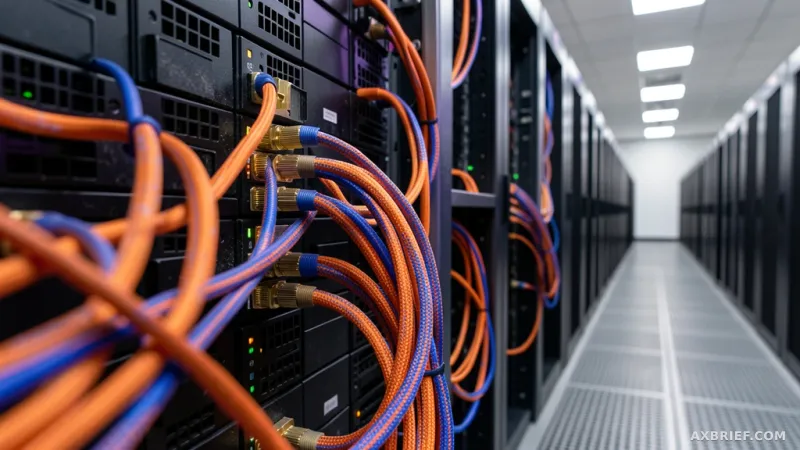
However, the most significant bottleneck is not software, but physics. The four major hyperscalers are projected to spend 725 billion dollars in capital expenditure by 2026, a 77 percent increase over the previous year. Crucially, more than 60 percent of this investment is not going toward the AI chips themselves. Instead, the money is flowing into the physical infrastructure required to support those chips: massive power grids, advanced liquid cooling systems, and the actual construction of data centers. The cost of the brain is becoming secondary to the cost of the life-support system required to keep that brain from overheating.
The rhythmic appearance of text on a screen is the final output of a complex orchestration of prefill and decode cycles. The economic reality of AI is that the training run is merely the entry fee; the real cost is the perpetual energy and hardware required to keep the model talking. For developers and enterprises, the criteria for choosing an inference provider must now move beyond simple pricing per token to a deeper analysis of TTFT and cache efficiency. The true strength of AI infrastructure is no longer measured by the size of the model, but by the efficiency of the response.