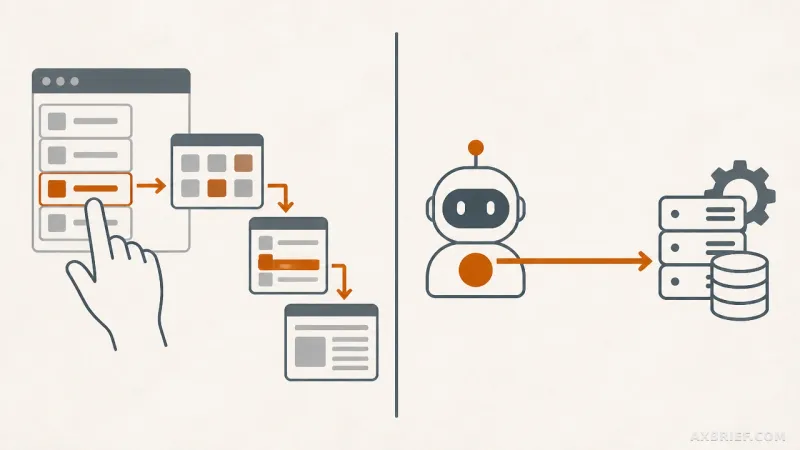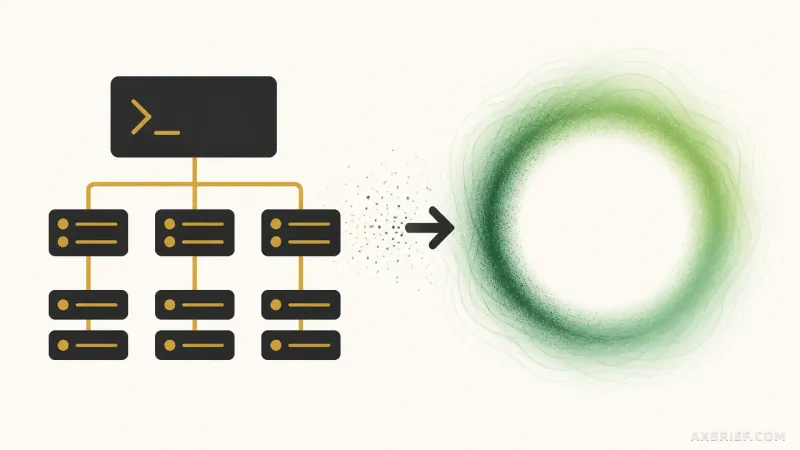
The modern developer's workflow is a study in contradictions. We spend our days in the streamlined, minimalist environment of Markdown, yet we are frequently forced to migrate that content into the bloated, manual world of presentation software. For years, the industry has chased the dream of a seamless bridge between these two worlds, recently turning to Large Language Models to automate the process. However, the result is often a chaotic lottery of layout shifts, unpredictable text overflows, and slides that look different every time the prompt is run. The frustration is not the lack of automation, but the lack of control.
The Architecture of Rule-Based Rendering
Into this gap steps mdpresent, a command-line interface tool designed to transform Markdown documents into structured presentation materials across PPTX, HTML, and PDF formats. Available via GitHub, the tool allows users to validate their output through a dedicated theme preview before final deployment. While most contemporary productivity tools are racing to integrate generative AI into every layer of their stack, mdpresent takes a defiant technical stance: it operates with no LLM runtime.
This means that from the moment a file is parsed to the final rendering of a slide, there are no external API calls and no probabilistic guesses. The entire pipeline is handled locally by a rule-based engine. This architectural choice ensures that the output is not a collection of static images captured from a browser, but a set of fully editable PPTX objects. Text remains text, shapes remain shapes, and badges remain editable elements, allowing the user to perform final manual tweaks within PowerPoint without fighting against a flattened image.
To achieve this, mdpresent employs a sophisticated dual-stage Intermediate Representation (IR) pipeline. The process follows a strict linear flow: Markdown $\rightarrow$ Presentation IR $\rightarrow$ Layout IR $\rightarrow$ Renderer. In the first stage, the Presentation IR interprets the semantic structure of the Markdown. It does not simply strip formatting; it preserves the intent behind lists, emphasis, block quotes, and arrow-based pipeline representations, translating them into a format the system understands as presentation-specific data.
Once the semantic meaning is locked in, the Layout IR takes over to determine the visual distribution of content. Rather than guessing where a slide should end, mdpresent relies on a set of deterministic signals to trigger slide breaks. These include heading levels, text density measurements, the total count of list items, sentence-unit lengths, and specific diagram signals. By decoupling the semantic meaning from the visual layout, the tool allows users to apply different design presets to the same Presentation IR, ensuring that the content remains constant while the aesthetic evolves.
The Shift Toward Deterministic Automation
The critical distinction here is the move from stochastic to deterministic output. In the current AI landscape, LLM-based generators are probabilistic; they provide a high-quality guess. For a casual pitch deck, a 5% chance of a layout collapse is acceptable. For a corporate technical report or a high-stakes engineering specification, it is a deal-breaker. When a layout breaks in a professional setting, the time spent fixing the AI's mistake often exceeds the time it would have taken to build the slide manually.
By utilizing a rule-based engine, mdpresent guarantees that the same input will always produce the exact same output. This reliability transforms the tool from a simple converter into a powerful primitive for AI agent orchestration. In a sophisticated development pipeline, an agent like Codex or Claude Code can be tasked with the creative and structural work of drafting a presentation in Markdown. Once the draft is finalized, mdpresent acts as the deterministic execution layer, rendering that draft into a professional file with 100% predictability.
This creates a clean separation of concerns: the LLM handles the synthesis of information, while the CLI handles the precision of presentation. The agent provides the intelligence, and mdpresent provides the guardrails.
However, this reliability comes with a specific trade-off. Because the tool does not possess a contextual understanding of the text, it cannot magically fix a poorly structured document. It does not know if a paragraph is too long for a slide because of the meaning of the words; it only knows the paragraph is too long because it exceeds the density threshold. Consequently, the burden of precision shifts to the author. To get the most out of the tool, users must optimize their Markdown source to align with the recognized signals—such as strategic heading placement and list management—to guide the layout engine.
This is a fundamental shift in the user experience. Instead of prompting an AI and hoping for the best, the user engages in a structured dialogue with a rendering engine. It replaces the uncertainty of generative AI with the precision of a compiler, trading the illusion of effortless creation for the reality of reliable production.
As the industry moves toward autonomous agentic workflows, the need for deterministic tools that can act as the final stage of a pipeline will only grow. The value is no longer in the ability to generate content, but in the ability to finalize it without human intervention.