The current era of artificial intelligence is shifting from the novelty of chat interfaces to the grueling reality of industrial-scale deployment. For the past year, the developer community has lived in a state of perpetual anticipation, waiting for the next version number to drop or the next benchmark to be shattered. Yet, beneath the surface of these releases, a more pragmatic tension is emerging. Companies are no longer asking if a model can write a poem, but whether the cost per token allows for a sustainable business model and whether the physical infrastructure of the modern data center can actually support the weight of these ambitions.
The Economics of Inference and the Rise of Agentic Hardware
The commercialization of AI is now a game of margins and milliseconds. In the insurance sector, Travelers Insurance has moved beyond experimentation by integrating OpenAI's real-time API into its claims system. By allowing customers to interact with AI assistants during the initial reporting phase, the company is actively reducing the crushing call center wait times that typically follow natural disasters like hurricanes. This shift highlights a broader trend where AI is being embedded into the First Notice of Loss (FNOL) stage, creating a high-throughput gateway that dictates the efficiency of the entire subsequent claims process.
Lowering the barrier to entry requires a drastic reduction in inference costs. MiniMax is attacking this problem with an aggressive pricing strategy, offering API plans at $0.3 per million input tokens and $1.2 per million output tokens. For users on a $20 monthly plan, the company provides access to approximately 1.7 billion M3 tokens, which integrate text, image, voice, and music. The M3 model utilizes a native multimodal architecture trained on over 100 trillion tokens, allowing it to reason directly about image structures and coordinate calculations without the need for a separate image encoder.
This push toward native multimodality extends into the physical world. NVIDIA has introduced Cosmos 3, an open-world foundation model for physical AI trained on a multimodal dataset of 20 trillion tokens. This dataset includes not only video and sound but also action trajectories for humans and robots, positioning Cosmos 3 as a foundational layer for autonomous vehicles and robotics to perceive and plan within their environments. Simultaneously, Anthropic's Claude Opus 4.8 has pushed the boundaries of simulation, implementing autonomous economic systems complete with virtual citizen salaries and corporate balance sheets to model the dynamics of taxes, welfare, and supply-demand.
To support these agentic workflows, the hardware layer is evolving. NVIDIA has launched the Vera CPU, specifically designed for AI agents. Unlike general-purpose processors, Vera is optimized for the logic execution and task coordination required for reinforcement learning and data processing. In actual agent workloads—such as code compilation, test execution, and data retrieval—the Vera CPU delivers processing speeds up to 1.8 times faster than traditional x86 processors. This hardware shift is mirrored in the software layer, where Zapier now provides a Model Context Protocol (MCP) server. This allows agents like Claude Code or OpenClaw to connect to thousands of tools, including Gmail, Notion, and Slack, simply by providing a URL during setup.
The Infrastructure Bottleneck and the Valuation Paradox
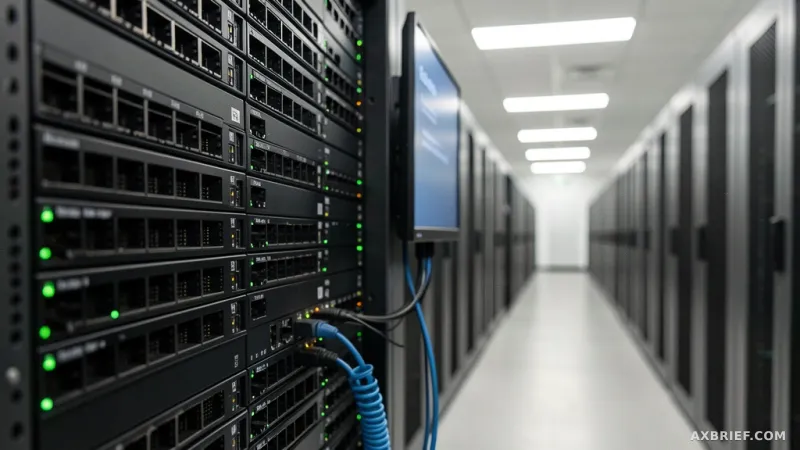
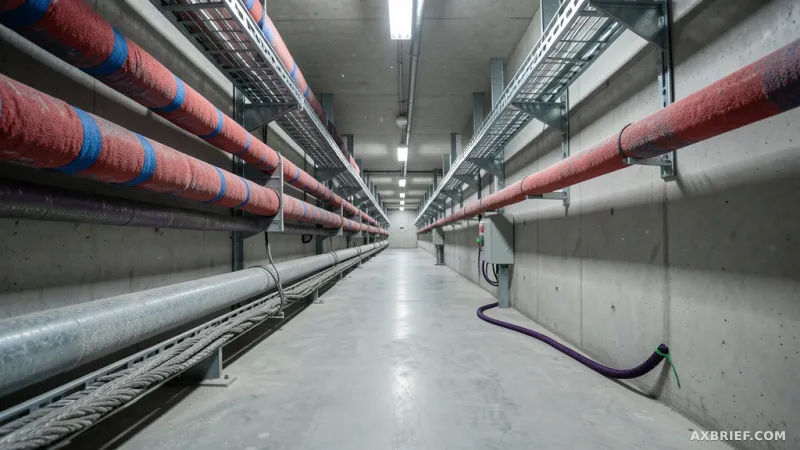
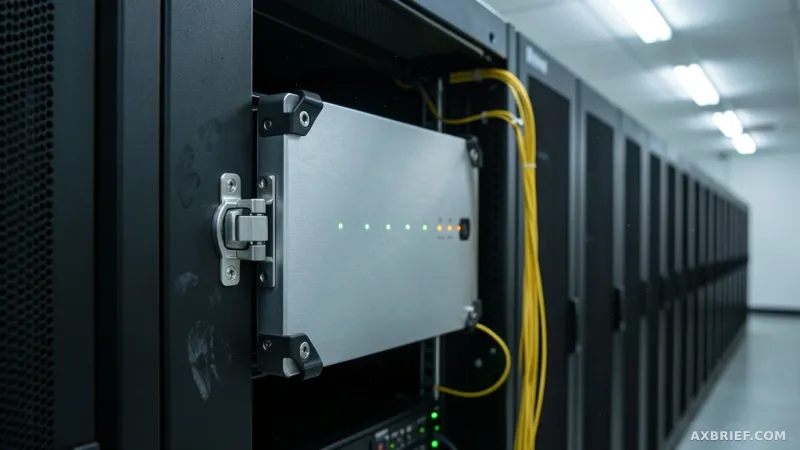
As the industry moves toward these complex agentic systems, a critical disconnect has emerged between chip availability and operational reality. The bottleneck is no longer just the GPU itself, but the physical environment required to run it. Microsoft, despite spending hundreds of billions of dollars on GPUs, has reportedly faced situations where equipment sat idle in warehouses due to insufficient power supply, inadequate cooling systems, and wiring failures. This has transformed the role of hardware providers. Dell has evolved from a PC manufacturer into an integrated infrastructure provider, assembling the racks and cooling systems necessary to make NVIDIA GPUs functional. This strategic pivot is reflected in Dell's market performance, with its stock price surging 240% this year, including an 80% jump following two consecutive earnings reports.
This infrastructure surge is happening alongside a volatile shift in the labor market. The narrative of AI-driven productivity is being used as a catalyst for corporate restructuring. Jack Dorsey recently cut 50% of the workforce at Block, arguing that AI enables a 1,000x increase in productivity scale. Similar justifications have appeared at Duolingo, Pinterest, and Meta. However, this trend reveals a deeper tension. While some executives use AI as a reason to trim organizations bloated during the zero-interest-rate era, others warn of a long-term talent vacuum. The CEO of AWS has argued that replacing junior employees with AI is fundamentally inefficient, as juniors are the most cost-effective workers and the most aggressive adopters of AI tools. Replacing them now risks a total collapse of software engineering capability a decade from now when there are no experienced seniors left to lead.
Technical benchmarks continue to climb, but the gap between performance and utility remains. MiniMax's M3 model introduced the MiniMax Sparse Attention (MSA) architecture, which scores content blocks to apply attention only to critical sections. This allows for a context window ranging from 512,000 to 1 million tokens without sacrificing speed. In rigorous testing, M3 outperformed Opus 4.7 and GPT-5.5 in Browser comp, SVG bench, kernel bench hard, and OS world benchmarks. Specifically, on the Software engineering bench pro, M3 recorded a score of 59%, surpassing both GPT-5.5 and Gemini 3.1 pro. Its long-horizon consistency was further proven in CUDA kernel optimization, where it increased hardware utilization from 7.6% to 71.3% and reproduced an ICLR 2025 paper in just 12 hours.
Despite these leaps, the ultimate challenge is not technical, but financial. Anthropic has secretly filed for an IPO in the United States, with rumored valuations reaching $965 billion. This puts it in the same stratosphere as OpenAI and SpaceX, potentially creating a cluster of trillion-dollar IPOs in a single year. The dilemma is whether the public equity market possesses the absorptive capacity to handle such massive valuations. The current reliance on cloud credits as a form of indirect investment and the staggering capital expenditure required for data centers suggest a fragile equilibrium. When the valuation of a company is driven more by the scale of its capital requirements than by its immediate cash flow, the risk shifts from the technology to the market's ability to sustain the price.
The true value of these AI giants will soon be measured not by their benchmark scores or the size of their token windows, but by whether the stock market can actually digest their scale.