Modern AI engineering is currently haunted by the RAG tax. For most development teams, building a Retrieval-Augmented Generation pipeline is less about the AI and more about the plumbing. Engineers spend weeks wrestling with the friction of connecting fragmented data sources, choosing the right embedding dimensions, and managing the brittle synchronization between a primary data store and a vector database. The gap between a successful proof-of-concept and a production-ready enterprise system usually lies in this infrastructure sprawl, where a single change in a document permission or a shift in data volume can break the entire retrieval chain.
The Automation of the RAG Infrastructure Stack
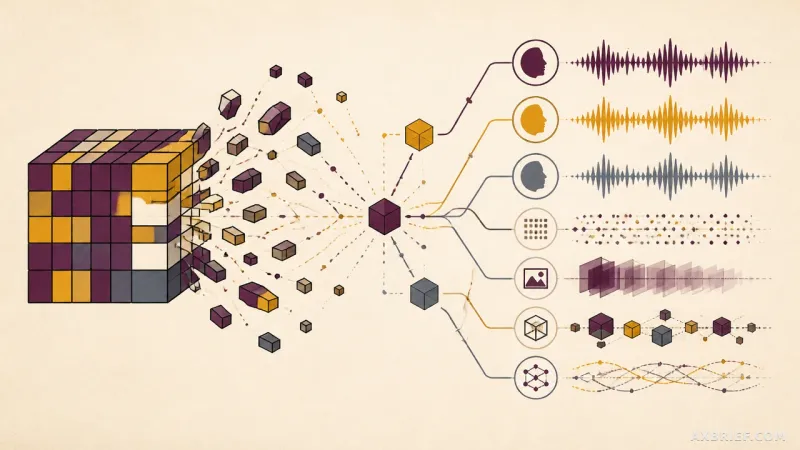
Amazon Bedrock Managed Knowledge Base enters the market to eliminate this manual assembly. The service abstracts the entire pipeline—data ingestion, parsing, storage provisioning, and retrieval logic—into a single managed entity. Instead of developers manually stitching together separate connectors and parsers, the system automates the flow from raw data to a queryable vector store. This shift reduces the setup time from several days or weeks to a matter of minutes via the AWS Management Console.
Connectivity is handled through six native connectors that integrate directly with Amazon S3, Microsoft SharePoint, Atlassian Confluence, Google Drive, Microsoft OneDrive, and a dedicated Web Crawler. For proprietary or unsupported sources, the service provides an ingestion API to bring in external data. To solve the problem of data staleness and excessive compute costs, the system employs an incremental synchronization method. This ensures that only modified or newly added documents are processed, maintaining the freshness of the knowledge base without re-indexing the entire corpus.
Parsing capabilities are designed to handle the messy reality of enterprise data. The system automatically selects parsing strategies based on the file format, extracting structured information from tables, charts, and complex mixed layouts without manual configuration. The supported limits are substantial: PDF, PPT, PPTX, and DOCX files up to 500MB, audio files up to 2GB, and video files up to 10GB. This multimodal approach allows a single pipeline to ingest diverse media types, removing the need for separate processing paths for text and rich media.
Once parsed, the content undergoes a chunking process to ensure the LLM receives context in an optimal size. While the service automatically selects the best chunking strategy based on data characteristics, developers retain granular control. They can implement fixed-size chunking by defining specific token limits or opt for a no-chunking configuration when the document structure demands it. The vector store itself is auto-provisioned, meaning engineers no longer need to manually define vector dimensions or similarity metrics. The infrastructure scales automatically from gigabytes to terabytes, removing the operational burden of index management, backups, and capacity planning. To ensure accuracy, hybrid search—combining keyword and semantic retrieval—is enabled by default, with all data encrypted at rest and in transit via AWS KMS.
From Simple Retrieval to Agentic Reasoning
The true distinction of the Managed Knowledge Base lies in how it moves beyond simple document lookup. Most RAG systems function as a basic search engine: they find a relevant snippet and feed it to the model. Bedrock splits this functionality into two distinct paths: the Retrieve API and the RetrieveAndGenerate API.
The Retrieve API is built for direct lookup. It is a high-speed path designed for single-fact verification or simple question-answering where a direct match in the database is sufficient. However, enterprise queries are rarely that simple. When a user asks for a comparison between two products or a synthesis of trends across ten different reports, a single search query fails. This is where the RetrieveAndGenerate API introduces agent-based search.
Instead of a linear search, the RetrieveAndGenerate API initiates an agentic loop. The model does not just search; it plans. The process follows a strict cognitive cycle: query analysis, plan formulation, sub-query generation, execution, result evaluation, and final response. If a user asks for a performance analysis between Product A and Product B, the agent recognizes this as a multi-hop reasoning task. It creates independent tasks to search for Product A's specs and Product B's specs, analyzes the intent, and then synthesizes the findings. If the agent determines the retrieved information is insufficient or contains logical gaps, it modifies its plan and performs additional searches before delivering the final answer.
Operators can tune this behavior using the `maxAgentIteration` parameter, which allows them to balance the depth of reasoning against response latency. Furthermore, the system allows for the selection of different foundation models for the planning and evaluation stages. A developer can use a high-reasoning model like Claude 3 Sonnet for complex planning and a lighter, faster model for simple evaluations to optimize cost and speed.
This intelligence is paired with a critical enterprise security feature: real-time ACL (Access Control List) checks. In traditional RAG, permissions are often baked into the vector index, meaning a change in a user's access rights requires a costly re-indexing of the data. Bedrock Managed Knowledge Base performs ACL checks at the moment of the query. It verifies permissions against the original source in real-time, ensuring that filtered documents exist only temporarily during the API call lifecycle. This prevents unauthorized data exposure and eliminates the need for complex permission synchronization.
Real-world applications already demonstrate the impact of this abstraction. OpenAI has utilized these RAG capabilities to provide personalized context to millions of users, ensuring response accuracy and grounded reasoning. Syngenta Group has synchronized data across SharePoint and Confluence to allow employees to generate on-demand knowledge bases. MRH Trowe operates an AI copilot across thousands of internal documents in English and German, leveraging native connectors and built-in permission controls to accelerate multilingual knowledge access.
Implementing the Pipeline in Three Steps
For developers, the transition from infrastructure management to implementation is reduced to three primary API calls: creating the knowledge base, adding the data source, and starting the ingestion.
The initial setup is handled via the `create_knowledge_base` API, which provisions the storage and search logic automatically.
response = bedrock_agent.create_knowledge_base(
 name='enterprise-kb',
 role_arn='arn:aws:iam::123456789012:role/service-role/BedrockKBRole'
)
When the application requires complex reasoning or multi-hop analysis, the `retrieve_and_generate` API is used to trigger the agentic search loop.
response = bedrock_agent_runtime.retrieve_and_generate(
 input={'text': 'A 제품과 B 제품의 성능 차이를 분석해줘'},
 retrieveAndGenerateConfiguration={
 'type': 'KNOWLEDGE_BASE',
 'knowledgeBaseConfiguration': {
 'knowledgeBaseId': 'KB12345678',
 'modelArn': 'arn:aws:bedrock:us-east-1::foundation-model/anthropic.claude-3-sonnet',
 'maxAgentIteration': 5
 }
 }
)
The system provides responses via streaming, and developers can use Trace Events to monitor the AI's internal thought process—observing exactly how the agent analyzes the query, generates sub-queries, and evaluates the results in real-time. Integration with the AgentCore Gateway further ensures that these interactions remain observable and secure.
The difficulty of building RAG has shifted. It is no longer a problem of infrastructure configuration, but a problem of data quality and connectivity. By automating the technical hurdles of parsing and vector provisioning, AWS has moved the engineer's focus back to the core challenge: refining the data itself.
The most efficient path to enterprise AI adoption now lies in using the RetrieveAndGenerate API to validate the utility of a data source without the overhead of managing the underlying machinery.