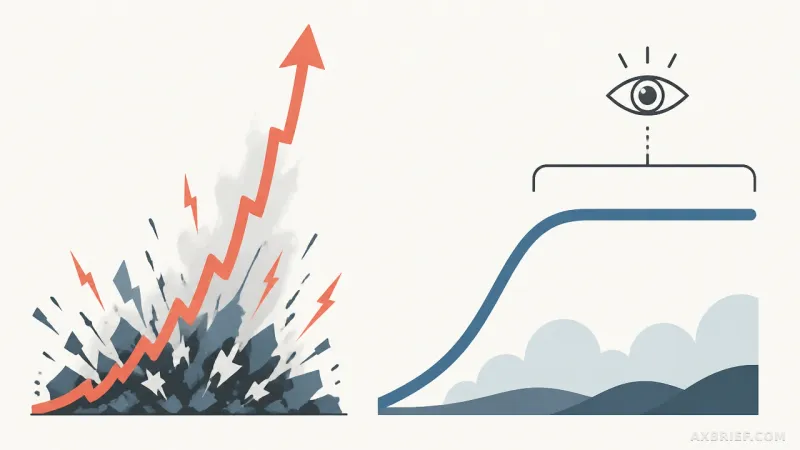
A fraud detection analyst opens their dashboard on a Tuesday morning to find a surge in false positives that should have been caught weeks ago. In a different office, a loan officer realizes that several high-risk applications were approved because the credit scoring model stopped recognizing new risk patterns. Meanwhile, a supply chain manager discovers a massive inventory surplus because the demand forecasting model began overestimating needs without triggering a single system alert. This is the nightmare of silent model degradation, where a machine learning model continues to return predictions with high confidence while its actual accuracy collapses in the background.
The Architecture of ML Governance
To combat this invisibility, Amazon SageMaker AI has implemented a comprehensive inference meta-monitoring system designed as a governance layer. This layer sits atop the production ML inference pipeline, providing a continuous stream of data quality metrics and prediction tracking. The architecture is built on a managed AWS ecosystem, integrating Amazon SageMaker AI with Amazon Athena, AWS Lambda, Amazon EventBridge, and Amazon QuickSight to remove the operational overhead of managing raw infrastructure. To enhance the precision of distribution analysis and experiment tracking, the system integrates open-source tools including Evidently AI and SageMaker AI MLflow Apps.
At the heart of this system is a centralized data lake composed of five Athena Iceberg tables. The process begins with a rigorous data partitioning strategy where prediction data stored in S3 is split into two primary categories: training data and evaluation data. The system employs an 80:20 split, allocating 80 percent to the training_data table and 20 percent to the evaluation_data table. To ensure this process is idempotent, the system uses a deterministic hash split based on the transaction_id. This ensures that the same identifier always maps to the same partition, preventing data leakage and ensuring that repeated pipeline executions yield identical results.
The evaluation_data table serves as the critical hold-out slice. By using data that the model never saw during training as the baseline, the system avoids the trap of over-optimism and provides an objective measure of performance decay. The SeedAthenaTrainingData step handles the initial distribution of CSV files from S3 into these tables. While the system provides a default configuration, developers can utilize the Bring your own dataset guide to swap in custom training sets, ensuring the baseline remains relevant as the business domain evolves.
The Asynchronous Bridge to Ground Truth
Most monitoring systems fail because they assume the answer is known immediately. In reality, the gap between a prediction and the ground truth can be days or weeks. Amazon SageMaker AI addresses this by decoupling the inference event from the label update. The custom handler in the inference endpoint does not write directly to a database, which would introduce latency into the user experience. Instead, it pushes every inference result to Amazon Simple Queue Service (SQS).
An inference-logger Lambda function consumes these messages using a batching strategy. The function triggers only when 10 prediction records have accumulated or 30 seconds have elapsed, whichever comes first. This batching minimizes write load on the Athena Iceberg tables while maintaining near real-time visibility. The resulting inference_responses table captures the input features, the confidence score, a timestamp, and a unique inference_id. These records remain in a pending state, waiting for their corresponding labels to arrive.
The true insight emerges when the system joins the inference_responses table with the ground_truth_updates table using the inference_id. In a credit card fraud scenario, a transaction is flagged in milliseconds, but the actual confirmation of fraud may take a week of investigation. By using an asynchronous join, the system can retroactively calculate accuracy and precision the moment the ground truth is updated. Records without a label are marked as NULL, ensuring they do not skew the current performance metrics until the data is verified.
To quantify the shift in data distribution, the system employs the Kolmogorov-Smirnov (KS) test. Unlike simple mean tracking, the KS test measures the maximum distance between the cumulative distribution functions of the training baseline and the current inference data. If the average transaction amount in the training set was 50 dollars but the current production data spikes to 500 dollars, the KS test identifies this as a statistically significant drift. This triggers a drift flag, signaling to the ML team that the model is encountering patterns it was not trained to handle.
The sensitivity of this detection is controlled via environment variables, allowing teams to define the lookback window for analysis.
DATA_DRIFT_LOOKBACK_DAYS: 1With this configuration, the system analyzes the last 24 hours of inference data to determine if the model has drifted from its baseline. This allows teams to quantitatively decide when a model requires retraining rather than relying on anecdotal evidence from end-users.
From Simulation to Production
Deploying this governance layer is handled through CloudFormation templates and a structured environment configuration. Users can initialize the entire monitoring stack by executing the template and configuring a .env file. This .env file overrides the default settings in config.yaml, allowing for rapid environment-specific tuning. Once the variables are set, a sequence of provided notebooks activates the pipeline.
However, there is a critical distinction between the demonstration environment and a production deployment. In the provided solution, Step 4 of the pipeline is a simulation that intentionally injects 15 percent inaccuracy by randomly flipping ground truth values. In a live production environment, this simulation must be replaced with a real business logic feed. For a fraud model, this means integrating the actual pipeline where bank confirmations, customer dispute resolutions, or manual auditor approvals are written into the ground_truth_updates table.
By separating the ground truth acquisition cycle from the inference cycle, the system transforms model monitoring from a reactive exercise into a proactive governance strategy. The ability to join delayed labels with original predictions via a unique identifier allows organizations to see exactly where their models are failing in real-time, effectively silencing the silent decay of machine learning performance.
This architecture shifts the burden of proof from the human analyst to the automated pipeline, ensuring that model degradation is caught by a statistical test long before it becomes a business crisis.