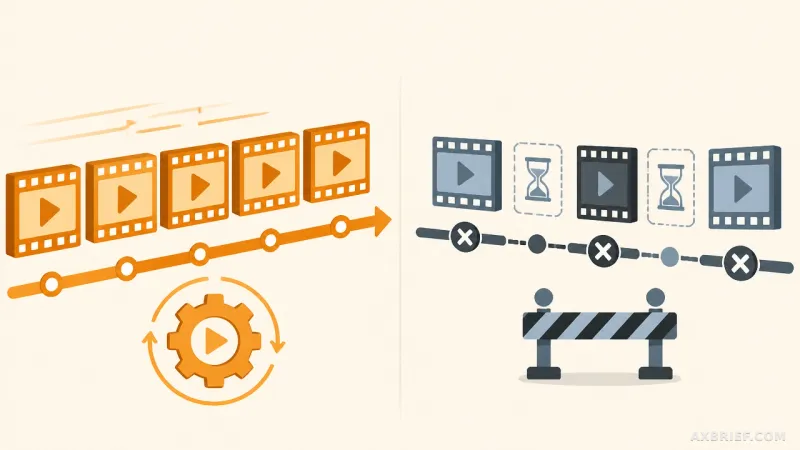
The modern enterprise AI landscape has devolved into a state of chaotic plurality. In any given Fortune 500 company, one engineering team is likely building structured workflows with rigid input-output paths, while another is experimenting with autonomous multi-agent orchestration, and a third is clinging to deterministic model pipelines to satisfy strict compliance requirements. This multi-everything environment is not a choice but a necessity. As foundation models evolve weekly, the trade-offs between latency, cost, and reasoning capabilities shift constantly. Developers are no longer looking for a single perfect model; they are building mosaics of custom agents, third-party SaaS features, and legacy internal systems. Yet, this flexibility has created a hidden tax: systemic fragmentation that threatens to stall production deployment.
The Friction of Forced Standardization
When organizations attempt to solve this fragmentation by mandating a single framework or a specific model provider, they inadvertently create a culture of shadow AI. Forcing a team that requires the high-reasoning capabilities of a frontier model to use a standardized, lower-cost alternative results in a performance gap that developers will inevitably bypass. This friction leads to the adoption of unauthorized architectures, where teams build 'around' the corporate standard to achieve their KPIs. The result is a fragmented ecosystem that is even harder to govern than one that was never standardized in the first place.
The deeper danger lies in tight coupling. When an application is hard-coded to a specific model's API or a proprietary framework's orchestration logic, the organization loses its agility. In a market where a new model can render a previous state-of-the-art architecture obsolete in a matter of months, tight coupling becomes a strategic liability. The ability to swap a model or shift a provider without rewriting the entire application logic is no longer a luxury; it is a requirement for survival. The challenge, therefore, is not how to standardize the tools developers use, but how to standardize the environment in which those tools operate.
The Strategic Split: Control Plane vs. Execution Plane
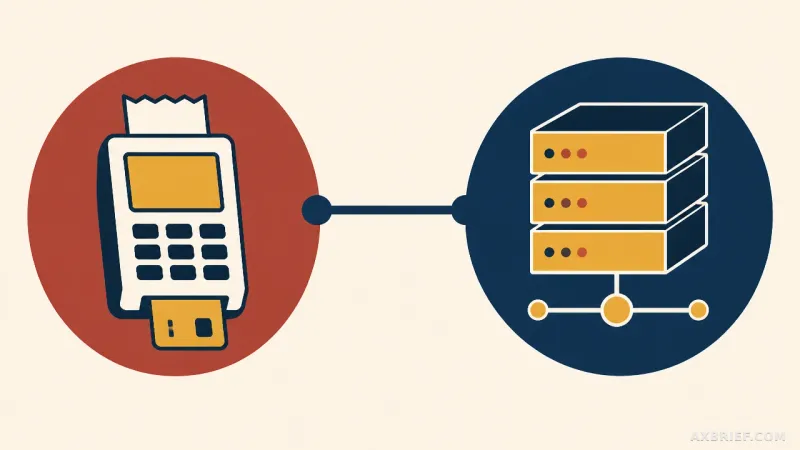
The resolution to this tension is the architectural separation of the control plane from the execution plane. Rather than trying to dictate which model a developer uses, the organization standardizes the layer that manages the model. The control plane acts as the centralized brain of the AI ecosystem, handling identity verification, policy enforcement, observability, and routing. It is here that the organization ensures a user has the correct permissions to trigger an agent, enforces API rate limits, and tracks token consumption across different teams for precise cost allocation. By centralizing these functions, the company maintains a consistent security and financial posture regardless of the underlying model.
Conversely, the execution plane is intentionally decentralized. This is where the actual development and running of AI agents occur. By decoupling execution from control, teams gain the autonomy to experiment with different frameworks or models without risking the stability of the broader system. If a team wants to test a new agentic framework, they can do so within their isolated execution environment. The control plane continues to monitor the telemetry and enforce policies, but the internal logic of the agent remains flexible. This separation creates a safety buffer, ensuring that an experimental failure in one agent does not cascade into a system-wide outage.
To manage this complexity, a scalable agent system must adhere to seven core operational principles. First, the separation of control and execution must be absolute, ensuring that governance is not embedded within the agent logic itself. Second, observability must be unified; the organization needs a telemetry layer that captures inputs, outputs, and latency across all frameworks, rather than relying on provider-specific dashboards. Third, central governance must be implemented as a platform feature, moving security and compliance checks out of the application code and into the infrastructure.
Fourth, the system must employ dynamic routing, matching tasks to resources based on real-time requirements for cost, speed, and accuracy. Fifth, resilience is mandatory, utilizing retries, circuit breakers, and fallback paths to switch to an alternative model instantly if a primary provider fails. Sixth, the architecture must support incremental evolution, moving from simple centralized orchestration to a more complex event-driven distributed system as the agent population grows. Finally, built-in optimization, such as intelligent caching and input complexity analysis, should be used to dynamically select the most efficient model for a given prompt.
Amazon SageMaker serves as the foundational execution layer that makes this architectural split possible. By providing a unified environment for model lifecycle management and large-scale inference, SageMaker allows enterprises to mix frameworks like PyTorch and TensorFlow while maintaining a consistent deployment pipeline. This eliminates infrastructure fragmentation, as the process for building and deploying a model remains the same regardless of the model's origin. This consistency reduces the switching cost of moving from one model to another, effectively neutralizing vendor lock-in.
By leveraging SageMaker as the execution engine, companies can start with a centralized orchestration model to establish visibility and control, then gradually transition toward a highly scalable, event-driven architecture. The ultimate goal is a system where the control plane intelligently routes a request to the most optimal execution path in real-time, balancing performance against cost without the developer ever having to hard-code a specific provider into the application logic.
This shift from tool-standardization to plane-separation transforms AI from a collection of fragile experiments into a robust corporate utility.