Every machine learning engineer has faced the sudden, jarring halt of an Out-of-Memory error during a critical training run. The immediate reaction is usually a series of compromises: slashing the batch size, shortening sequence lengths, or diving into the complexities of model sharding. These adjustments are not merely inconveniences; they introduce significant communication overhead and slow the pace of discovery. The industry has long waited for a hardware shift that allows developers to stop managing memory constraints and start focusing on model architecture.
The P6-B200 Architecture and the End of Memory Bottlenecks
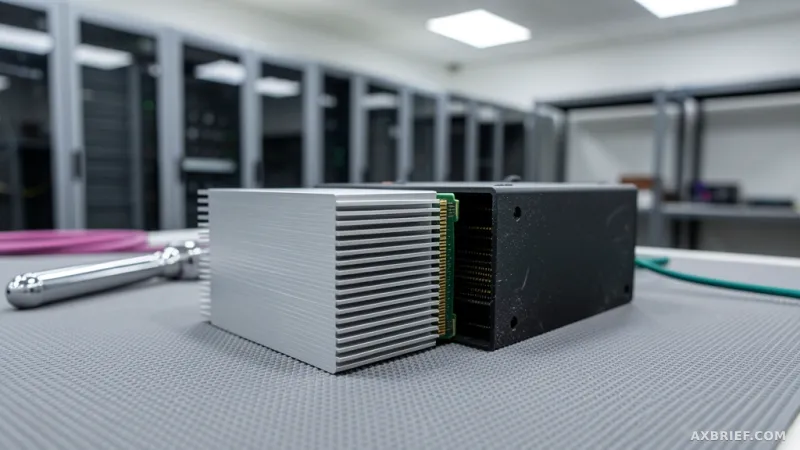
Amazon SageMaker AI has addressed these physical constraints by introducing P6-B200 instances, which pack eight NVIDIA Blackwell GPUs into a single node. The primary catalyst for this performance leap is the massive expansion of High Bandwidth Memory (HBM). The B200 model provides 180GB of HBM, while the B300 pushes this further to 268GB. This increase in available memory directly alleviates the pressure felt during the processing of large batches and long sequences, effectively simplifying the model sharding process. By reducing the need to move data across multiple devices, the system minimizes unnecessary communication latency and increases overall training throughput.
Beyond raw capacity, the Blackwell architecture utilizes a dual-chip design and fifth-generation Tensor Cores to accelerate AI computations. The connectivity is handled by NVLink 5, which provides a bidirectional GPU-to-GPU bandwidth of up to 1.8 TB/s. This high-speed interconnect allows the eight GPUs to function as a single, cohesive computational unit. Consequently, large-scale models that previously demanded complex multi-node configurations can now run on a single 8-GPU node, drastically reducing network overhead and shortening the time between training iterations.
These capabilities are integrated directly into Amazon SageMaker AI training jobs. The platform automatically provisions and manages the underlying computing infrastructure, allowing teams to pivot their focus from server orchestration to algorithm optimization. For organizations requiring guaranteed access, the Flexible Training Plan provides predictable resource availability and automated cost management, making the deployment of massive models more economically viable.
The Strategic Trade-off: Trading Compute for 8x Throughput
While raw hardware specs are impressive, the real breakthrough occurs when software strategies are aligned with the hardware's capacity. GPU resources are expensive, and running a chip at sub-optimal capacity due to small batch sizes is a waste of capital. The challenge is that even with 180GB of HBM, the memory footprint of intermediate activations in deep neural networks can trigger OOM errors. The solution is Activation Checkpointing, a technique that trades a small amount of computation time for a massive amount of memory space.
In a standard forward pass, every intermediate activation value is stored in memory to be used later during backpropagation for weight updates. Activation Checkpointing changes this by storing only a few strategic checkpoints and re-calculating the missing values on the fly during the backward pass. This introduces a computational overhead—typically between 10% and 30% depending on the model architecture—but it clears the memory runway for much larger workloads.
The impact of this strategy is evident in benchmarks using a 1B parameter model with MXFP8 precision and an 8K sequence length. Without activation checkpointing, a batch size of 1 yields a throughput of approximately 6K tokens per second, with peak memory usage hitting 15.5GB. When activation checkpointing is enabled at the same batch size, peak memory usage plummets to 2.3GB. While the re-calculation overhead slightly dips the initial throughput, it creates the necessary headroom to scale the batch size.
When the batch size is increased to 16 using activation checkpointing, the throughput explodes to approximately 51K tokens per second. This represents an 8x increase over the baseline throughput without checkpointing. Although peak memory rises to 22.8GB in this configuration, it remains well within the limits of the Blackwell GPU. The insight here is clear: by accepting a slight penalty in individual operation speed, developers can process vastly more data simultaneously, maximizing the total efficiency of the hardware.
Precision Scaling from FP8 to NVFP4
Optimizing throughput also requires a nuanced approach to numerical precision. The fifth-generation Tensor Cores in the Blackwell architecture support FP8, MXFP8, and NVFP4 formats. Contrary to popular belief, these low-precision formats are not primarily about saving memory space, but about maximizing the number of operations the GPU can perform per clock cycle. Because low-precision formats reduce the memory bandwidth requirements per operation, the GPU can feed its cores more efficiently.
However, the NVIDIA TransformerEngine maintains a memory-neutral state by keeping both high-precision master weights and quantized copies in memory to ensure training stability. This means that switching to low precision does not automatically lower the memory footprint, but it does change the nature of the bottleneck. Small models are typically compute-bound, meaning the actual calculation speed is the limiting factor. In these cases, the overhead of quantization and managing multiple weight copies can offset some of the throughput gains.
Large models, conversely, are memory-bound. The bottleneck is not the calculation itself, but the time it takes to move data from HBM to the processing cores. Low-precision formats like NVFP4 directly solve this by reducing the data footprint, leading to significant performance jumps. NVFP4 is particularly potent for inference workloads, where the need to maintain high-precision weights for updates is eliminated, allowing the system to leverage the full speed of the hardware.
To manage this complexity, the TransformerEngine employs automatic mixed-precision switching, fused kernels to reduce memory access, and dynamic loss scaling to prevent numerical instability. For developers, the decision to move to low precision depends on whether the model is compute-bound or memory-bound. If a model already achieves sufficient throughput at FP16 without memory pressure, the engineering complexity of low-precision formats may not be justified. The gold standard for validation remains the loss curve; developers must track convergence to ensure that precision reductions do not degrade model accuracy.
Transitioning to Single-Node 8-GPU Training
The shift toward P6-B200 instances fundamentally changes the operational logic of training models in the 1B to 64B parameter range. Previously, these models often required multi-node clusters, which introduced a layer of networking complexity and latency. By consolidating the workload onto a single node with eight Blackwell GPUs, the network overhead associated with inter-server communication is virtually eliminated.
This consolidation shortens the iteration cycle. When an engineer can modify a model and restart training without configuring a multi-node environment or battling network bottlenecks, the speed of hypothesis testing increases. The reduction in infrastructure management points also translates to lower operational costs and fewer points of failure.
To maximize this single-node efficiency, developers must prioritize their resource allocation based on the specific goal. If the priority is raw throughput, the focus should be on batch size tuning to saturate GPU utilization. If the bottleneck is communication, simplifying the sharding structure—the method of distributing model parameters across GPUs—is the most effective path. Because the internal interconnects of a single node are so fast, complex distributed strategies are often unnecessary.
For tasks requiring long context windows, memory priority must be shifted toward sequence length. Since both batch size and sequence length compete for the same HBM, finding the equilibrium between the two is the central challenge of single-node optimization. The final choice of precision—whether FP8 or NVFP4—serves as the final lever to resolve whether the workload remains compute-bound or memory-bound.
In the broader landscape of AI development, these advancements represent a convergence of hardware power and software intelligence. Tools like PyTorch FSDP (Fully Sharded Data Parallel) allow developers to distribute parameters, gradients, and optimizer states across GPUs to overcome physical limits. When combined with the managed environment of Amazon SageMaker and the acceleration of the NVIDIA TransformerEngine, the barrier to training state-of-the-art models is lowered. The focus has shifted from surviving the OOM error to orchestrating the most efficient path to convergence.