For millions of patients worldwide, the journey from a suspected symptom to a definitive diagnosis is often a grueling odyssey. In the realm of rare diseases, this struggle is compounded by a systemic lack of data. Because these conditions affect small, geographically dispersed populations, clinical researchers spend years manually building patient registries, identifying therapeutic targets, and designing trials from scratch. The inherent uniqueness of each disease has historically acted as a wall, preventing scientists from seeing the shared biological mechanisms that might link one rare condition to another.
The Logistics of the Anthropic Research Grant
To break these bottlenecks, Anthropic has launched a targeted support program providing up to $50,000 in Claude credits to researchers focusing on rare genetic diseases. The application window remains open until August 2, 2026, at 11:59 PM PST. This initiative targets a massive global health gap, addressing more than 7,000 types of rare diseases that collectively affect approximately 400 million people. By leveraging the pattern recognition capabilities of Large Language Models, Anthropic aims to help researchers overcome data scarcity and foster a more connected global research community.
The program is structured into two distinct tracks to ensure support reaches different stages of the pipeline. The first track focuses on basic science and the discovery of disease mechanisms, encouraging collaboration between clinical researchers, patient advocacy groups, and data scientists. The second track is designed for early-stage biotech companies looking to accelerate the clinical development of actual therapies. This tiered approach allows for customized API support, ensuring that a discovery made in a lab can move more rapidly toward a clinical application.
Selected participants gain access to Claude Opus and general-purpose models approved for biological use. Recognizing the sensitivity of biotech research, Anthropic employs biological risk classifiers to detect the potential for misuse, such as the creation of biological weapons. However, the company has established a specific exception approval process for legitimate researchers, framing this as part of its beneficial deployments strategy. The goal is to remove the manual labor of data retrieval so scientists can focus on high-level analysis.
From Chatbots to Agentic Science via DisMech
While providing credits is a significant financial boost, the real shift occurs in how Claude is being integrated into the scientific workflow. The challenge with rare disease data is not just its volume, but its fragmentation. The Monarch Initiative, an international consortium dedicated to rare disease diagnosis, has spent years standardizing this data. They utilize the Mondo Disease Ontology, a computational framework that unifies disease definitions from disparate sources like OMIM, Orphanet, and ICD into a single system that an LLM can actually comprehend.
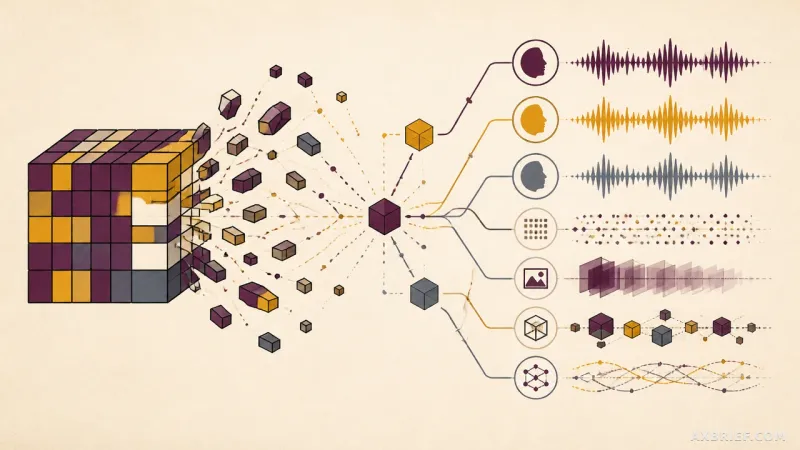
Building on this, the Monarch Knowledge Graph integrates genotype-phenotype data across different species. This foundation led to the creation of DisMech, an agent-friendly disease classification library. DisMech transforms case reports, variant databases, registry schemas, and raw public data into a structure that Claude can read and analyze autonomously. This represents a fundamental transition in methodology: instead of a human researcher manually comparing two diseases to find similarities, an AI agent can now scan massive datasets to identify shared biological pathways at scale.
When Claude interacts with the DisMech library, it can synthesize unstructured case reports with complex variant databases to identify mechanistic similarities that were previously invisible. This allows researchers to generate and validate new hypotheses for treatment far faster than traditional literature reviews would allow. By ensuring data interoperability, the environment allows the LLM to leap across different datasets to suggest novel therapeutic strategies. Detailed resources and community participation guidelines are available at monarchinitiative.org.
Compressing the Twelve Year Development Cycle
Even when a biological mechanism is discovered, the path to a cure is blocked by administrative friction. The traditional pharmaceutical pipeline is notorious for its length, often taking over a decade to bring a drug to market. Even after a genetic diagnosis is made, patients often wait one to two years to receive treatment due to bottlenecks in manufacturing slots, sequential safety studies, and the mountain of paperwork required for regulatory approval.
Anthropic is positioning Claude to attack these administrative hurdles directly. The model is being used to automate the drafting and review of regulatory dossiers, the massive documents required for drug approval. Beyond paperwork, Claude helps researchers select the optimal modality for a treatment, whether it be a small molecule, an antibody, or a gene therapy. One of the most promising shifts is the move toward basket trials. Instead of filing a separate Investigational New Drug (IND) application for every single rare disease, researchers can use AI to group patients with shared mechanisms, streamlining the approval process through a single, integrated trial.
Several organizations are already integrating these workflows into their production pipelines. Every Cure uses Claude to analyze millions of candidates for drug repurposing, searching for existing medications that could treat rare diseases. The Centre for Population Genomics has implemented a system for drafting variant classifications, significantly reducing the time experts spend on manual review. Meanwhile, the Violet Research Institute has adopted a full-stack AI approach, using Claude for everything from navigating FDA guidelines and executing bioinformatics pipelines to analyzing experimental data and writing regulatory documents.
This shift toward agentic science—where AI autonomously handles research tasks rather than just answering prompts—is redefining productivity in biotechnology. By automating the most labor-intensive parts of the process, such as regulatory writing and genomic data processing, the time between a laboratory discovery and a clinical trial is drastically compressed. In the world of rare diseases, where every day of delay impacts patient survival, the ability to turn fragmented data into a regulatory filing via AI is more than a convenience; it is a critical acceleration of medicine.