
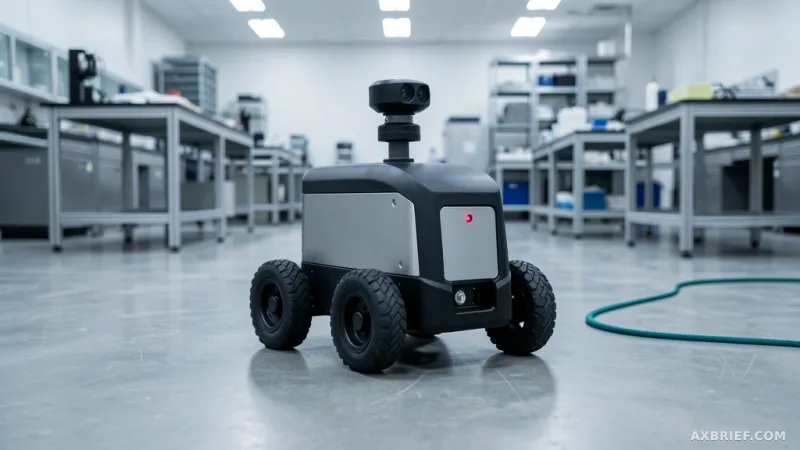
The robotics industry has long struggled with a recurring nightmare known as the prototype gap. An engineer spends months perfecting a single robot on a workbench, only to find that deploying that same intelligence across a fleet of one hundred machines is a logistical catastrophe. The friction does not usually lie in the AI model itself, but in the plumbing. Every single device requires a precise OS build, specific driver versions, and a fragile set of configurations that often break the moment they leave the lab. This bottleneck has historically turned hardware deployment into a slow, manual process where a single configuration error can brick an entire shipment of devices.
The Declarative Architecture of Physical AI
Peridio has entered this fray with the general availability of Avocado OS 1.0, an operating system specifically engineered for Physical AI. Physical AI refers to the integration of advanced artificial intelligence with physical hardware, requiring a level of stability and predictability that standard general-purpose operating systems cannot provide. The core innovation of Avocado OS 1.0 is its shift toward a declarative structure. In a traditional imperative system, a developer must provide a sequence of commands to reach a desired state, which often leads to configuration drift across a fleet. In contrast, a declarative system allows the developer to define the final desired state in a single configuration file, leaving the system to handle the underlying execution.
By utilizing a single configuration file, developers can describe the entire system state required for their Physical AI environment. This ensures that every device in a fleet is an exact mirror of the defined specification, eliminating the manual troubleshooting that typically plagues hardware teams. When a change is needed, the developer updates the configuration file rather than running a series of patches across individual machines. This architectural shift transforms the OS from a volatile collection of scripts into a predictable asset. Detailed specifications and implementation guides for this environment are available at peridio.com.
From Quarterly Build Cycles to Laptop-Based Deployment
The most significant friction point in robotics has been the dependency on specialized OS teams. For years, the industry standard involved a rigid hierarchy where hardware engineers had to request OS changes from a dedicated systems team. These teams operated massive build servers and followed release cycles that often spanned entire quarters. If a developer discovered a critical bug in the OS layer, the path to a fix involved a bureaucratic loop of tickets and server-side builds that could take weeks or months to propagate to the actual hardware.
Avocado OS 1.0 collapses this entire infrastructure. The requirement for dedicated OS teams and centralized build servers is removed, shifting the power of deployment directly to the individual engineer. The entire process now takes place on a single laptop. By defining the system in the configuration file and executing three specific commands, the system generates a signed, immutable image. An immutable image is a read-only file system that cannot be modified after it is created, which prevents the common issue of accidental configuration changes during field operations. The signing process ensures that only authenticated, secure images are executed on the hardware.
This transition changes the fundamental unit of time for robotics development. The build cycle is no longer measured in quarters, but in minutes. By moving the build process to a local environment and utilizing immutable images, Peridio has effectively decoupled the OS deployment from the organizational bottlenecks of traditional enterprise hardware management. The engineer who writes the code now possesses the tools to ship the OS, removing the middleman and the associated latency.
This shift toward local, declarative OS management suggests a future where hardware is as agile as software. When the operating system becomes a versioned artifact generated in minutes, the iteration speed of Physical AI can finally match the speed of the models driving it.



