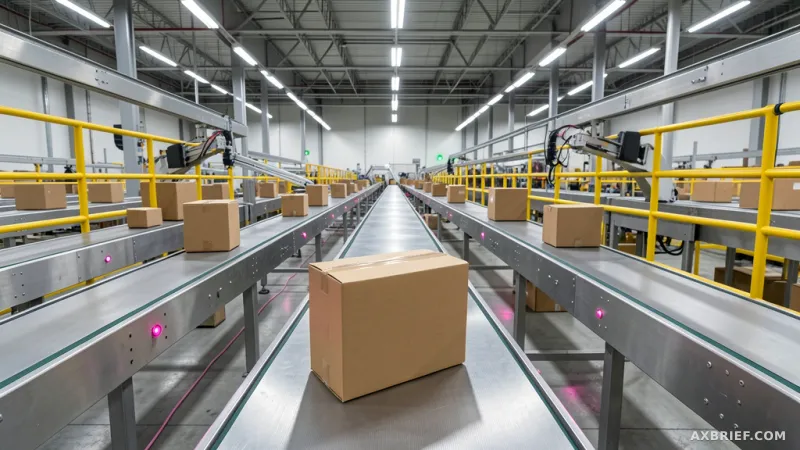
A logistics manager at a global fulfillment center starts their morning with a high-accuracy demand forecast. The machine learning model has correctly predicted exactly how many packages will move through the hub and where they are headed. Yet, as the clock ticks toward the first truck departure, the manager is still staring at a whiteboard, manually sketching out driver assignments and route sequences. The AI told them what would happen, but it cannot tell them exactly what to do. This gap between prediction and execution is where the most expensive inefficiencies in the modern supply chain reside.
The Architecture of Prescriptive Analytics
AWS is closing this execution gap through the implementation of mathematical optimization, a core component of prescriptive analytics. While traditional descriptive analytics explain the past and predictive analytics forecast the future, prescriptive analytics determine the optimal course of action to achieve a specific goal under a set of defined constraints. This represents a fundamental shift in how AI is deployed in industrial settings, moving from a tool that suggests possibilities to a system that dictates the most efficient path forward.
At its core, this approach distinguishes between inductive and deductive AI. Machine learning is inherently inductive; it analyzes vast datasets to identify patterns and provide probabilistic guesses. Mathematical optimization, however, is deductive. It uses rigorous mathematical principles to provide a deterministic, provable answer. In high-stakes operational environments, a high-probability guess is often insufficient. A truck cannot be 95% likely to fit its cargo, and a driver cannot be 90% likely to comply with legal driving hour regulations. These are hard constraints that require a binary, mathematically certain resolution.
To operationalize this, AWS employs a predict-then-optimize pipeline. In this architecture, a machine learning model first predicts a variable, such as demand or the likelihood of a system failure. This prediction then serves as the input for an optimization model, which calculates the best execution plan. This structure functions similarly to how Amazon Bedrock Guardrails restrict generative AI outputs to a factual scope to prevent hallucinations. By constraining decision-making within a mathematically provable range, AWS ensures that the resulting instructions are not just efficient, but physically and legally executable.
This methodology is codified into a four-stage framework. The process begins with the Discover phase, where engineers identify specific operational bottlenecks. This is followed by the Model phase, where the problem is translated into a mathematical objective function and a set of constraints. The Solve phase then applies optimization algorithms to find the best possible solution. Finally, the Architect phase transforms the solution into a reusable structure that can be deployed across different regions or processes without starting from scratch.
The Shift from Probability to Proof
The critical difference between a standard ML implementation and a mathematical optimization pipeline becomes evident when dealing with hard constraints. An ML model might suggest a route that is statistically faster based on historical data, but it may inadvertently ignore a bridge's weight limit or a strict delivery time window. Optimization models treat these constraints as non-negotiable boundaries. By defining these limits as mathematical equations, the system forces the solution to exist only within the realm of what is actually possible.
This transition from probabilistic guessing to deterministic proof has yielded massive financial returns in real-world deployments. Within the Amazon EU logistics network, this framework was applied to a massive scale involving 90 warehouses, 34 sorting centers, and 242 delivery stations. By optimizing over 11,000 distinct routes, AWS used ML to predict demand and optimization to determine precise truck departure times. This resulted in a 20 to 50 basis point improvement in next-day delivery coverage, creating value measured in tens of millions of dollars.
Similar efficiencies are appearing across diverse industries. Delivery Hero implemented an automated routing solution for middle-mile logistics in complex urban environments. By managing the movement of 50 to 150 pallets daily, they reduced planning costs by up to 24%. In the manufacturing sector, the BMW Group optimized the path sequencing for robots applying sealant to vehicle chassis, which improved robot cycle times by up to 10%.
Even in the healthcare sector, the impact is quantifiable. The Australian Red Cross Lifeblood utilized a CP-SAT solver to optimize nurse work schedules. This implementation led to a theoretical cost reduction of 7%, with projections suggesting that if supply volumes were to double, the cost savings would scale up to 46%. These results highlight a recurring theme: the more complex the constraints and the larger the scale, the greater the advantage of deductive optimization over inductive prediction.
For organizations operating in high-density environments, such as quick-commerce in urban centers or precision manufacturing lines, the ability to build reusable methodologies is a significant competitive advantage. Rather than solving each bottleneck as a unique problem, AWS provides accelerated solutions that allow companies to model industry-specific constraints once and scale that logic across their entire enterprise. This reduces the time to production and ensures that operational efficiency is a systemic capability rather than a series of isolated wins.
When a company correctly predicts demand but still struggles with truck dispatching or staff scheduling, the failure is not in the AI's intelligence, but in its nature. Machine learning provides the map, but mathematical optimization provides the turn-by-turn directions. By integrating these two forces into a single pipeline, enterprises can finally move past the era of probabilistic suggestions and enter the era of provable operational excellence.