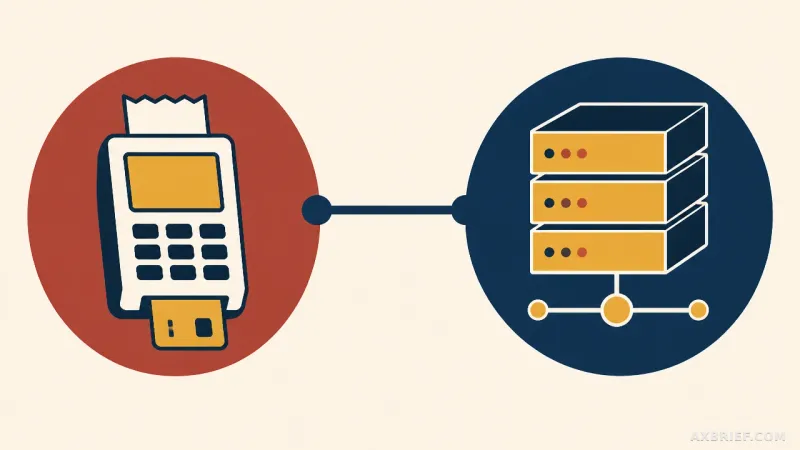
Engineering teams deploying AI agents are hitting a scaling wall that has nothing to do with model intelligence and everything to do with networking. As an organization moves from a single prototype to a fleet of twenty specialized agents across different teams and vendors, the communication overhead explodes. Without a central orchestrator, these agents rely on point-to-point connections, creating a mathematical nightmare where twenty agents require up to 190 individual connection paths. Every new agent added to the ecosystem forces a manual audit of existing links, a proliferation of scattered API keys, and a fragmented security posture that slows deployment to a crawl.
The Serverless Blueprint for Agent Orchestration
AWS addresses this operational friction by introducing a centralized gateway pattern that transforms the agent ecosystem into a hub-and-spoke model. Instead of agents talking directly to one another, every request passes through a single entry point that handles routing, authentication, and discovery. This gateway is agnostic to the backend; whether an agent is hosted on Amazon ECS, AWS Lambda, the Amazon Bedrock AgentCore Runtime, or even a hybrid cloud environment, it is accessed via a standardized domain using path-based routing. Clients simply call `/agents/{agentId}`, and the gateway resolves the request to the correct backend destination.
The underlying infrastructure is built entirely on a serverless stack to eliminate server management and optimize cost. Amazon API Gateway serves as the front door, utilizing REST APIs to support Server-Sent Events (SSE) streaming, which is critical for the real-time, token-by-token responses expected from modern AI agents. The core routing logic resides in AWS Lambda, while Amazon DynamoDB acts as the system's brain. DynamoDB maintains three critical tables: a registry mapping agent IDs to backend URLs, a permissions table for access control, and a RateLimitCounters table to track requests per minute.
Security is integrated into the identity layer via Amazon Cognito, which implements OAuth 2.0 client credentials flows to issue JSON Web Tokens (JWT). To ensure that sensitive backend credentials never leak into the application code, the system retrieves OAuth client secrets from AWS Secrets Manager using Amazon Resource Name (ARN) lookups. To move beyond simple ID-based routing, the architecture incorporates Amazon Titan Text Embeddings. By vectorizing agent descriptions and storing them in Amazon S3 Vectors, the gateway enables semantic discovery, allowing users to find the right agent through natural language queries rather than static IDs.
From Simple Routing to Dynamic Policy Enforcement
The true shift in this architecture is the transition from static routing to dynamic, identity-aware orchestration. The system employs a Lambda Authorizer that does not merely validate a token but actively transforms JWT scopes into granular access controls. When a client submits a token containing scopes such as `billing:read` or `support:write`, the authorizer queries the DynamoDB Permissions table to determine which agents the user is authorized to invoke. It then dynamically generates an IAM (Identity and Access Management) policy that grants access only to specific paths, such as `/agents/agent-a/*`.
This design ensures that unauthorized requests are intercepted and rejected at the API Gateway level, long before they ever reach the backend Lambda functions, significantly reducing the attack surface. To prevent system exhaustion, the Proxy Lambda utilizes DynamoDB Atomic Counters combined with Time-to-Live (TTL) settings to enforce strict request quotas per user and agent. When a quota is exceeded, the gateway returns a 429 status code accompanied by a `Retry-After` header, maintaining system stability under heavy load.
Interoperability is further solidified by adhering to the A2A (Agent-to-Agent) protocol. The gateway supports two distinct binding methods to accommodate different architectural preferences. For lightweight, method-driven communication, it supports JSON-RPC, where a single endpoint is used and the specific method is defined in the request body:
{ "jsonrpc": "2.0", "method": "get_weather", "params": { "location": "Seoul" }, "id": 1 }
For teams preferring traditional web standards, the gateway provides HTTP+JSON/REST bindings, allowing for intuitive, resource-oriented URL paths. By combining these protocols with the S3-based semantic search, the gateway evolves from a simple proxy into an intelligent discovery layer. A user can input a vague business requirement in plain English, and the system will mathematically identify the agent with the most similar functional description and route the request automatically.
Infrastructure as Code and Registry-Driven Operations
To move this from theory to production, the entire environment is codified using Terraform. This allows engineers to deploy the full suite of DynamoDB tables, Cognito user pools, Amazon ECR repositories, Lambda functions, and IAM roles in a single operation. By utilizing the aws-samples repository, developers can configure their environment via the `terraform/terraform.tfvars` file and execute the deployment with a single command:
terraform applyOnce the infrastructure is live, the operational model shifts from network configuration to registry management. Using the provided Weather Agent and Calculator Agent examples, administrators can verify independent deployments and register new agents into the ecosystem using a management JWT and a simple API call:
curl -X POST $GATEWAY_URL/admin/register -H "Authorization: Bearer $JWT" -d @agent_config.jsonThis approach fundamentally changes the lifecycle of AI agent deployment. Operators no longer need to modify VPC routes, update security groups, or manually distribute API keys every time a new capability is added. By registering a functional description and a backend URL in the central registry, the agent is instantly discoverable, secured, and rate-limited. The complexity of the network is abstracted away, leaving only a logical mapping of permissions and capabilities.
This architectural shift moves the industry away from the fragile point-to-point connectivity of the early agent era toward a scalable, governed, and programmable agent mesh.