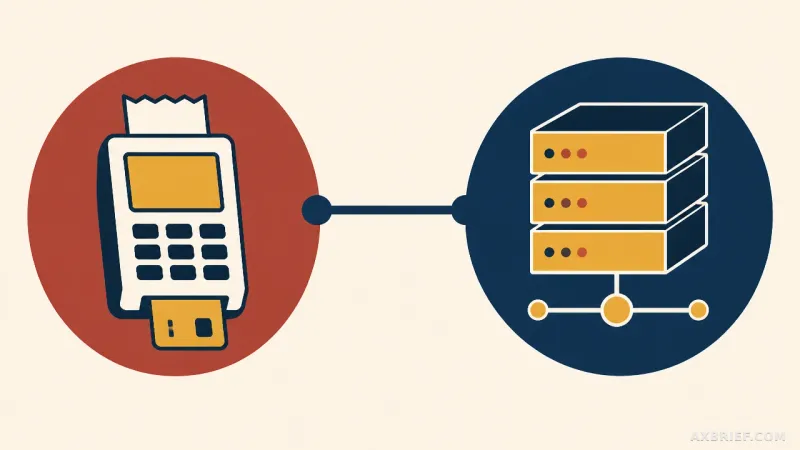
The modern AI developer spends a disproportionate amount of time acting as a part-time systems administrator. The cycle is predictable: a high-performance open-weight model like DeepSeek V4 Flash drops, and the race begins. Engineers scramble to secure H100 clusters, wrestle with Kubernetes configurations, and spend hours debugging container environments just to see if a model's reasoning capabilities actually fit their specific use case. This infrastructure tax creates a massive friction point between the discovery of a model on Hugging Face and the first successful API call in a production-like environment.
The New Serverless Pipeline for Open Weights
Baseten has fundamentally altered this workflow by joining the Hugging Face Hub as an official inference provider. This integration transforms the model page from a static repository of weights into a live execution environment. Instead of downloading gigabytes of tensors to a local machine or renting a dedicated GPU instance, developers can now trigger serverless inference directly from the Hugging Face interface. Baseten specializes in serverless AI infrastructure, and by embedding its capabilities into the Hub, it removes the need for manual GPU orchestration entirely.
At launch, the integration focuses on the most critical workloads: conversational AI and text generation. The system currently supports a suite of cutting-edge open-weight LLMs, including DeepSeek V4 Flash, Kimi K3, and GLM-5.2. For a model like DeepSeek V4 Flash, which is prized for its efficiency and speed, the ability to call it as a serverless API means developers can measure latency and output quality in seconds rather than hours. While the current focus is strictly on text-based generation, Baseten intends to expand this support to other modalities, including Text-to-Speech (TTS), in future updates.
Accessing these models is handled through a streamlined SDK approach. For Python developers, updating the `huggingface_hub` package to version 1.26.1 or higher unlocks Baseten's infrastructure. This eliminates the need for the traditional glue code typically required to bridge a model's weights with a third-party inference endpoint. In the JavaScript ecosystem, the `@huggingface/inference` package provides the same capability, allowing frontend and Node.js developers to integrate high-performance inference without configuring a backend GPU cluster. The entire routing mechanism is centered on the Hugging Face token; once authenticated, requests are automatically routed to Baseten's high-performance compute nodes. Users can find the full list of supported models and their specifications at the Baseten Hugging Face page.
The Economic Shift and the Death of Glue Code
The true significance of this integration lies in the distinction between direct API access and routed inference. When a developer uses a Baseten API key directly, they are operating within the Baseten ecosystem, and billing is handled through their Baseten account. However, when using the Hugging Face Hub routing method, the system employs a pass-through pricing model. This means that while the request is routed through Hugging Face to Baseten's hardware, there is zero additional markup or platform fee added by Hugging Face. The user pays the standard provider rates, effectively treating Hugging Face as a transparent gateway to Baseten's compute.
This architectural choice solves a major pain point for enterprise teams who want to experiment with multiple models without managing a dozen different billing accounts. By using the routing method, a team can maintain a single point of authentication and billing through Hugging Face while leveraging Baseten's specialized serverless hardware. It shifts the developer's focus from cost-optimization of idle GPU instances to the actual performance of the model.
Beyond billing, the integration removes the technical debt associated with agent frameworks. Developers using harnesses like Pi, OpenCode, Hermes Agents, or OpenClaw often spend days writing wrapper code to ensure their agent can communicate with a specific model's API. Because Baseten's hosted models on Hugging Face follow a standardized endpoint structure, these frameworks can connect to the models almost instantly. The endpoint provided on the model page can be inserted directly into the agent's configuration, allowing the developer to spend their time optimizing prompts and task execution rather than debugging HTTP headers.
For those scaling from a prototype to a pilot, the Hugging Face PRO plan provides a strategic advantage. PRO subscribers receive 2 달러 worth of inference credits monthly to test Baseten-powered models, alongside access to ZeroGPU and Spaces Dev Mode. Most importantly, the API rate limits for PRO users are 20 times higher than those for free users. This 20x increase is the difference between a simple smoke test and a rigorous prototype phase where thousands of iterative calls are necessary to fine-tune hyperparameters. Even for free users, a small initial quota is provided, ensuring that the barrier to entry for testing a model like DeepSeek V4 Flash is effectively zero.
This shift represents a broader trend in the AI industry: the decoupling of model weights from the compute required to run them. By treating inference as a utility rather than a server management task, the industry is moving toward a future where the only thing that matters is the model's output, not the H100 cluster supporting it.
Infrastructure is no longer the bottleneck for innovation when the distance between a model's release and its first production API call is reduced to a single SDK update.