Every power user of large language models knows the ritual of the new chat. It begins with a tedious block of text, often copied from a notes app, detailing a professional persona: I am a senior strategist with ten years of experience, I prefer concise bullet points, and I use a specific set of internal frameworks. This repetitive introduction is the tax paid for precision. For years, the burden of context has rested entirely on the human, forcing users to re-educate their AI assistant every time a session resets. This friction creates a ceiling on productivity, where the energy spent on prompt engineering often rivals the energy spent on the actual task.
The Evolution from Static Storage to Active Synthesis
OpenAI is attempting to dismantle this friction with the introduction of the Dreaming memory architecture. This scalable memory synthesis system is designed to handle years of conversation data across hundreds of millions of users, moving away from manual data entry toward an autonomous understanding of the user. The rollout has begun with Plus and Pro users in the United States, with plans to expand to Free and Go tier users globally in the coming weeks.
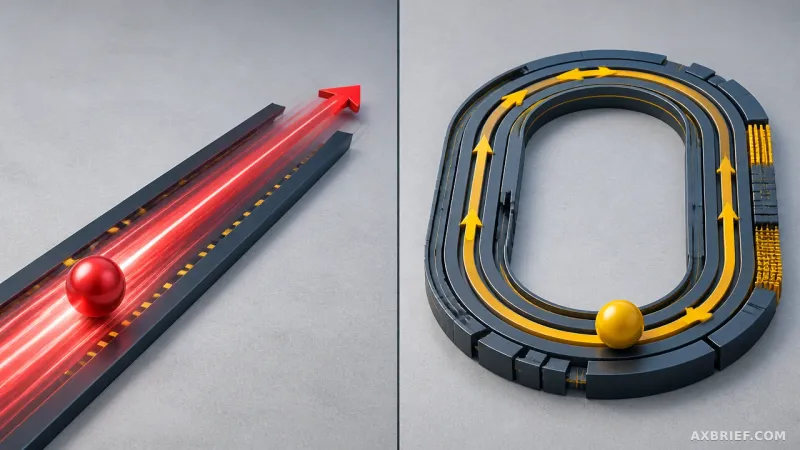
To understand Dreaming, one must look at its predecessor. In April 2024, OpenAI released Saved Memories. This was a reactive system; it functioned like a digital notepad where the AI only recorded information when explicitly told to do so. A user would have to say, Remember that I am traveling to Singapore in July, and the AI would store that specific string. While useful, this approach was fundamentally static. The AI acted as a secretary who only noted down what was dictated, often failing to update information as it grew stale or missing the subtle nuances of a user's workflow that were never explicitly labeled as memories.
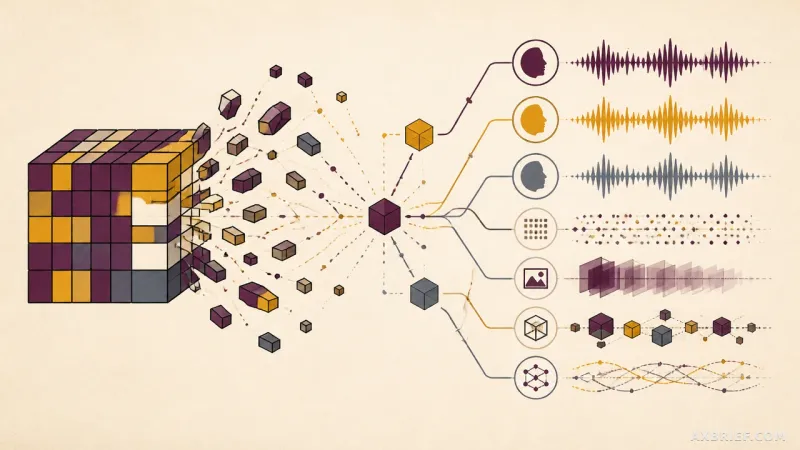
Launched in April 2025, the first generation of the Dreaming architecture shifts the paradigm from storage to synthesis. Instead of waiting for a command, the system operates as a background process that continuously analyzes conversation history. It curates and synthesizes important contexts, preferences, and environmental constraints without requiring a single explicit instruction. It identifies patterns in how a user works, the tools they prefer, and the specific goals they pursue across disparate chat sessions. This allows the AI to maintain a living, breathing state of the user's identity that evolves in real-time.
Control remains in the hands of the user through a dedicated memory summary page. Here, users can view exactly what the AI has synthesized about them, allowing for direct editing or deletion of specific facts. This transparency transforms the memory system into a collaborative workspace where the user can tune their AI's understanding of their professional requirements or personal preferences, effectively creating a real-time, evolving manual for their digital assistant.
From General Guidance to Precision Procurement
The true impact of the Dreaming architecture is felt when the AI moves from providing general knowledge to executing high-precision tasks. Consider the difference in how a standard LLM handles a technical request versus one powered by Dreaming. In a traditional session, a user asking for recommendations for underwater photography TTL equipment would receive a comprehensive but generic guide. The AI might explain the theoretical differences between fiber optic and electronic triggers and advise the user to check compatibility charts for their specific gear. The heavy lifting of cross-referencing product manuals remains a human task.
Under the Dreaming architecture, the conversation changes because the AI already knows the user's hardware stack. It remembers that the user owns a Sony A1 II camera, a Nauticam NA-A1II housing, and Inon Z-330 strobes. Instead of a general guide, the AI provides a specific part number, such as the BS-TR-SN2, and explains why it is the optimal choice for that exact configuration. If the AI has synthesized that the user prefers macro photography, it might further suggest a trigger optimized for the Mini Flash 3, noting the specific advantages over other converters.
This shift represents a fundamental change in the cost of communication. The AI is no longer just a knowledge base; it is a context-aware agent. This precision extends to travel planning or project management. If the AI knows a user enjoys wildlife photography and prefers hotels with strong air conditioning, a Singapore itinerary is no longer a list of top-rated tourist spots, but a curated route based on the user's specific physiological and professional constraints.
For the professional, this means the floor of response quality is permanently raised. The time previously spent on the preamble of a prompt is reclaimed. The cognitive load shifts from explaining the situation to reviewing the options. When the AI understands the internal naming conventions of a company's software or the specific approval rules of a corporate hierarchy through background synthesis, the first draft it produces is often immediately actionable. This effectively democratizes high-level AI utility, as the quality of the output is no longer solely dependent on the user's ability to write a perfect prompt, but on the AI's ability to remember the user correctly.
We have moved past the era of adapting ourselves to the tool. The Dreaming architecture signals a transition into an era where the tool adapts to us, turning the AI from a stranger we meet every morning into a seasoned partner that grows more capable with every word we speak.