Enterprise AI is currently navigating a volatile transition from passive chatbots to active autonomous agents. For the past year, developers have struggled with the inherent tension between the desire for complex, multi-step agentic workflows and the harsh reality of inference latency and escalating compute costs. The industry has reached a point where the software capabilities of large language models have outpaced the underlying infrastructure's ability to support them at scale without breaking the budget or compromising security.
The Hardware Foundation of the Azure-Anthropic Integration
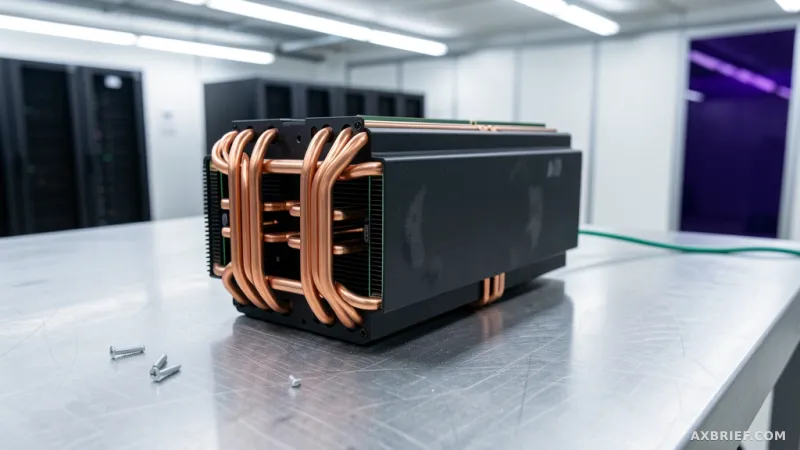
Anthropic has officially announced the general availability of its Claude models within Microsoft Foundry, the specialized AI development environment on Azure. This launch is not a simple software integration but a deep infrastructure play powered by NVIDIA GB300 Blackwell Ultra GPUs. The deployment centers on the NVIDIA GB300 NVL72 system, a configuration designed to maximize large-scale computational efficiency by treating a cluster of GPUs as a single, massive accelerator. To eliminate the data bottlenecks that typically plague distributed inference, the environment implements NVIDIA Quantum-X800 InfiniBand networking, ensuring ultra-high-speed data transfer between servers.
This technical rollout is the direct realization of a strategic partnership forged in November between Microsoft, NVIDIA, and Anthropic. By leveraging the Blackwell architecture, enterprise users now have a dedicated path to run Claude models on the most advanced GPU accelerators available. This provides a standardized, high-performance environment where the primary constraint is no longer the raw speed of the hardware, but the sophistication of the agentic logic being deployed.
From Chatbots to Secure Autonomous Agent Swarms
While the raw benchmarks of the GB300 are impressive, the true shift lies in how this efficiency alters the economics of AI deployment. The reduction in Total Cost of Ownership (TCO) does more than just save money; it unlocks the ability to deploy a hierarchy of agents. Instead of relying on a single, monolithic model to handle every task, enterprises can now afford to deploy a primary orchestrator that manages a fleet of specialized sub-agents, each tuned for a specific business domain.
NVIDIA is facilitating this transition by integrating its own toolsets directly into the Anthropic stack through NVIDIA verified agent skills. This allows companies to imbue Claude agents with domain-specific capabilities that are pre-validated for performance and reliability, effectively bridging the gap between general reasoning and professional execution. However, the most critical component for the enterprise is the NVIDIA Secure Agent Workspace Reference Design. This blueprint addresses the primary fear of autonomous AI: the loss of control.
By providing a structured approach to governance, the reference design allows administrators to exert granular control over identity management, network access, credentials, and runtime policies. This transforms the AI agent from a black-box process into a governed corporate asset that operates within a strictly defined security perimeter. The focus has shifted from whether an agent can perform a task to whether that task can be executed within a controlled, auditable workspace.
The industry has now entered a phase where the infrastructure is ready for the agentic era, leaving enterprises to determine exactly how much autonomy they are willing to grant their digital workforce.