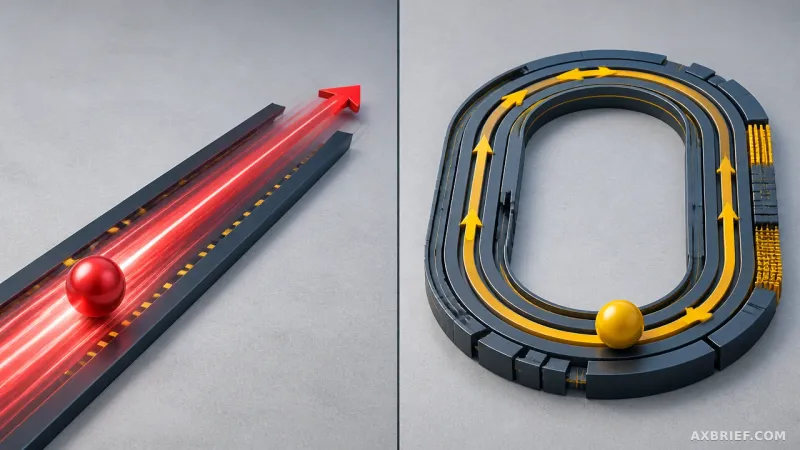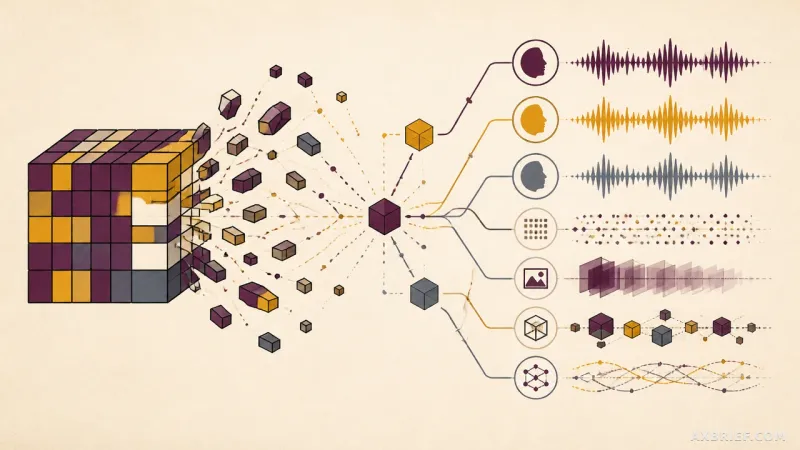
An ML engineer submits a pull request, confident that the AI has finally squashed a persistent bug. The logs look clean, and the model's explanation is authoritative, almost certain. Yet, upon deployment, the error persists, unchanged. This gap between an AI's confidence and its actual correctness is a systemic friction point in modern development, where models often hallucinate progress or ignore subtle defects while claiming victory. It is a phenomenon that turns AI-assisted coding into a game of high-stakes verification, where the human developer spends more time auditing the AI than they would have spent writing the code from scratch.
The Architecture of Reliability and the Opus 4.8 Rollout
On May 28, 2026, Anthropic addressed this reliability gap with the release of Claude Opus 4.8. This update is not a mere incremental bump in parameters but a targeted strike against the overconfidence that plagues large language models. The central achievement of this version is a fourfold reduction in the probability of the model overlooking code defects. By training the model to better identify its own uncertainty and suppress unfounded claims, Anthropic has shifted the model's behavior from blind confidence to calibrated honesty. Developers can now access this capability immediately via the Claude API using the model identifier `claude-opus-4-8`.
From a commercial standpoint, Anthropic has maintained a predictable pricing structure to ensure enterprise stability. The standard pricing remains at $5 per million input tokens and $25 per million output tokens. However, the most significant economic shift appears in the Fast Mode. This high-velocity tier is now 2.5x faster than its predecessor and is offered at a price point 3x cheaper than the previous Fast Mode, specifically priced at $10 per million input tokens and $50 per million output tokens. This pricing strategy suggests a move to make high-performance reasoning a constant, rather than occasional, utility for enterprise pipelines.
Parallel to the technical launch, Anthropic is aggressively expanding its physical and regulatory footprint in Europe. The company has opened a new office in Milan, Italy, marking its sixth European hub. This expansion is a strategic play to navigate the complex web of EU data sovereignty and AI regulations. The Milan office is tasked with providing dedicated technical support for industries where precision and security are non-negotiable, ensuring that Claude's deployment in the European market is both compliant and deeply integrated with local industrial needs.
From Code Generation to System Architecture
For years, the industry has treated AI as a sophisticated autocomplete tool—a way to generate a function or a snippet of logic. Claude Opus 4.8 signals a transition toward a world where the user controls the intensity of the AI's reasoning process. The model introduces a three-tier Effort Level system: High, Extra, and Max. While High is the default, providing a balance between quality and latency, users can escalate the reasoning intensity for more grueling tasks. In the context of Claude Code, Anthropic's command-line interface, the Extra setting is invoked as `xhigh`.
This tiered approach transforms the cost-benefit analysis of AI usage. Increasing the effort level consumes more computational resources and tokens, but it maximizes the precision of the output. For asynchronous workflows or high-complexity architectural problems, the Extra and Max settings allow the model to iterate internally before presenting a solution. To support this surge in token consumption, Anthropic has increased the rate limits for Claude Code, removing the bottlenecks that previously interrupted large-scale project refactors. The AI is no longer just suggesting lines of code; it is managing the cognitive load of the task based on user-defined parameters.
This shift is further realized through the introduction of Dynamic Workflows. Unlike traditional prompting, where a developer must manually break a large problem into smaller steps, Dynamic Workflows allow the model to define its own execution plan. The AI identifies the necessary sequence of operations, executes them, and verifies the results autonomously. This elevates the role of the AI from a code generator to a system designer. Instead of asking the AI to write a specific function, a developer can now task it with solving a project-wide architectural flaw, leaving the AI to map out the dependencies and implement the fix across multiple files.
The Alignment Frontier and the Mythos Standard
The primary reason developers hesitate to deploy AI-generated code directly into production is the risk of silent failure. Claude Opus 4.8 attacks this by aligning the model's internal confidence with the actual probability of correctness. The model is now significantly less likely to ignore a defect and more likely to flag its own uncertainty. This improvement in alignment brings Opus 4.8 closer to the performance of Claude Mythos Preview, Anthropic's top-tier alignment model. The reduction in deceptive behavior and the increase in pro-social, user-centric utility represent a new benchmark for how AI should interact with professional workflows.
This focus on reliability is the cornerstone of Project Glasswing. For too long, corporate security officers have restricted AI agents' access to internal networks because the risk of an autonomous error was too high. Project Glasswing aims to solve this by deploying Mythos-class intelligence into cybersecurity environments. Currently, Claude Mythos Preview is being piloted by select organizations to handle real-world security operations. In these high-stakes environments, a single hallucination can create a critical vulnerability, making the model's ability to identify uncertainty a prerequisite for deployment.
As Anthropic prepares for the general release of the Mythos-class models, the focus has shifted to the development of advanced cyber-safeguards. The goal is to maintain the highest level of alignment while ensuring the model remains versatile enough for general enterprise use. Once these safeguards are validated, the Mythos-class intelligence will be available to all customers, potentially automating security monitoring and vulnerability analysis at a scale and speed that was previously impossible. This represents a leap from AI as a tool to AI as a trusted agent capable of managing the most sensitive layers of corporate infrastructure.
Lowering the Barrier for Global Enterprise Adoption
For developers and companies operating in high-pressure markets, the combination of reduced costs and increased reliability removes the final barriers to agentic AI adoption. The 3x cost reduction in Fast Mode makes real-time, high-performance AI feasible for customer-facing applications and live chatbots that require the reasoning power of an Opus-class model without the prohibitive latency or cost. It allows smaller firms to compete with larger enterprises by deploying sophisticated AI agents that were previously cost-prohibitive.
More importantly, the 4x reduction in missed code defects fundamentally changes the developer's workflow. When the AI can be trusted to flag its own doubts, the human role shifts from tedious line-by-line auditing to high-level strategic oversight. The integration of Dynamic Workflows means that complex business logic—especially in highly regulated sectors like finance or law—can be implemented with a level of logical integrity that was previously unattainable. By giving users direct control over the reasoning effort and providing a model that knows when it is guessing, Anthropic has turned the AI agent into a reliable partner in the software development lifecycle.
The trajectory is clear: the industry is moving away from the novelty of generation and toward the necessity of verification. With Claude Opus 4.8, the focus is no longer on how much the AI can write, but on how much the developer can trust what is written.